
Forget the easy private-equity walkover. FTSE 100 testing firm Intertek has just rejected EQT’s sweetened £10bn bid — its third rebuff in a month. The Swedish private equity giant’s 5,800p-per-share offer, already 54% above the pre-bid price, was unanimously turned down by the Intertek board. Translation: even at a 28% premium to current market cap, EQT “significantly undervalues” the group. Welcome to the new UK plc resistance.
The 5,800p number that wasn’t enough
EQT’s latest offer values Intertek at £10bn — 5,800p per share. The Intertek board met, reviewed the proposal with its advisers, and rejected it on 8 May 2026. Unanimously. Unequivocally.
The board’s statement: “The Board of Intertek has carefully reviewed the further revised proposal with its advisers and unanimously concluded that it significantly undervalues Intertek and its future prospects and there is significant execution risk given its conditional nature.”
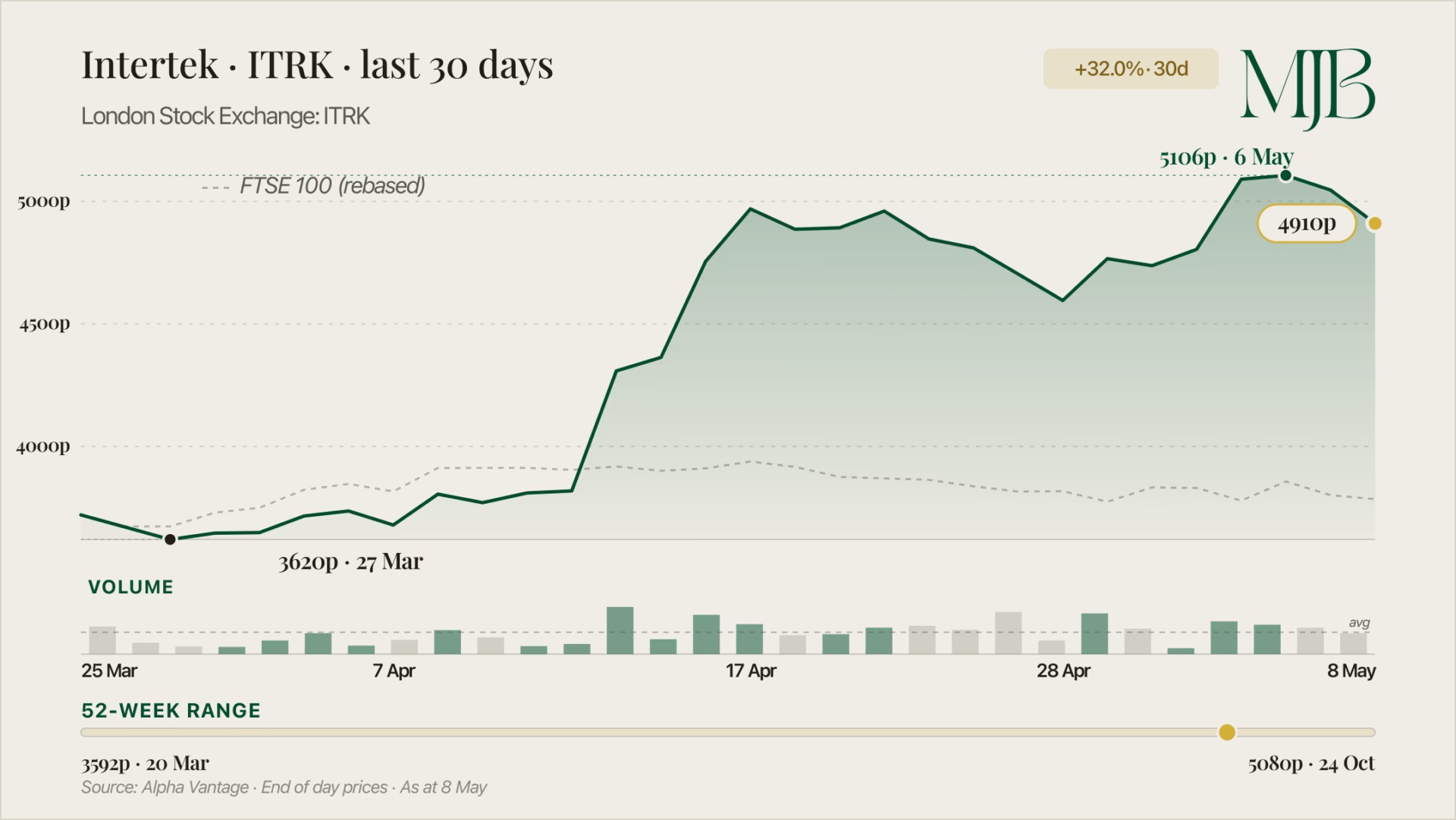
The 5,800p price is already 54% above where Intertek’s stock closed the day before EQT’s first offer landed on 9 April. Any other month, that kind of premium would clear most public-company boards in a heartbeat. Intertek’s current market value sits around £7.8bn — meaning the £10bn EQT proposal is roughly a 28% premium to current market cap.
That premium still wasn’t enough to crack the board.

EQT’s bid ladder
This is EQT’s third attempt. The escalation:
5,150p → 5,400p → 5,800p.
Each offer was rejected. Each follow-up came with a higher number. The Swedish private equity firm lodged its sweetened bid on Tuesday with what it called “a view to to securing prompt and constructive engagement” — the press-release equivalent of asking the Intertek board to please pick up the phone.
The pattern is classic private-equity persistence. Each bid tests how high the board’s number is, and each rejection narrows the gap between the next offer and the perceived floor. Five offers ago, this looked like an opportunistic approach to a beaten-down FTSE 100 name. By offer three, it looks like EQT genuinely wants this asset and is prepared to keep walking up the ladder.
The Intertek board’s specific rejection language — “execution risk given its conditional nature” — also matters. Even if the price was right, the deal structure isn’t certain enough.

What Intertek is actually doing
The board has an alternative plan, and it is leaning into it hard. The 140-year-old testing firm, based in London’s Cavendish Square, unveiled a strategic review in April. The plan: separate Intertek’s Energy & Infrastructure division from its Testing & Assurance operations, either through a sale or a demerger.
The board’s argument: a split would “create two high-quality global … businesses with a strong historical operational and financial track record” and the company is “fully focused on maximising value for shareholders.”
In other words: don’t accept EQT’s cash, because the demerger path produces more long-term shareholder value than 5,800p in hand.
That is a confident bet. Intertek’s services — helping companies ensure their products, processes, and systems meet safety, quality, and regulatory standards — sit in two distinct end markets that scale very differently. Splitting them is a credible value-creation argument, but only if the board executes cleanly. The “execution risk” line cuts both ways.
What this tells us about UK plc valuations
The unanswered question for every UK plc on EQT’s radar: how many “no thanks” rounds before the price is actually right?
The most uncomfortable number in the whole story is the 54% pre-bid premium. Intertek was trading 54% below where EQT thought it was worth on 9 April — and the board now says EQT is still 28% under. The implication: the FTSE 100 listing has not delivered Intertek a fair valuation in years.
That is the structural UK plc story. Deeply discounted FTSE 100 names, private equity sees genuine value, boards push back saying even your premium isn’t enough — but UK domestic flows stay muted, so the stock can’t re-rate without a bidder.
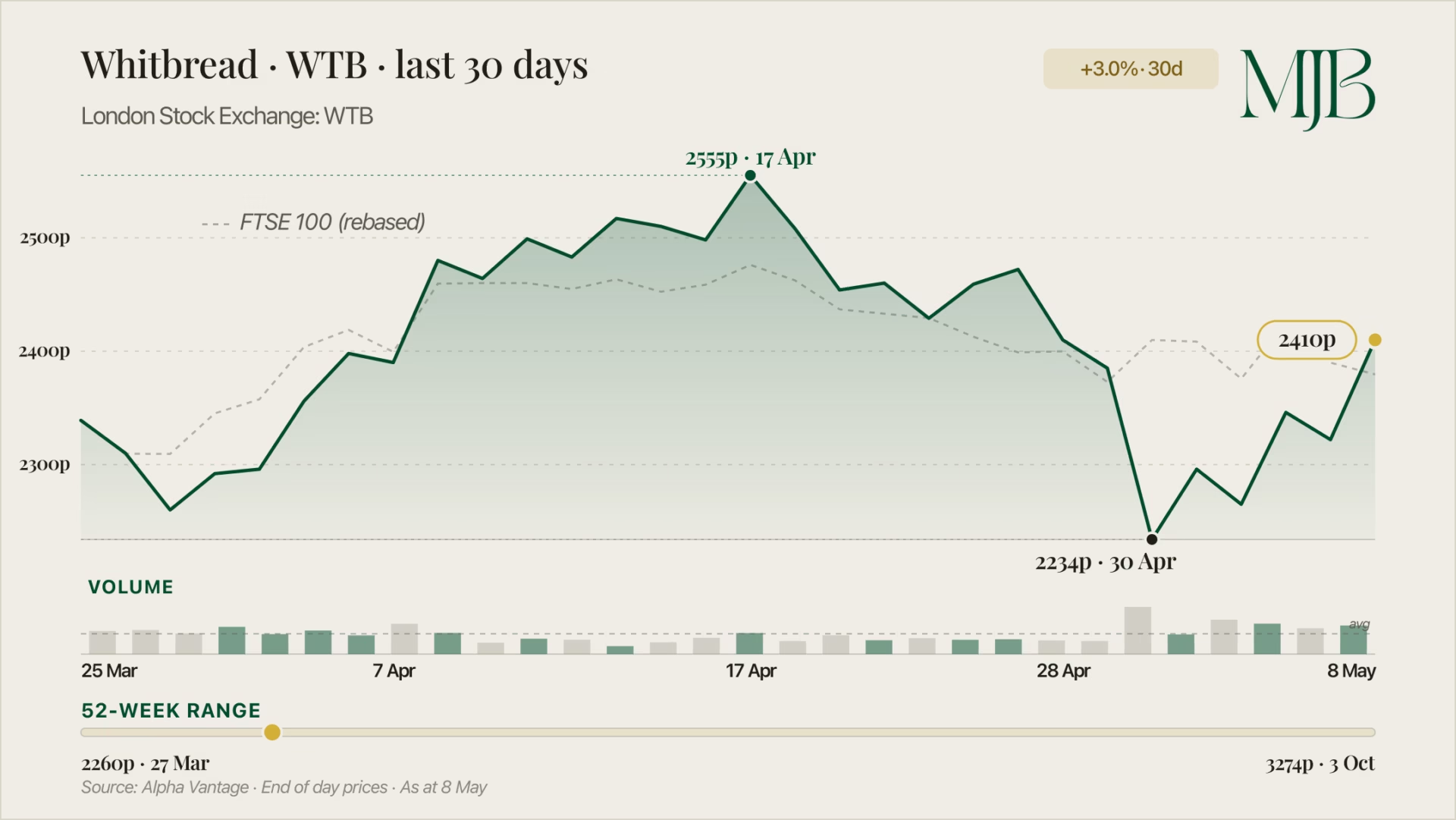
The pattern echoes Whitbread (LON: WTB)’s £2bn strategic pivot and the wider class of FTSE 100 boards stress-testing their own value with strategic-action plans. The unanswered question for every UK plc on EQT’s radar: how many “no thanks” rounds before the price is actually right?
The wider read for the FTSE 100: London’s listing market currently rewards bidders, not boards. When the public-market valuation lags the takeover valuation by 50% or more, the board’s job becomes defending against opportunism while running a strategic plan that closes the gap. Intertek is doing both at once — and the fourth EQT bid will tell us whether the demerger story is the right counterweight, or whether London needs a different fix entirely.

The Bottom Line
Don’t expect EQT to walk away yet. The 5,150p → 5,400p → 5,800p ladder is classic private equity persistence, and the Swedish firm has every reason to believe a fourth bid lands closer to 6,000p. The Intertek board’s gamble: that the demerger creates more value than the cash on the table. Watch for offer four — the next test of UK plc takeover resistance lands soon.
Want more like this? Sign up to The MJBurrows Briefing — our free weekly newsletter delivered every Monday morning.
FAQ
Why did Intertek reject EQT’s £10bn bid?
The Intertek board unanimously concluded that the 5,800p-per-share offer “significantly undervalues” the group and its future prospects, and flagged “significant execution risk given its conditional nature.” The board prefers its own strategic-review path — a potential sale or demerger of the Energy & Infrastructure division.
How does this offer compare with the previous EQT bids?
EQT’s bid ladder ran 5,150p, then 5,400p, then 5,800p — each rejected by the Intertek board. The latest offer is roughly 54% above Intertek’s closing share price the day before the first bid landed on 9 April, and around a 28% premium to Intertek’s current market cap of about £7.8bn.
What is Intertek’s alternative plan?
The 140-year-old company unveiled a strategic review in April that is considering a sale or demerger of its Energy & Infrastructure division from its Testing & Assurance operations. The board says the split would create “two high-quality global businesses” and is “fully focused on maximising value for shareholders” — its bet that the demerger path beats EQT’s cash offer over time.



Disclosure & Editorial Standards
MJBurrows is not authorised or regulated by the Financial Conduct Authority (FCA). The content on this website — including articles, calculators, and tools — is for general informational and educational purposes only. It does not constitute personal financial, investment, tax, or legal advice and does not take into account your individual circumstances, financial situation, or objectives.
Nothing on this site is a personal recommendation to buy, sell, hold, or otherwise deal in any financial product, asset, or service. You should always conduct your own research and seek advice from a qualified, FCA-regulated financial adviser before making any financial decisions.
Our calculators produce estimates based on simplified models using HMRC-published rates for the current tax year. They cannot account for every individual circumstance and should not be relied upon as exact figures. Tax rules and rates may change — verify current rates with HMRC or a qualified tax adviser.
Projections are not guarantees. Where our tools show future values (investment growth, pension projections, compound interest), these are hypothetical illustrations based on assumed growth rates. Past performance does not guarantee future results. The value of investments can go down as well as up.
Market data displayed on this site is provided by third-party sources including Twelve Data, Yahoo Finance, and CoinGecko. We do not guarantee the accuracy, completeness, or timeliness of third-party data.
This content is designed for UK residents and reflects UK tax rules, thresholds, and legislation. It may not apply to other jurisdictions.
Using this website does not create a professional-client relationship of any kind. MJBurrows is not responsible for any financial loss, damage, or decision made based on the content presented. By using this site, you accept these terms.
This disclaimer may be updated from time to time without prior notice. Last reviewed: 23 April 2026.
MJBurrows is an independent UK personal finance publication, written and edited by Matthew Burrows. There is no parent company, no investor group, and no advertising sales team — decisions about what to cover and how to frame it are made by Matthew alone. Our full Editorial Policy sets out how the site operates in detail.
Commercial model. As of April 2026, MJBurrows generates no revenue. The site carries no display advertising, no affiliate links, no sponsored content, no paid product placements, and no pay-for-coverage arrangements. If this changes in future, it will be disclosed openly on the Editorial Policy page.
Sources. Articles and tools reference primary sources — HM Revenue & Customs (HMRC), gov.uk, the Bank of England, the Office for National Statistics (ONS), the Financial Conduct Authority (FCA), Companies House, and UK government departmental publications (DWP, Treasury). Calculator data uses HMRC-published rates for the 2026/27 tax year. Market data (tickers, asset prices) is provided by Twelve Data, Yahoo Finance, and CoinGecko.
Verification. Every published article is fact-checked before going live. Numerical claims are traced to their primary source, quotes are checked against the original speaker or document, and calculator outputs are tested against HMRC worked examples. See our verification and accuracy policy for the full process.
Corrections. If you spot an error, please report it via the Corrections page. A three-tier severity system commits to specific response times:
- Tier 1 — Urgent (material reader harm, defamatory statements, regulatory or legal issues): acknowledged within 24 hours, page actioned within 24 hours, correction published within 48 hours of confirmation.
- Tier 2 — High (significant factual errors that misinform readers): acknowledged within 3 working days, correction published within 7 working days of confirmation.
- Tier 3 — Standard (minor factual errors, dated references, missing context): acknowledged within 7 working days, correction published at the next regular content review (within the quarter).
Significant corrections are logged on the public Corrections log.
Updates and review cadence. Calculators are reviewed at least quarterly, plus event-driven updates when HMRC publishes new rates (Budget, Autumn Statement, new tax year). Guides are reviewed at least twice a year, with major rewrites whenever underlying regulation changes. Tax-year-sensitive content is prioritised for review at the April tax-year transition.
Get in touch. For editorial enquiries — corrections, story tips, reader questions — the address is contact@mjburrows.com. The contact page is at mjburrows.com/contact. Every email is read personally by Matthew.