
Britain’s biggest hotel chain doesn’t want to own hotels anymore. Whitbread (LON: WTB), the FTSE 100 owner of Premier Inn, announced on Thursday it will cut nearly 4,000 jobs, offload more than 100 restaurants, and sell £1.5bn of property freeholds — all to raise £2bn and rebuild a battered share price. Shares slid as much as 7% on the news, leaving the stock down 12% year-to-date at 2,221p. CEO Dominic Paul calls it pragmatism. The market calls it a high-stakes pivot.
What Whitbread is actually doing
The plan has three legs.
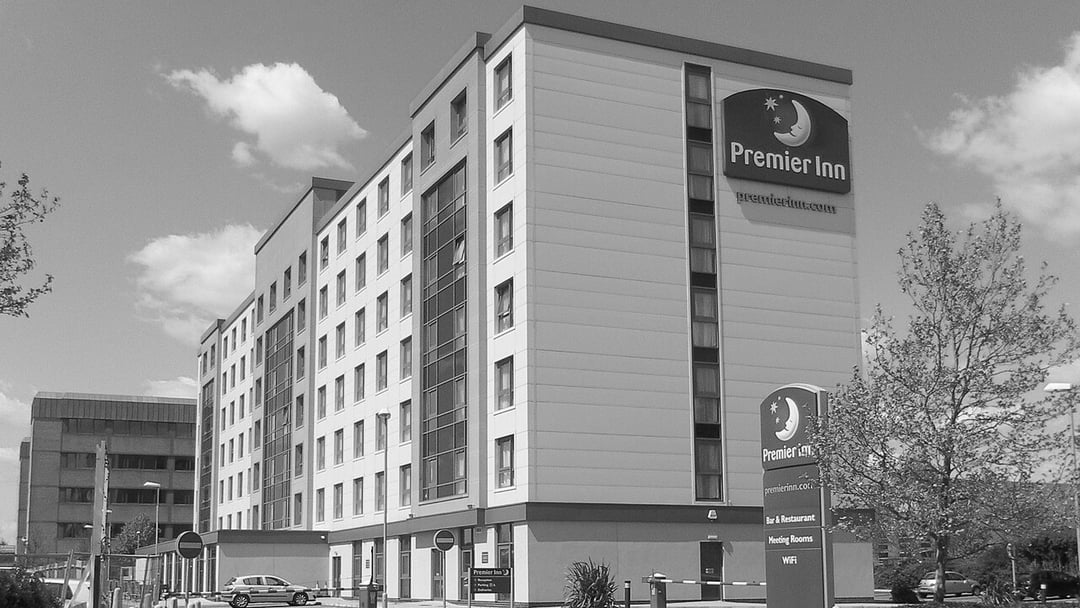
First, the property: Whitbread will sell freehold rights to a swathe of its Premier Inn hotels in a sale-and-leaseback structure aiming to raise £1.5bn. The hotels stay open; the buildings change hands.
Second, the restaurants: more than 100 sites will be offloaded, with 51 already agreed at £50m and another 60 going through employee consultation. The restaurant arm alone accounts for 3,800 jobs of the 4,000 slated to go.
Third, capital allocation: £1bn shaved from planned capital spending, with the company targeting £2bn of free cash flow available for shareholders by 2031.
In CEO Dominic Paul’s own words: “In light of significant cost increases in the form of business rates and National Insurance, as well as the implied market discount to our inherent value, we’ve looked hard at the options open to us.”
That’s a polite way of saying the share price has been undervalued for years and the board has finally decided to do something about it.
The numbers behind the pivot
Whitbread’s full-year results, also out Thursday, tell the story the strategy is responding to. Revenue was flat at £2.9bn for the year to February 2026, but pre-tax profit fell 19% to £298m. Premier Inn accommodation sales grew 1.9% — the rooms business is fine. Food and drink, however, dropped 4%, and the company expects that line to fall by a further £160m next year as it walks away from standalone restaurant sites.
Costs are the issue. The Budget’s increase in business rates hit hospitality particularly hard, and the government’s £300m business rates support package — announced for pubs — explicitly excluded hotels and restaurants from rate relief. Whitbread’s own previous five-year plan, announced as recently as October 2024, has now been torn up and replaced because the cost trajectory broke the original assumptions.
There is also a smaller, geopolitical sting: the company expects a £5m hit from the Iran war on its Middle East hotels, with management citing the risk that surging energy prices “feed into sustained inflation in goods, utilities and transport-related inputs that materially affect the hospitality sector”.

What it means for hospitality, jobs, and customers
The catch is in the small print of the lease structure — Whitbread will be a tenant in buildings it used to own.
For the wider sector, this is the loudest signal yet that the post-Budget tax environment is forcing structural change at the top of UK hospitality. If a FTSE 100 stalwart with the brand strength of Premier Inn cannot absorb business rate hikes without slashing 4,000 jobs, the implication for smaller chains and independents is sobering. Expect more sale-and-leaseback announcements across the sector before year-end.
For Premier Inn customers, the day-to-day experience should not change. The hotels stay open, the rooms stay branded, the booking system is unaffected. The catch is in the small print of the lease structure — Whitbread will be a tenant in buildings it used to own. If the new landlords push rents up at review, that operational pressure ultimately lands somewhere, and “somewhere” usually means room rates.
For investors, the pivot is the trade itself. Sale-and-leaseback delivers cash now in exchange for higher long-term operating costs. It works brilliantly when interest rates are falling and rent inflation is muted. It works terribly when the opposite happens. With the Bank of England rate path now meaningfully tighter than the market priced a month ago, Whitbread is making this trade at a difficult moment in the cycle.

The Bottom Line
The £2bn raise will land. The dividend will rise. The 4,000 jobs will go. The harder question is whether selling the freeholds at the bottom of the cycle is genius or the kind of move that looks brilliant short-term and crippling long-term. Watch the rent review clauses on the lease deals — that is where the real story is buried.
Want more like this? Sign up to The MJBurrows Briefing — our free weekly newsletter delivered every Monday morning.
FAQ
Why is Whitbread selling its Premier Inn properties?
The board concluded the share price was trading at too steep a discount to the value of the underlying property assets. Selling the freeholds unlocks £1.5bn of that hidden value as cash, which the company plans to return to shareholders alongside dividends and a higher payout ratio.
Will Premier Inn hotels close?
No — hotels remain open under the Premier Inn brand. Only the building ownership changes, with Whitbread becoming a long-term tenant rather than freeholder.
Are the 4,000 job losses spread evenly across the business?
No — around 3,800 jobs come from selling more than 100 restaurant sites. Premier Inn hotel operations and head office account for the remaining roles.



Disclosure & Editorial Standards
MJBurrows is not authorised or regulated by the Financial Conduct Authority (FCA). The content on this website — including articles, calculators, and tools — is for general informational and educational purposes only. It does not constitute personal financial, investment, tax, or legal advice and does not take into account your individual circumstances, financial situation, or objectives.
Nothing on this site is a personal recommendation to buy, sell, hold, or otherwise deal in any financial product, asset, or service. You should always conduct your own research and seek advice from a qualified, FCA-regulated financial adviser before making any financial decisions.
Our calculators produce estimates based on simplified models using HMRC-published rates for the current tax year. They cannot account for every individual circumstance and should not be relied upon as exact figures. Tax rules and rates may change — verify current rates with HMRC or a qualified tax adviser.
Projections are not guarantees. Where our tools show future values (investment growth, pension projections, compound interest), these are hypothetical illustrations based on assumed growth rates. Past performance does not guarantee future results. The value of investments can go down as well as up.
Market data displayed on this site is provided by third-party sources including Twelve Data, Yahoo Finance, and CoinGecko. We do not guarantee the accuracy, completeness, or timeliness of third-party data.
This content is designed for UK residents and reflects UK tax rules, thresholds, and legislation. It may not apply to other jurisdictions.
Using this website does not create a professional-client relationship of any kind. MJBurrows is not responsible for any financial loss, damage, or decision made based on the content presented. By using this site, you accept these terms.
This disclaimer may be updated from time to time without prior notice. Last reviewed: 23 April 2026.
MJBurrows is an independent UK personal finance publication, written and edited by Matthew Burrows. There is no parent company, no investor group, and no advertising sales team — decisions about what to cover and how to frame it are made by Matthew alone. Our full Editorial Policy sets out how the site operates in detail.
Commercial model. As of April 2026, MJBurrows generates no revenue. The site carries no display advertising, no affiliate links, no sponsored content, no paid product placements, and no pay-for-coverage arrangements. If this changes in future, it will be disclosed openly on the Editorial Policy page.
Sources. Articles and tools reference primary sources — HM Revenue & Customs (HMRC), gov.uk, the Bank of England, the Office for National Statistics (ONS), the Financial Conduct Authority (FCA), Companies House, and UK government departmental publications (DWP, Treasury). Calculator data uses HMRC-published rates for the 2026/27 tax year. Market data (tickers, asset prices) is provided by Twelve Data, Yahoo Finance, and CoinGecko.
Verification. Every published article is fact-checked before going live. Numerical claims are traced to their primary source, quotes are checked against the original speaker or document, and calculator outputs are tested against HMRC worked examples. See our verification and accuracy policy for the full process.
Corrections. If you spot an error, please report it via the Corrections page. A three-tier severity system commits to specific response times:
- Tier 1 — Urgent (material reader harm, defamatory statements, regulatory or legal issues): acknowledged within 24 hours, page actioned within 24 hours, correction published within 48 hours of confirmation.
- Tier 2 — High (significant factual errors that misinform readers): acknowledged within 3 working days, correction published within 7 working days of confirmation.
- Tier 3 — Standard (minor factual errors, dated references, missing context): acknowledged within 7 working days, correction published at the next regular content review (within the quarter).
Significant corrections are logged on the public Corrections log.
Updates and review cadence. Calculators are reviewed at least quarterly, plus event-driven updates when HMRC publishes new rates (Budget, Autumn Statement, new tax year). Guides are reviewed at least twice a year, with major rewrites whenever underlying regulation changes. Tax-year-sensitive content is prioritised for review at the April tax-year transition.
Get in touch. For editorial enquiries — corrections, story tips, reader questions — the address is contact@mjburrows.com. The contact page is at mjburrows.com/contact. Every email is read personally by Matthew.