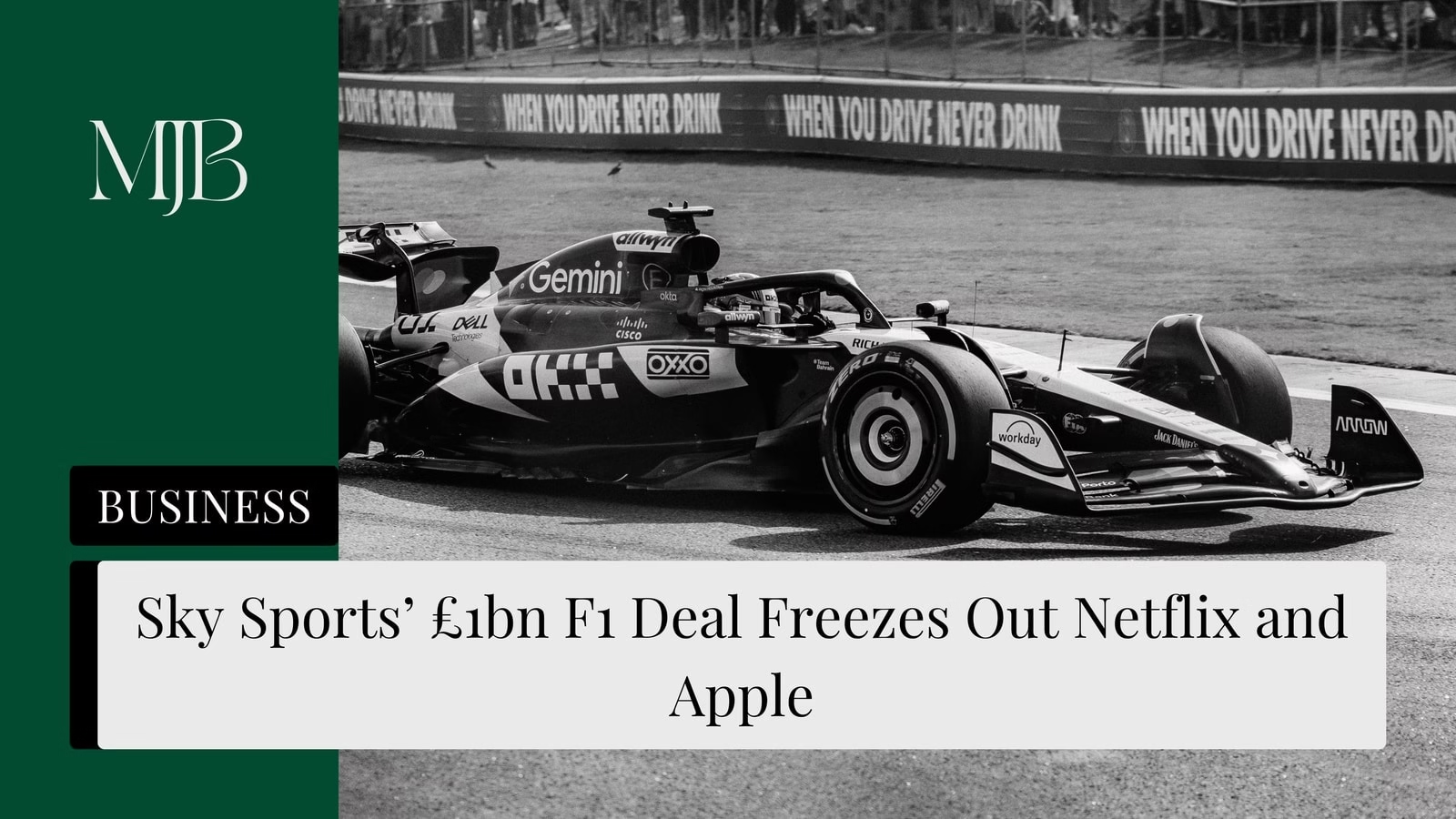
Forget the streaming-takes-everything narrative. Sky Sports just dropped £1bn to extend its Formula 1 rights through 2034 — frozen Netflix (NASDAQ: NFLX) and Apple (NASDAQ: AAPL) out of the most-watched motorsport on the planet. For a sport that has surged 120% among under-35 viewers since 2019, the message lands sharp: legacy broadcast still pays the highest bid. The CMC-Everton sponsorship cheque showed sport rights money moving sideways.
What £1bn actually buys
The new agreement extends Sky’s existing F1 rights — already running to 2029 — for five additional years through to 2034. Sky has been the UK home of Formula 1 since 2019, and the £1bn figure is reported to cover all elements of the new package, including a separate broadcasting agreement covering Italy that runs through 2032.
What the cheque buys narrowly: five more years of UK and Ireland live exclusivity. What it really buys is harder to value — a multi-year window in which Netflix and Apple, the two streaming giants most actively muscling into live sport, cannot bid for live UK race rights.
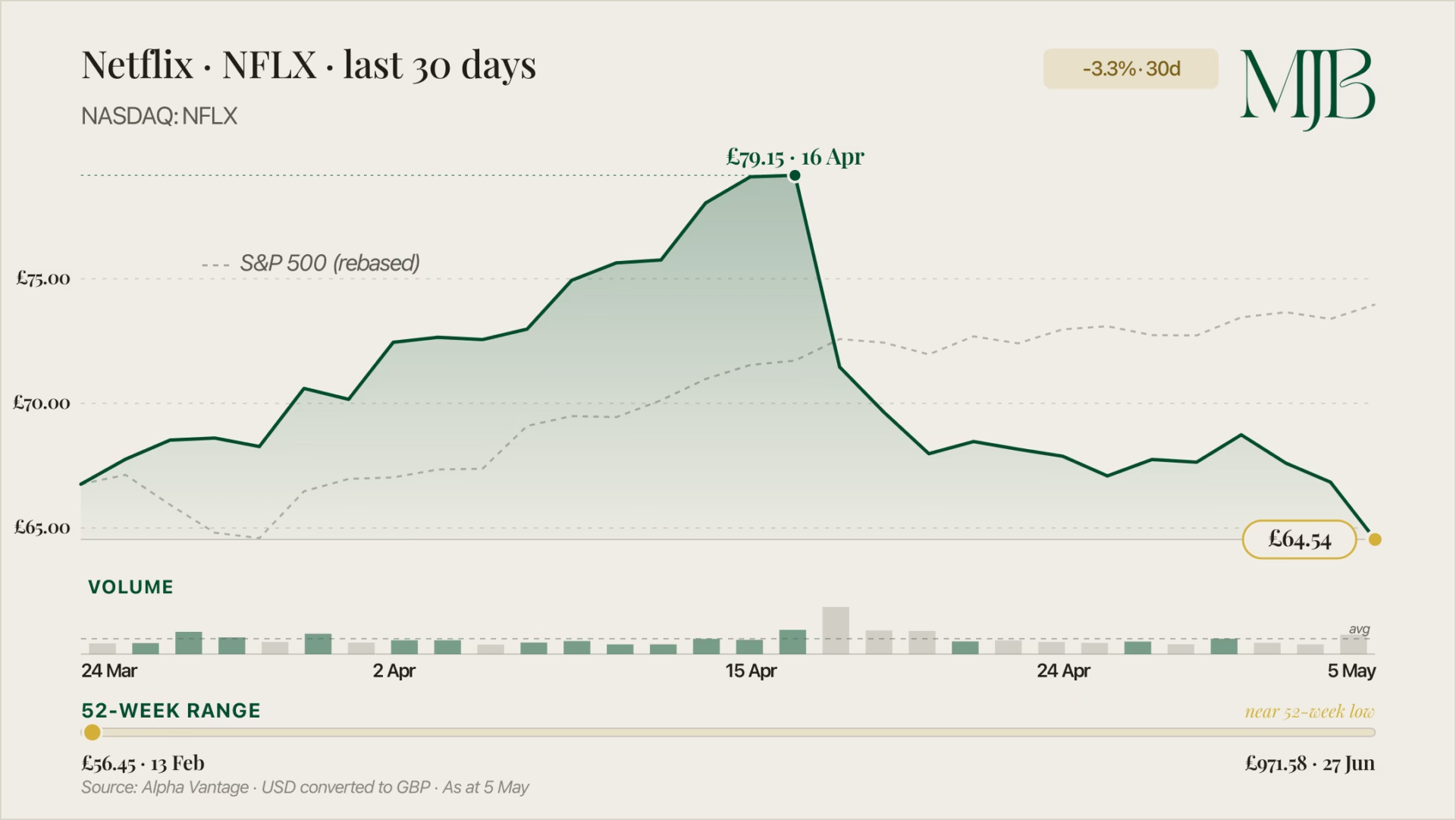
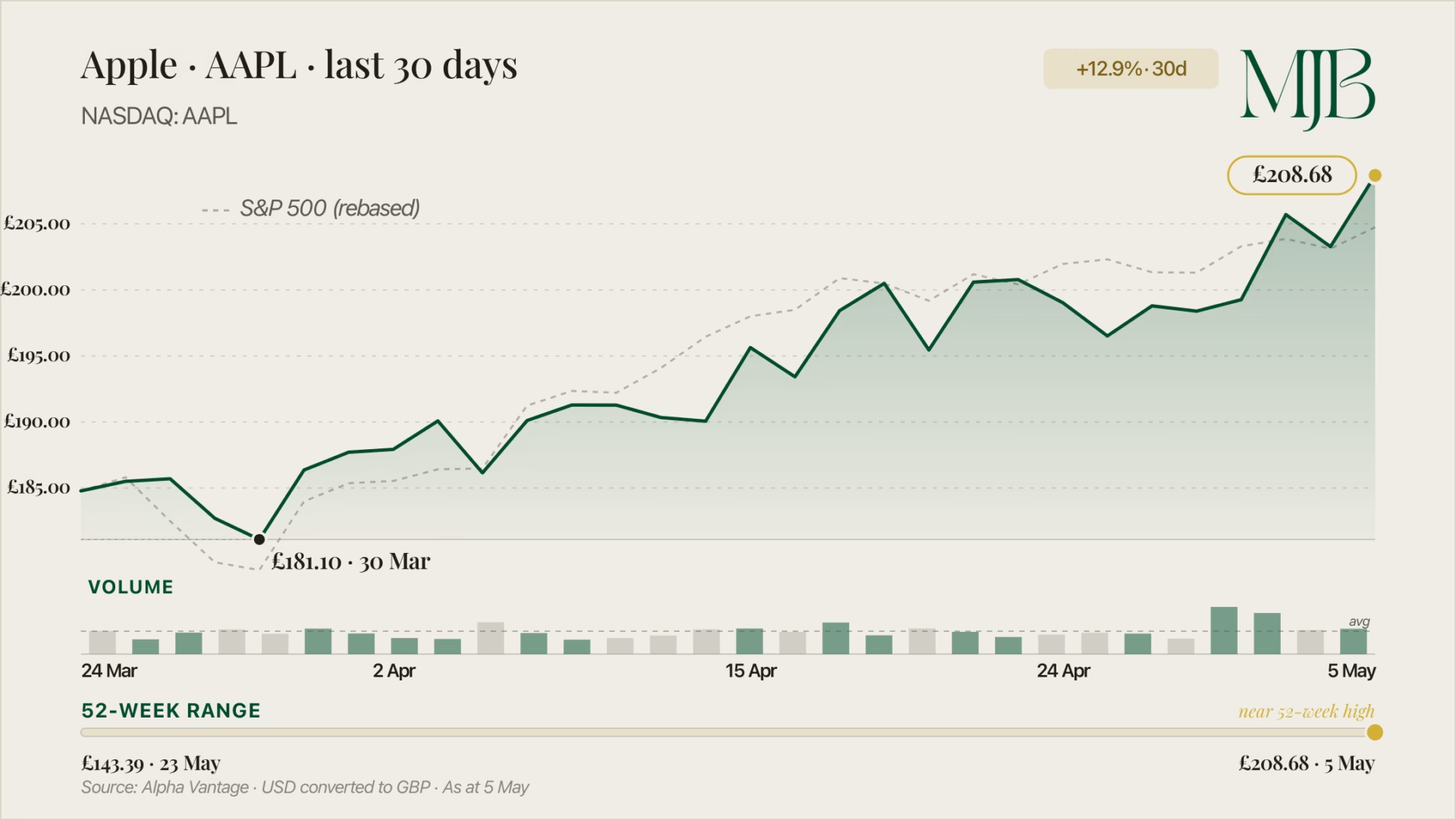
That bid-blocker effect is the core. Apple paid $150m (~£110.1m) a year for its F1 rights at the start of this season — confirming the platform was willing to play in motorsport. Netflix already owns the F1 storytelling crown via Drive to Survive, the docu-series widely credited with the sport’s audience boom since 2019. Locking both out of UK live rights through 2034 is a defensive masterstroke.

Why Netflix and Apple wanted in
Streaming’s appetite for live sport is no longer niche. Apple’s $150m (~£110.1m)-a-year F1 deal this season slotted in alongside its other live-sport ambitions, while Netflix has spent four years using Drive to Survive to convert a casual audience into hardcore fans.
For Sky, that growth trajectory was the prize. Total UK and Ireland viewership is up 90% since Sky took over the broadcast rights in 2019. Under-35 viewership is up 120%. Female viewership has surged. F1 has shed its old image as a niche, older-male sport and become genuinely mainstream — and a mainstream audience with a younger, more diverse demographic profile is exactly what justifies a billion-pound rights cheque.
The risk Sky was protecting against: if Apple or Netflix had secured live UK rights for the post-2029 window, the audience Sky has nurtured for the past 15 years walks out of the front door overnight, taking bundled subscribers with it.

The streaming-vs-linear bidding war is real
Live sport is the last must-have content category for legacy pay-TV, and the streaming platforms know it. The Sky-F1 extension is the most expensive defensive bid yet from a UK linear broadcaster. It is also a clear bet that the F1 audience profile — younger, more international, more digital-tax-rebate-144m-sitting-uncashed-as-digital-shift-stalls/) — is worth bidding through to 2034 even when the headline rights inflation looks scary on paper.
Sky’s calculation likely runs: the cost of losing F1 entirely is much higher than the £1bn premium of locking it down. Once a sport leaves your ecosystem, the bundled subscriptions tied to it leave too — and the customer-acquisition economics of replacing those subs from scratch are brutal.
For Apple, this is a missed opportunity to build on the early F1 rights credibility it secured at the start of the 2026 season. For Netflix, the storytelling franchise stays valuable but the live-rights door in the UK is now closed for the rest of the decade.
What it means for the wider sports rights market
The Premier League’s next domestic rights cycle will be watched closely by every CFO in pay-TV — because if Sky was willing to pay £1bn for a single motorsport, what does the world’s most watched football league command in 2028?
Sky’s move sets a clear price floor for premium UK live rights through the next decade. The Premier League’s next domestic rights cycle will be watched closely by every CFO in pay-TV — because if Sky was willing to pay £1bn for a single motorsport, what does the world’s most watched football league command in 2028?
It also signals a near-term ceiling on how much Apple and Netflix can grab from the live UK sports rights market. The streamers can buy Drive to Survive-style content, sponsor races, and run docu-series. They cannot — for the next eight years — own the live UK F1 broadcast.
For F1 itself, the new package locks in two of its biggest European fan bases — UK and Italy — into one broadcaster for the rest of the decade. F1 president Stefano Domenicali said: “Sky has always been a dedicated, trusted, and passionate partner since we began our relationship many years ago.”
With Lando Norris ending Britain’s wait for an F1 world champion since 2020 last season, Lewis Hamilton still on the 22-driver grid, and Cadillac joining as the eleventh team in 2026, Sky has bought into a sport entering a genuinely British-flavoured era.

The Bottom Line
Forget the talk about streaming inevitably devouring premium sport. Sky Sports just dropped £1bn to defend exactly the live rights everyone said it would lose. Through 2034, Netflix and Apple watch from the sidelines while Sky monetises a younger, more diverse F1 audience that has surged 120% in under-35s alone. Watch closely — the next domestic Premier League cycle will make this look cheap.
Want more like this? Sign up to The MJBurrows Briefing — our free weekly newsletter delivered every Monday morning.
FAQ
When does Sky’s new F1 deal actually start?
The new agreement extends Sky’s existing F1 broadcast rights — which already covered through 2029 — for five additional years to 2034. Italy’s Sky F1 rights run through 2032 under the same package, locking two of the biggest European fan bases into one broadcaster for the rest of the decade.
Why didn’t Netflix bid harder for live F1?
Netflix’s strategic focus has been original storytelling rights and its Drive to Survive franchise rather than live race broadcasts. The Sky lockout removes UK live F1 from contention until 2034, leaving Netflix to defend its docu-series moat without the live-rights upside.
How much did Apple actually pay for F1 rights this season?
Apple paid $150m (~£110.1m) a year for its Formula 1 rights agreement that started at the beginning of this season — a notable but secondary deal compared to Sky’s £1bn UK package. With the new Sky agreement in place, Apple’s path to UK live F1 rights is closed for nearly a decade.


Disclosure & Editorial Standards
MJBurrows is not authorised or regulated by the Financial Conduct Authority (FCA). The content on this website — including articles, calculators, and tools — is for general informational and educational purposes only. It does not constitute personal financial, investment, tax, or legal advice and does not take into account your individual circumstances, financial situation, or objectives.
Nothing on this site is a personal recommendation to buy, sell, hold, or otherwise deal in any financial product, asset, or service. You should always conduct your own research and seek advice from a qualified, FCA-regulated financial adviser before making any financial decisions.
Our calculators produce estimates based on simplified models using HMRC-published rates for the current tax year. They cannot account for every individual circumstance and should not be relied upon as exact figures. Tax rules and rates may change — verify current rates with HMRC or a qualified tax adviser.
Projections are not guarantees. Where our tools show future values (investment growth, pension projections, compound interest), these are hypothetical illustrations based on assumed growth rates. Past performance does not guarantee future results. The value of investments can go down as well as up.
Market data displayed on this site is provided by third-party sources including Twelve Data, Yahoo Finance, and CoinGecko. We do not guarantee the accuracy, completeness, or timeliness of third-party data.
This content is designed for UK residents and reflects UK tax rules, thresholds, and legislation. It may not apply to other jurisdictions.
Using this website does not create a professional-client relationship of any kind. MJBurrows is not responsible for any financial loss, damage, or decision made based on the content presented. By using this site, you accept these terms.
This disclaimer may be updated from time to time without prior notice. Last reviewed: 23 April 2026.
MJBurrows is an independent UK personal finance publication, written and edited by Matthew Burrows. There is no parent company, no investor group, and no advertising sales team — decisions about what to cover and how to frame it are made by Matthew alone. Our full Editorial Policy sets out how the site operates in detail.
Commercial model. As of April 2026, MJBurrows generates no revenue. The site carries no display advertising, no affiliate links, no sponsored content, no paid product placements, and no pay-for-coverage arrangements. If this changes in future, it will be disclosed openly on the Editorial Policy page.
Sources. Articles and tools reference primary sources — HM Revenue & Customs (HMRC), gov.uk, the Bank of England, the Office for National Statistics (ONS), the Financial Conduct Authority (FCA), Companies House, and UK government departmental publications (DWP, Treasury). Calculator data uses HMRC-published rates for the 2026/27 tax year. Market data (tickers, asset prices) is provided by Twelve Data, Yahoo Finance, and CoinGecko.
Verification. Every published article is fact-checked before going live. Numerical claims are traced to their primary source, quotes are checked against the original speaker or document, and calculator outputs are tested against HMRC worked examples. See our verification and accuracy policy for the full process.
Corrections. If you spot an error, please report it via the Corrections page. A three-tier severity system commits to specific response times:
- Tier 1 — Urgent (material reader harm, defamatory statements, regulatory or legal issues): acknowledged within 24 hours, page actioned within 24 hours, correction published within 48 hours of confirmation.
- Tier 2 — High (significant factual errors that misinform readers): acknowledged within 3 working days, correction published within 7 working days of confirmation.
- Tier 3 — Standard (minor factual errors, dated references, missing context): acknowledged within 7 working days, correction published at the next regular content review (within the quarter).
Significant corrections are logged on the public Corrections log.
Updates and review cadence. Calculators are reviewed at least quarterly, plus event-driven updates when HMRC publishes new rates (Budget, Autumn Statement, new tax year). Guides are reviewed at least twice a year, with major rewrites whenever underlying regulation changes. Tax-year-sensitive content is prioritised for review at the April tax-year transition.
Get in touch. For editorial enquiries — corrections, story tips, reader questions — the address is contact@mjburrows.com. The contact page is at mjburrows.com/contact. Every email is read personally by Matthew.