Introduction
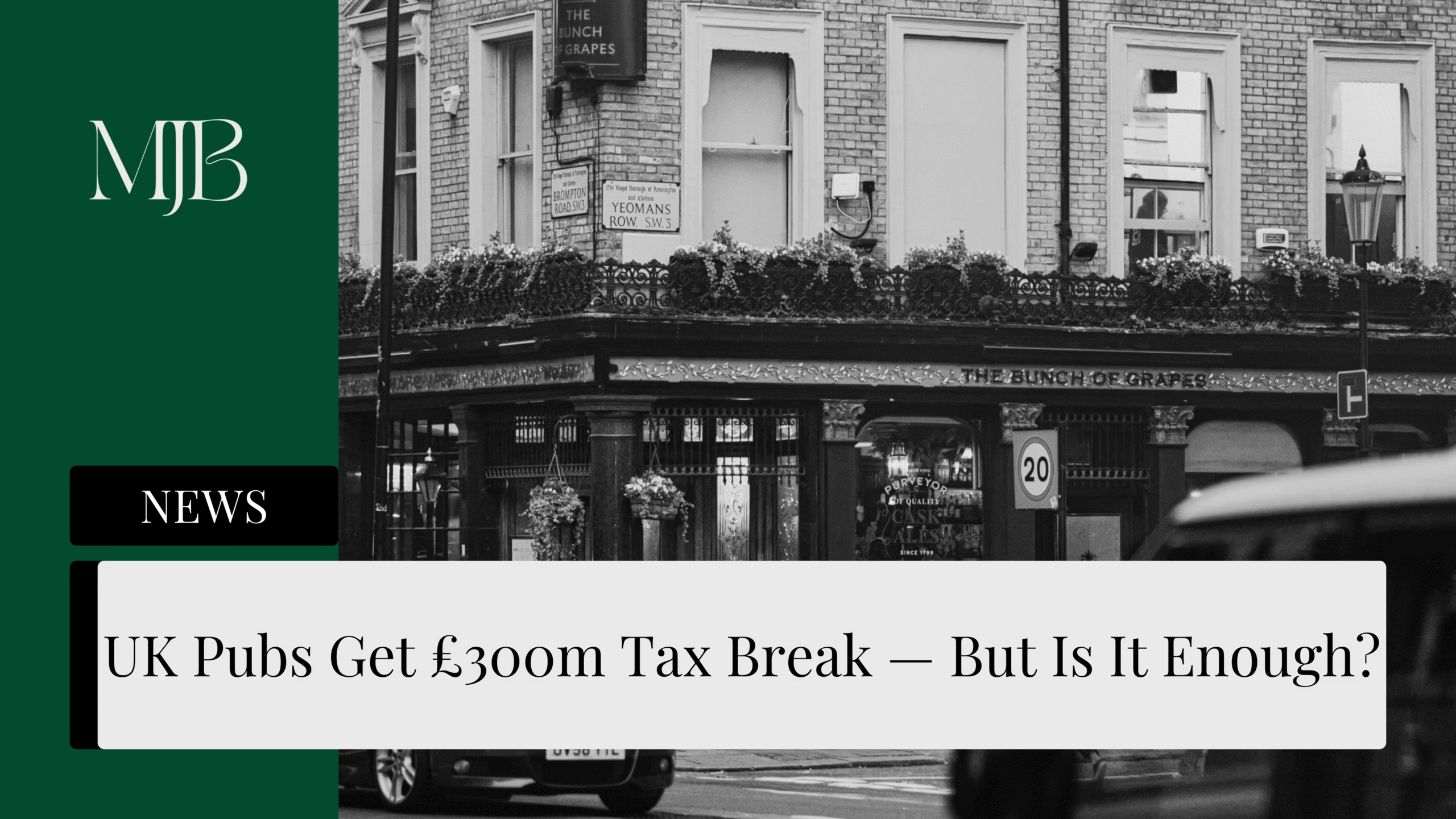
Four pubs are closing every day in the UK. Now, Chancellor Rachel Reeves is throwing them a £300m lifeline, but landlords and industry groups are calling it a “sticking plaster” on a broken system.
The Treasury just announced a 15% discount on business rates for pubs and music venues from April, plus a two-year freeze while the government rethinks how it calculates these taxes. Sounds good, right? Well, hotels and restaurants got left out entirely, and some venues were staring down bills that would’ve nearly doubled by 2029.
Let’s break down what’s actually happening here.
What’s in the £300m Pub Relief Package?
Here’s what pubs are getting:
The 15% discount kicks in from April and applies to business rates bills. For the average pub, that’s about £1,650 saved this year compared to what they would’ve paid under the old system.
A two-year freeze means rates won’t climb higher while Whitehall reviews its valuation methods (which everyone agrees are a mess).
Bonus World Cup perk: Licensing restrictions are being eased so pubs can stay open later during matches — some could run past midnight.
The catch? This only covers pubs and music venues. Hotels, restaurants, gyms, and retailers? They’re still facing steep increases.
Why Pubs Were Panicking in the First Place
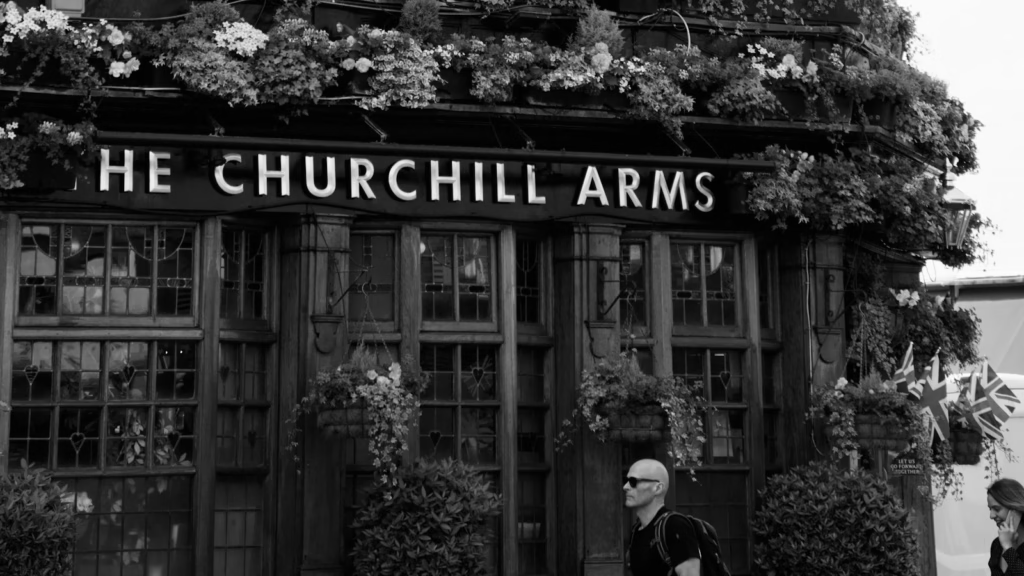
Before this announcement, the outlook was grim. Industry groups like UKHospitality and the British Beer and Pub Association estimated bills would jump by an average of 15% under the new business rates system unveiled in the Budget.
Some venues were looking at bills nearly doubling by 2029. Hotels warned their rates could more than double over three years, with the average increase hitting over £32,700 by decade’s end.
It got political fast. Hundreds of landlords joined a campaign group called Wonky Table and banned Labour MPs from their pubs. That’s pressure you can’t ignore when local elections are coming up in May.
Consumer intelligence firm NIQ counted 382 fewer licensed premises at the end of December than three months earlier. That’s four closures per day.
Industry Reaction: “Too Little, Too Late”
The response has been… mixed, to put it kindly.
Kate Nicholls, chair of UKHospitality, acknowledged the government “listened” but pointed out that restaurants and hotels are still facing severe challenges from successive Budgets. “They need substantive solutions that genuinely reduce their costs,” she said.
Helen Dickinson from the British Retail Consortium was blunter: business rates are “now at tipping point.” She reminded the government it promised “root-and-branch reform” during the 2024 election campaign.
Rachel Kelly from the British Property Federation called out the awkward timing: “The fact that emergency measures are needed just weeks after Government introduced its new two-tier system for business rates shows the changes have not been properly considered.”
Who Got Left Out (and Why That Matters)
The relief package only covers pubs and music venues, but the new business rates system hits basically every brick-and-mortar business.
Hotels and restaurants face the same rocketing bills without the discount. Airports like Manchester, Luton, and Gatwick have warned they might scale back investment plans because of higher taxes. Retailers, gyms, and visitor attractions are also stuck with unsustainable increases.
Ros Morgan, chief executive of Heart of London Business Alliance, summed it up: “This limited package of relief targeted only at pubs won’t fix our broken business rates system.”
The bigger issue? Online businesses pay little or nothing in business rates while physical venues get hammered. Labour promised to fix that imbalance before the election, but we’re still waiting.
The Bigger Picture: A System That’s Breaking Down
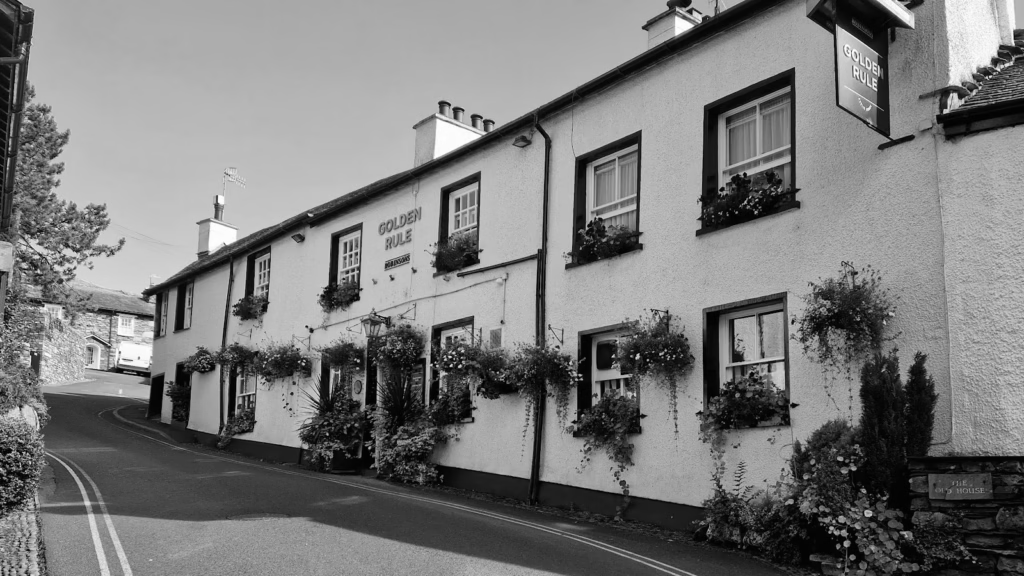
This is Rachel Reeves’ latest U-turn on tax policy, and it highlights a fundamental problem. The business rates system was already creaking before the Budget — now it’s actively crumbling.
The two-tier system introduced in the Budget was supposed to help smaller properties (those valued under £500,000 pay lower rates, while larger ones pay more). Instead, it created chaos so quickly that emergency measures were needed within weeks.
Revel Collective, which owns over 60 venues including Revolution Bars and the Peach pub chain, said it expected to appoint administrators within ten days. That’s not just a pub problem — it’s a signal of how bad things have gotten across hospitality.
The government’s promised review of valuation methods and move toward annual revaluations might help long-term, but businesses need relief now.
Conclusion
The £300m package gives pubs some breathing room, but it doesn’t fix the underlying mess. Four venues are still closing daily, hotels and restaurants got nothing, and the business rates system remains fundamentally broken. Labour promised real reform — now they need to deliver it before more businesses go under.
What happens next? Watch for updates on the valuation review and whether the government extends relief to other hospitality businesses ahead of May’s local elections.
FAQ
Q1: How much will the average pub save under the new relief package?
A: The average pub will save about £1,650 this year thanks to the 15% discount on business rates bills. However, this doesn’t address the long-term issues with the valuation system that caused bills to spike in the first place.
Q2: Why are hotels and restaurants excluded from the relief package?
A: The government hasn’t given a clear explanation. The £300m package specifically targets pubs and music venues, likely because of intense political pressure from landlords and the symbolic importance of pubs in British culture — but hotels and restaurants face similar financial pressures.
Q3: What’s wrong with the current business rates system?
A: The system taxes physical properties heavily while online businesses pay little or nothing. Valuations can jump suddenly, creating unsustainable bill increases. The government’s new two-tier system (lower rates for properties under £500,000, higher for larger ones) was supposed to help but created more problems than it solved.
Q4: How many pubs are actually closing in the UK?
A: According to consumer intelligence firm NIQ, 382 licensed premises closed in just three months ending December — that’s roughly four closures per day. Industry experts link this directly to rising costs, including business rates, wages, and energy bills.
Q5: Will this relief package actually save struggling pubs?
A: It’ll help, but probably won’t save businesses already on the edge. The £1,650 average saving is significant for small operations, but many venues face much larger cost pressures. The British Property Federation called these “emergency measures” — suggesting they’re temporary fixes rather than real solutions.
DISCLAIMER
Effective Date: 15th July 2025
The information provided on this website is for informational and educational purposes only and reflects the personal opinions of the author(s). It is not intended as financial, investment, tax, or legal advice.
We are not certified financial advisers. None of the content on this website constitutes a recommendation to buy, sell, or hold any financial product, asset, or service. You should not rely on any information provided here to make financial decisions.
We strongly recommend that you:
- Conduct your own research and due diligence
- Consult with a qualified financial adviser or professional before making any investment or financial decisions
While we strive to ensure that all information is accurate and up to date, we make no guarantees about the completeness, reliability, or suitability of any content on this site.
By using this website, you acknowledge and agree that we are not responsible for any financial loss, damage, or decisions made based on the content presented.
MORE NEWS






Disclosure & Editorial Standards
MJBurrows is not authorised or regulated by the Financial Conduct Authority (FCA). The content on this website — including articles, calculators, and tools — is for general informational and educational purposes only. It does not constitute personal financial, investment, tax, or legal advice and does not take into account your individual circumstances, financial situation, or objectives.
Nothing on this site is a personal recommendation to buy, sell, hold, or otherwise deal in any financial product, asset, or service. You should always conduct your own research and seek advice from a qualified, FCA-regulated financial adviser before making any financial decisions.
Our calculators produce estimates based on simplified models using HMRC-published rates for the current tax year. They cannot account for every individual circumstance and should not be relied upon as exact figures. Tax rules and rates may change — verify current rates with HMRC or a qualified tax adviser.
Projections are not guarantees. Where our tools show future values (investment growth, pension projections, compound interest), these are hypothetical illustrations based on assumed growth rates. Past performance does not guarantee future results. The value of investments can go down as well as up.
Market data displayed on this site is provided by third-party sources including Twelve Data, Yahoo Finance, and CoinGecko. We do not guarantee the accuracy, completeness, or timeliness of third-party data.
This content is designed for UK residents and reflects UK tax rules, thresholds, and legislation. It may not apply to other jurisdictions.
Using this website does not create a professional-client relationship of any kind. MJBurrows is not responsible for any financial loss, damage, or decision made based on the content presented. By using this site, you accept these terms.
This disclaimer may be updated from time to time without prior notice. Last reviewed: 23 April 2026.
MJBurrows is an independent UK personal finance publication, written and edited by Matthew Burrows. There is no parent company, no investor group, and no advertising sales team — decisions about what to cover and how to frame it are made by Matthew alone. Our full Editorial Policy sets out how the site operates in detail.
Commercial model. As of April 2026, MJBurrows generates no revenue. The site carries no display advertising, no affiliate links, no sponsored content, no paid product placements, and no pay-for-coverage arrangements. If this changes in future, it will be disclosed openly on the Editorial Policy page.
Sources. Articles and tools reference primary sources — HM Revenue & Customs (HMRC), gov.uk, the Bank of England, the Office for National Statistics (ONS), the Financial Conduct Authority (FCA), Companies House, and UK government departmental publications (DWP, Treasury). Calculator data uses HMRC-published rates for the 2026/27 tax year. Market data (tickers, asset prices) is provided by Twelve Data, Yahoo Finance, and CoinGecko.
Verification. Every published article is fact-checked before going live. Numerical claims are traced to their primary source, quotes are checked against the original speaker or document, and calculator outputs are tested against HMRC worked examples. See our verification and accuracy policy for the full process.
Corrections. If you spot an error, please report it via the Corrections page. A three-tier severity system commits to specific response times:
- Tier 1 — Urgent (material reader harm, defamatory statements, regulatory or legal issues): acknowledged within 24 hours, page actioned within 24 hours, correction published within 48 hours of confirmation.
- Tier 2 — High (significant factual errors that misinform readers): acknowledged within 3 working days, correction published within 7 working days of confirmation.
- Tier 3 — Standard (minor factual errors, dated references, missing context): acknowledged within 7 working days, correction published at the next regular content review (within the quarter).
Significant corrections are logged on the public Corrections log.
Updates and review cadence. Calculators are reviewed at least quarterly, plus event-driven updates when HMRC publishes new rates (Budget, Autumn Statement, new tax year). Guides are reviewed at least twice a year, with major rewrites whenever underlying regulation changes. Tax-year-sensitive content is prioritised for review at the April tax-year transition.
Get in touch. For editorial enquiries — corrections, story tips, reader questions — the address is contact@mjburrows.com. The contact page is at mjburrows.com/contact. Every email is read personally by Matthew.