

Introduction
Here’s a plot twist that few saw coming: Brits actually want to keep their wealthy investors around.
A new poll shows 67% of UK voters support offering tax incentives to stop rich investors from packing their bags and leaving the country. After the government axed non-dom tax breaks, think tanks are now pitching a “Prosperity Package” that could add £30bn to the UK economy.
The question isn’t whether we need wealthy investors – it’s whether we’re smart enough to keep them.
What’s Inside the Prosperity Package?
The Adam Smith Institute and Onward have cooked up a deal that sounds almost too good to be true. Here’s what wealthy investors would get – and what they’d have to give back.
The Sweet Deal for Investors
Under this scheme, high-net-worth individuals would enjoy a 15-year holiday from foreign income tax, capital gains tax, and global inheritance tax. Basically, the same perks non-doms used to get before Jeremy Hunt and Rachel Reeves pulled the plug on that party.
What They’d Pay Back
But there’s no free lunch. These investors would need to:
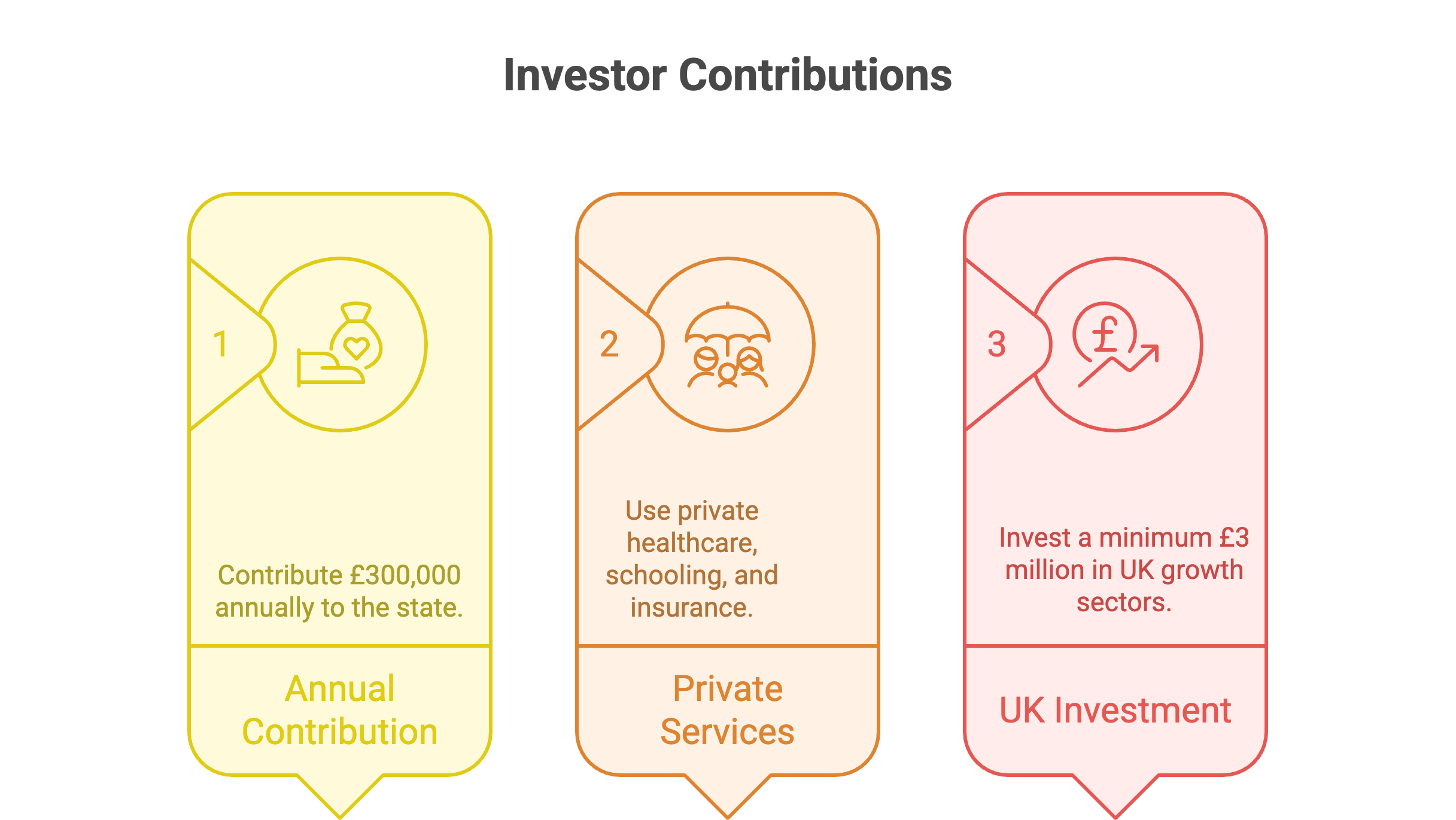
- Contribute £300,000 annually to the state
- Use private healthcare, schooling, and insurance (no burden on public services)
- Invest a minimum £3 million in UK growth sectors like life sciences and creative industries
Think of it as a membership fee to Club Britain – expensive, but with serious perks.
The Numbers That Matter
The polling data tells a fascinating story about what Brits really think about wealth and taxes.
Cross-Party Support
53% of all voters back the plan, with only 15% opposing it. The kicker – 69% of Labour voters support tax incentives for wealthy investors. That’s awkward timing for a Labour government that just killed the non-dom regime.
Economic Impact
If 1,000 wealthy individuals signed up, the think tanks project:
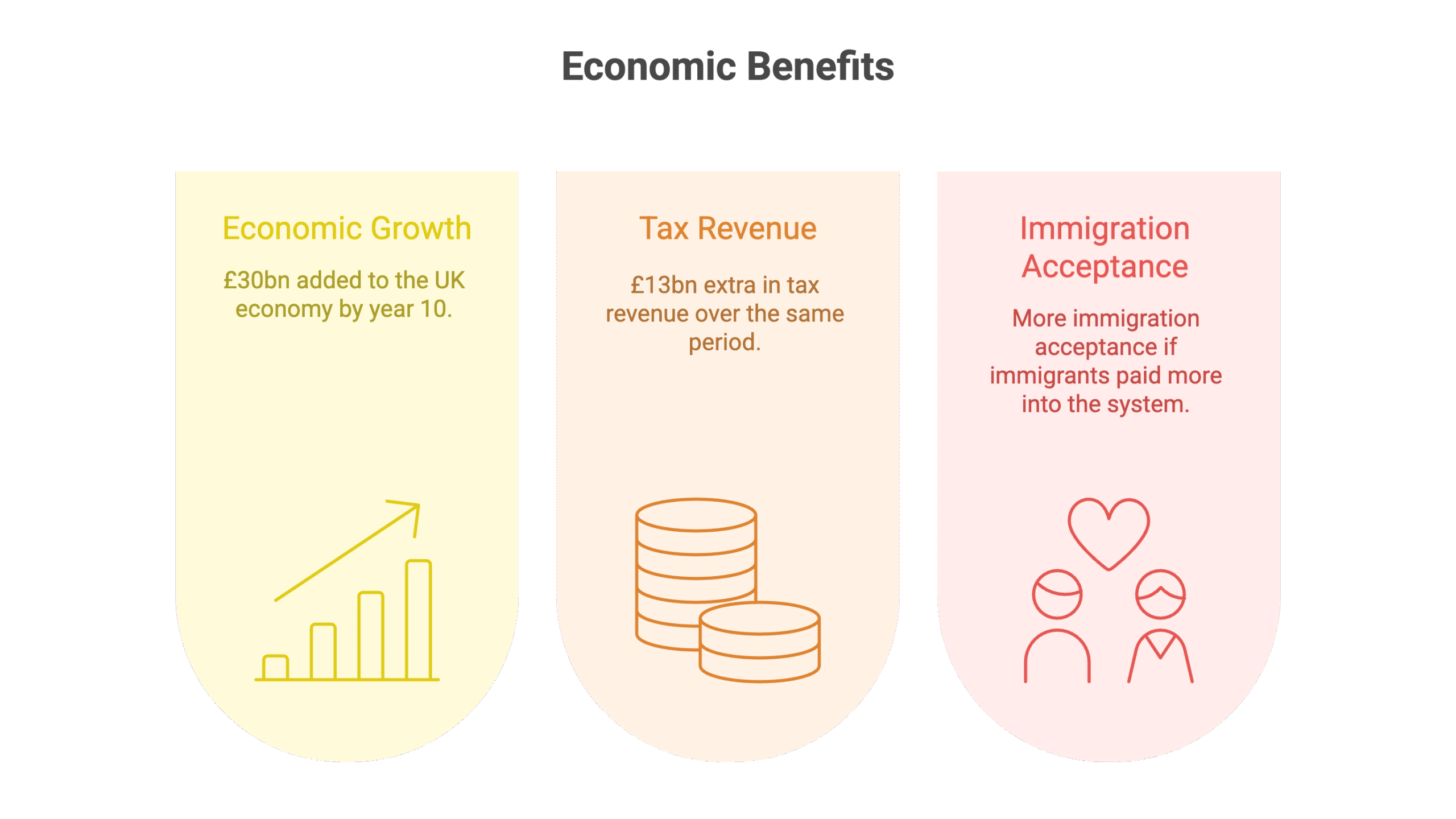
- £30bn added to the UK economy by year 10
- £13bn extra in tax revenue over the same period
- More immigration acceptance (74% of Brits would welcome it if immigrants paid more into the system)
Why This Matters Now
Global tax competition isn’t going anywhere. Countries are fighting tooth and nail to attract wealthy investors, and the UK just handed them a gift by scrapping non-dom status.
Simon Clarke, former Treasury secretary and Onward director, called it “crazy” to drive wealthy people away during a period of low growth. His point? At a time when every pound of investment counts, Britain can’t afford to get this wrong.
Shadow business secretary Andrew Griffith put it more colourfully: the government needs to reverse course “faster than a seal in a shark tank.”

The Bottom Line
The data suggests Brits aren’t anti-wealth – they’re anti-freeloading. If wealthy investors contribute significantly without draining public resources, most voters are on board.
Maxwell Marlow from the Adam Smith Institute nailed it: “If the wealthy contribute significantly and don’t draw on the state, most voters are open to their investment.”.
FAQ
Q1: How would the Prosperity Package differ from the old non-dom system?
A: Unlike the previous non-dom regime, this package requires mandatory contributions of £300,000 annually and £3 million minimum investment in UK growth sectors. It’s less of a tax dodge and more of a structured investment deal.
Q2: Which sectors would benefit from the required investments?
A: The package targets high-growth areas outlined in the government’s industrial strategy, particularly life sciences and creative industries. These sectors are seen as key to Britain’s economic future.
Q3: Why do Labour voters support tax incentives for the wealthy?
A: The polling suggests voters distinguish between wealthy individuals who contribute to the system versus those who simply avoid taxes. When investors pay into public coffers and use private services, support crosses party lines.
Q4: Could this policy actually increase tax revenue?
A: Yes, according to projections. Even with tax exemptions, the mandatory contributions and investment requirements could generate £13bn in additional revenue over 10 years if 1,000 investors participate.
Q5: What happens if wealthy investors keep leaving the UK?
A: The remaining taxpayers bear a heavier burden as the tax base shrinks. Think tanks argue that keeping wealthy investors with structured contributions is better than losing them entirely to other countries.
DISCLAIMER
Effective Date: 15th July 2025
The information provided on this website is for informational and educational purposes only and reflects the personal opinions of the author(s). It is not intended as financial, investment, tax, or legal advice.
We are not certified financial advisers. None of the content on this website constitutes a recommendation to buy, sell, or hold any financial product, asset, or service. You should not rely on any information provided here to make financial decisions.
We strongly recommend that you:
- Conduct your own research and due diligence
- Consult with a qualified financial adviser or professional before making any investment or financial decisions
While we strive to ensure that all information is accurate and up to date, we make no guarantees about the completeness, reliability, or suitability of any content on this site.
By using this website, you acknowledge and agree that we are not responsible for any financial loss, damage, or decisions made based on the content presented.
MORE NEWS








Disclosure & Editorial Standards
MJBurrows is not authorised or regulated by the Financial Conduct Authority (FCA). The content on this website — including articles, calculators, and tools — is for general informational and educational purposes only. It does not constitute personal financial, investment, tax, or legal advice and does not take into account your individual circumstances, financial situation, or objectives.
Nothing on this site is a personal recommendation to buy, sell, hold, or otherwise deal in any financial product, asset, or service. You should always conduct your own research and seek advice from a qualified, FCA-regulated financial adviser before making any financial decisions.
Our calculators produce estimates based on simplified models using HMRC-published rates for the current tax year. They cannot account for every individual circumstance and should not be relied upon as exact figures. Tax rules and rates may change — verify current rates with HMRC or a qualified tax adviser.
Projections are not guarantees. Where our tools show future values (investment growth, pension projections, compound interest), these are hypothetical illustrations based on assumed growth rates. Past performance does not guarantee future results. The value of investments can go down as well as up.
Market data displayed on this site is provided by third-party sources including Twelve Data, Yahoo Finance, and CoinGecko. We do not guarantee the accuracy, completeness, or timeliness of third-party data.
This content is designed for UK residents and reflects UK tax rules, thresholds, and legislation. It may not apply to other jurisdictions.
Using this website does not create a professional-client relationship of any kind. MJBurrows is not responsible for any financial loss, damage, or decision made based on the content presented. By using this site, you accept these terms.
This disclaimer may be updated from time to time without prior notice. Last reviewed: 23 April 2026.
MJBurrows is an independent UK personal finance publication, written and edited by Matthew Burrows. There is no parent company, no investor group, and no advertising sales team — decisions about what to cover and how to frame it are made by Matthew alone. Our full Editorial Policy sets out how the site operates in detail.
Commercial model. As of April 2026, MJBurrows generates no revenue. The site carries no display advertising, no affiliate links, no sponsored content, no paid product placements, and no pay-for-coverage arrangements. If this changes in future, it will be disclosed openly on the Editorial Policy page.
Sources. Articles and tools reference primary sources — HM Revenue & Customs (HMRC), gov.uk, the Bank of England, the Office for National Statistics (ONS), the Financial Conduct Authority (FCA), Companies House, and UK government departmental publications (DWP, Treasury). Calculator data uses HMRC-published rates for the 2026/27 tax year. Market data (tickers, asset prices) is provided by Twelve Data, Yahoo Finance, and CoinGecko.
Verification. Every published article is fact-checked before going live. Numerical claims are traced to their primary source, quotes are checked against the original speaker or document, and calculator outputs are tested against HMRC worked examples. See our verification and accuracy policy for the full process.
Corrections. If you spot an error, please report it via the Corrections page. A three-tier severity system commits to specific response times:
- Tier 1 — Urgent (material reader harm, defamatory statements, regulatory or legal issues): acknowledged within 24 hours, page actioned within 24 hours, correction published within 48 hours of confirmation.
- Tier 2 — High (significant factual errors that misinform readers): acknowledged within 3 working days, correction published within 7 working days of confirmation.
- Tier 3 — Standard (minor factual errors, dated references, missing context): acknowledged within 7 working days, correction published at the next regular content review (within the quarter).
Significant corrections are logged on the public Corrections log.
Updates and review cadence. Calculators are reviewed at least quarterly, plus event-driven updates when HMRC publishes new rates (Budget, Autumn Statement, new tax year). Guides are reviewed at least twice a year, with major rewrites whenever underlying regulation changes. Tax-year-sensitive content is prioritised for review at the April tax-year transition.
Get in touch. For editorial enquiries — corrections, story tips, reader questions — the address is contact@mjburrows.com. The contact page is at mjburrows.com/contact. Every email is read personally by Matthew.