
$126 a barrel. 7.1% in a single morning. The International Energy Agency has just called this the biggest oil supply shock in history. If you fill up your car this week, you are paying for what happens in the Strait of Hormuz right now — and Donald Trump is reportedly being briefed today on fresh military operations against Iran. Oxford Economics warns Brent could hit $190 by August.
Why Brent surged to $126 this morning
Markets read the combination as a clear sign that the next escalation is closer than the last de-escalation.
The trigger was a single news flash: the head of US Central Command is set to brief Trump later today, in a meeting markets read as the prelude to a restart of combat operations. Brent immediately printed a fresh wartime high at $126, before settling slightly lower at $122.8. WTI followed, breaching $110.
The fragile ceasefire that has held since early April is now visibly cracking. Talks scheduled for the weekend in Pakistan failed to materialise after Trump cancelled his envoys’ trip. Central Command has separately requested hypersonic missiles be deployed to the Middle East — what would be the first operational use of those weapons by the US military. Markets read the combination as a clear sign that the next escalation is closer than the last de-escalation.
The Strait of Hormuz, the chokepoint through which roughly a fifth of the world’s oil flows, remains closed to tanker traffic. Iran has refused to reopen it. The US Navy blockade of Iranian ports is now into its second month with no exit ramp visible.
The blockade is now the strategy
Trump’s tone has hardened. In a Wednesday meeting with US oil executives, he discussed maintaining the blockade “for months if needed” — language the White House confirmed in a follow-up briefing. He bluntly told reporters: “The blockade is somewhat more effective than bombing. They are choking like a stuffed pig.”
That marks a notable strategic shift. The previous play was kinetic strikes followed by ceasefire diplomacy. The new play is economic warfare — choke Iranian oil exports until Tehran returns to the negotiating table on US terms. The US has also moved to seize two Iran-linked oil tankers, which would represent a further escalation if forfeiture proceedings succeed.
The economic logic is brutal but coherent. US officials are betting that the blockade forces Iran to cap its oil wells once storage runs out — a process that takes weeks, not months, and inflicts permanent damage on producing fields. The risk runs both ways: every additional week of blockade tightens global oil supply, and the price has nowhere to go but up.
Oxford Economics put a number on the downside risk: a sustained impasse could push Brent to a staggering $190 by August. Analysts have warned of a potential global recession if the blockade extends through the summer. The IEA’s “biggest supply shock in history” framing is not hyperbole — daily passages through the Strait of Hormuz have collapsed to near zero.

How this hits UK pockets
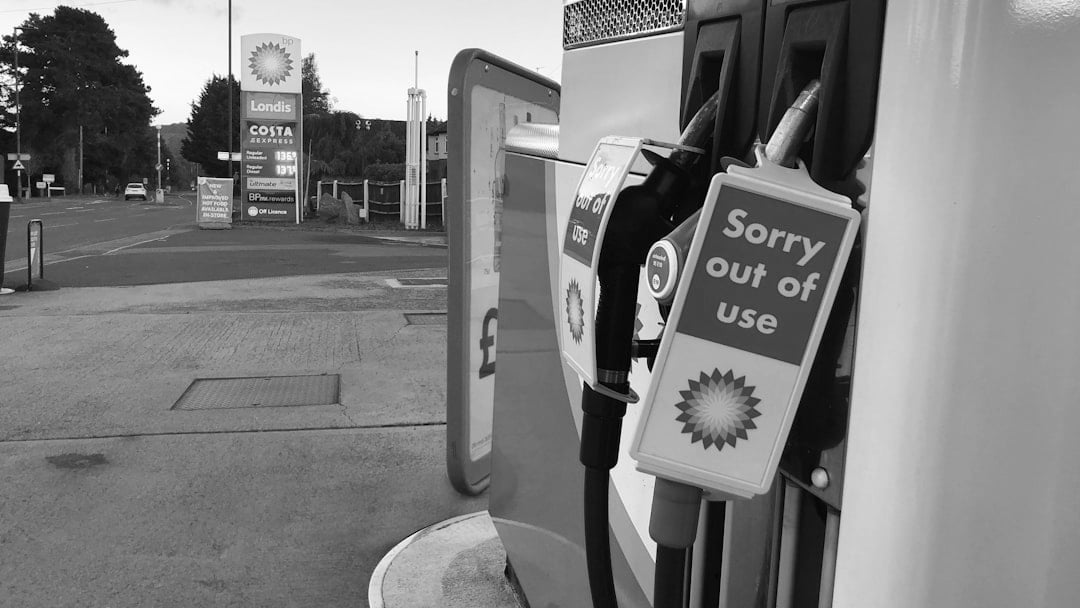
Every dollar on the Brent price feeds through to UK pump prices within days. At $126 a barrel sustained, UK petrol forecourts are looking at meaningfully higher prices through May on current refining margins. At Oxford’s $190 scenario, the maths gets ugly fast: prices that used to be worst-case quietly become the central forecast.
Energy bills are the second hit. Wholesale gas prices track oil with a short lag, and Ofgem’s autumn price cap review is now baking in a worse starting point than analysts modelled earlier this year.
The Bank of England rate path is the third hit. Every additional point of energy-driven inflation pushes the next cut further out. Markets that were pricing two cuts by December are now pricing one, with a non-trivial risk of a hike if the conflict escalates.
For UK households, the chain of consequence is direct: tanker doesn’t move → barrel goes up → forecourt goes up → bill goes up → rates stay higher → mortgage stays higher. Each step running in the same direction.

The Bottom Line
The IEA does not throw “biggest in history” around lightly. Pump prices are heading higher, energy bills are heading higher, and any UK rate cut you were counting on this summer is now meaningfully less likely. Watch the Hormuz tanker data — that is the leading indicator for everything else this quarter.
Want more like this? Sign up to The MJBurrows Briefing — our free weekly newsletter delivered every Monday morning.
FAQ
How high could Brent oil really go?
Oxford Economics has flagged $190 a barrel by August if the Hormuz impasse persists. That scenario would put oil prices well above pre-war levels and drag the global economy close to recession territory.
When will UK petrol prices reflect today’s spike?
Within days. Pump prices typically lag wholesale Brent by under a fortnight as forecourt operators work through existing inventory at older prices.
Will the Bank of England still cut rates this year?
Less likely than a month ago. Markets that were pricing two rate cuts by December are now pricing one, and a sustained $126 Brent could push the BoE to hold or even hike if energy-driven inflation breaks higher again.


Disclosure & Editorial Standards
MJBurrows is not authorised or regulated by the Financial Conduct Authority (FCA). The content on this website — including articles, calculators, and tools — is for general informational and educational purposes only. It does not constitute personal financial, investment, tax, or legal advice and does not take into account your individual circumstances, financial situation, or objectives.
Nothing on this site is a personal recommendation to buy, sell, hold, or otherwise deal in any financial product, asset, or service. You should always conduct your own research and seek advice from a qualified, FCA-regulated financial adviser before making any financial decisions.
Our calculators produce estimates based on simplified models using HMRC-published rates for the current tax year. They cannot account for every individual circumstance and should not be relied upon as exact figures. Tax rules and rates may change — verify current rates with HMRC or a qualified tax adviser.
Projections are not guarantees. Where our tools show future values (investment growth, pension projections, compound interest), these are hypothetical illustrations based on assumed growth rates. Past performance does not guarantee future results. The value of investments can go down as well as up.
Market data displayed on this site is provided by third-party sources including Twelve Data, Yahoo Finance, and CoinGecko. We do not guarantee the accuracy, completeness, or timeliness of third-party data.
This content is designed for UK residents and reflects UK tax rules, thresholds, and legislation. It may not apply to other jurisdictions.
Using this website does not create a professional-client relationship of any kind. MJBurrows is not responsible for any financial loss, damage, or decision made based on the content presented. By using this site, you accept these terms.
This disclaimer may be updated from time to time without prior notice. Last reviewed: 23 April 2026.
MJBurrows is an independent UK personal finance publication, written and edited by Matthew Burrows. There is no parent company, no investor group, and no advertising sales team — decisions about what to cover and how to frame it are made by Matthew alone. Our full Editorial Policy sets out how the site operates in detail.
Commercial model. As of April 2026, MJBurrows generates no revenue. The site carries no display advertising, no affiliate links, no sponsored content, no paid product placements, and no pay-for-coverage arrangements. If this changes in future, it will be disclosed openly on the Editorial Policy page.
Sources. Articles and tools reference primary sources — HM Revenue & Customs (HMRC), gov.uk, the Bank of England, the Office for National Statistics (ONS), the Financial Conduct Authority (FCA), Companies House, and UK government departmental publications (DWP, Treasury). Calculator data uses HMRC-published rates for the 2026/27 tax year. Market data (tickers, asset prices) is provided by Twelve Data, Yahoo Finance, and CoinGecko.
Verification. Every published article is fact-checked before going live. Numerical claims are traced to their primary source, quotes are checked against the original speaker or document, and calculator outputs are tested against HMRC worked examples. See our verification and accuracy policy for the full process.
Corrections. If you spot an error, please report it via the Corrections page. A three-tier severity system commits to specific response times:
- Tier 1 — Urgent (material reader harm, defamatory statements, regulatory or legal issues): acknowledged within 24 hours, page actioned within 24 hours, correction published within 48 hours of confirmation.
- Tier 2 — High (significant factual errors that misinform readers): acknowledged within 3 working days, correction published within 7 working days of confirmation.
- Tier 3 — Standard (minor factual errors, dated references, missing context): acknowledged within 7 working days, correction published at the next regular content review (within the quarter).
Significant corrections are logged on the public Corrections log.
Updates and review cadence. Calculators are reviewed at least quarterly, plus event-driven updates when HMRC publishes new rates (Budget, Autumn Statement, new tax year). Guides are reviewed at least twice a year, with major rewrites whenever underlying regulation changes. Tax-year-sensitive content is prioritised for review at the April tax-year transition.
Get in touch. For editorial enquiries — corrections, story tips, reader questions — the address is contact@mjburrows.com. The contact page is at mjburrows.com/contact. Every email is read personally by Matthew.