

Ever had a conversation with someone who had just bought Bitcoin for $1,000, and at the time you thought they were crazy? Well, Changpeng Zhao (CZ) — the chap who built Binance — just shared some more of his glorious wisdom that might make you rethink what “expensive” really means. Even as Bitcoin flirts with record prices, he’s telling everyone to chill out and keep stacking sats. Here’s why the crypto OG thinks we’re still early.
The “Everything Before ATH Is a Dip” Philosophy
CZ took to X on July 11th with a message that’s pure crypto zen: if you think you missed the boat on previous Bitcoin dips, relax — there’s always another one coming. The controversial kicker however: he says we’re technically still in a dip right now.
“Remember, by definition, everything before the next ATH [all-time high] is a dip,” CZ posted, turning conventional investing wisdom on its head.
It’s similar to saying every house price before the peak of the housing market was a bargain — except Bitcoin has this nifty trick where it keeps making new peaks (historically speaking, anyway).
Why Bitcoin’s Different from Your Money
While central banks can print money faster than you can count, Bitcoin has a hard cap of 21 million coins. Period. No emergency printing sessions, no “quantitative easing” fancy talk.
CZ put it simply: “There are no limits to mathematical numbers or fiat printing, only limited number of bitcoins.”
Translation please? Your pounds can multiply like rabbits, but Bitcoin stays scarce like beachfront property. And we all know what happens to scarce assets when demand picks up…
The Institutional Money Has Entered the Chat
While retail investors debate whether to buy or wait, the big money is already moving. Here’s what’s driving the current momentum:
Growing Institutional Interest
Remember when Bitcoin was just for tech nerds and libertarians? Now you’ve got suits from Wall Street piling in. The institutional adoption isn’t just talk anymore — it’s showing up in the numbers.
ETF Inflows Are Real
Those Bitcoin ETFs everyone was waiting for? They’re here, and money is flowing in like coffee at a Monday morning meeting. Standard Chartered thinks these inflows could help push BTC to $200,000 by Q4.
The Macro Picture Looks Spicy
With inflation still a thing and trust in traditional systems wobbling, Bitcoin’s looking more like digital gold to many investors. When your purchasing power keeps shrinking, a deflationary asset starts looking pretty attractive.

The Bulls Are Getting Bold with Price Predictions
Speaking of $200,000, that’s not even the wildest prediction out there:
- Bitwise CIO Matt Hougan: Sees $200,000 by year-end thanks to institutional demand meeting limited supply
- Standard Chartered: Also in the $200,000 camp for Q4, citing ETF momentum
- Robert Kiyosaki & Arthur Hayes: These guys are thinking bigger — like $1 million per coin bigger. Sure, it sounds mental now, but so did $69,000 back in 2013
Should You Actually Buy Every Dip?
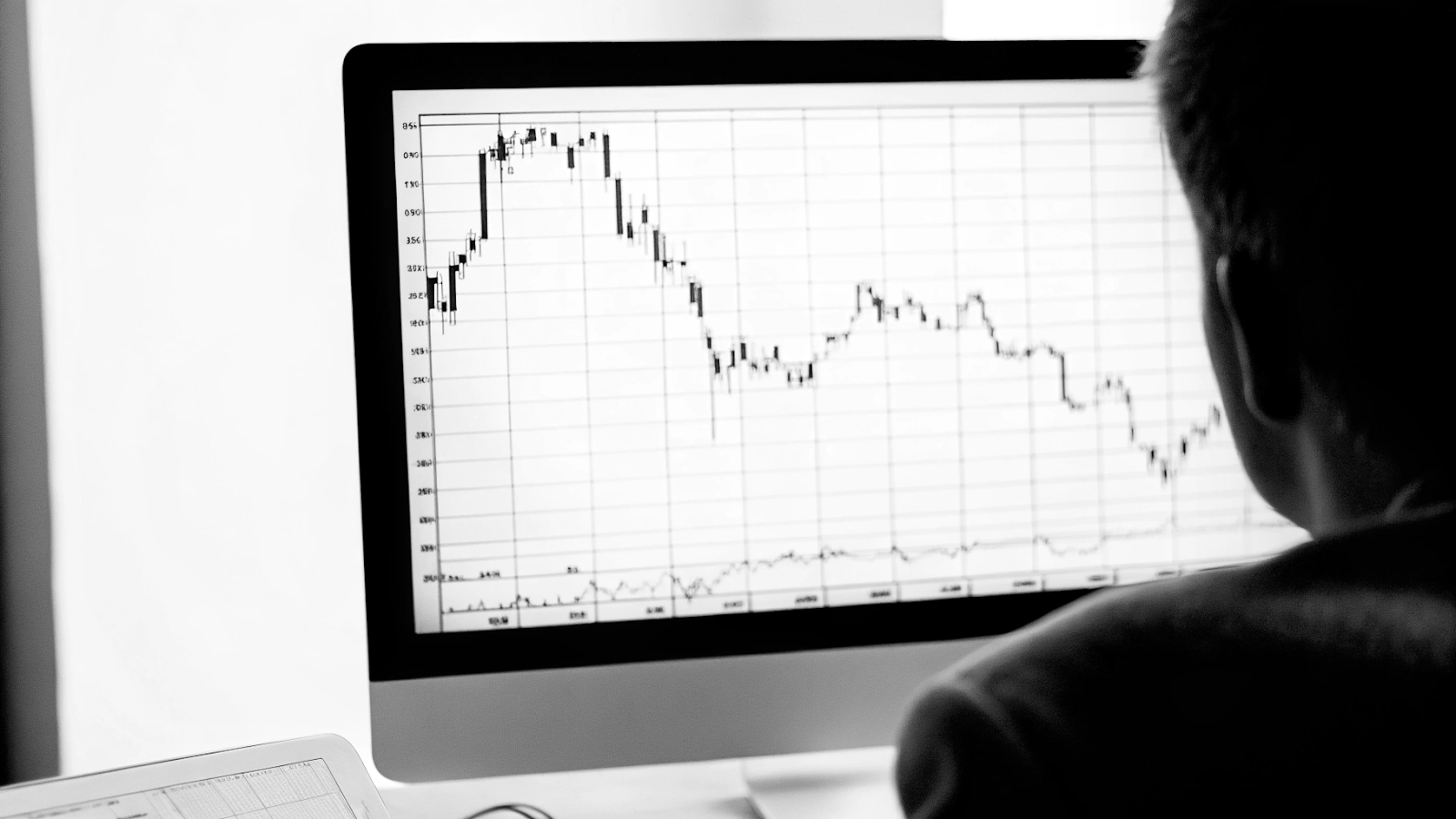
Look, CZ’s philosophy sounds great on paper (or on X), but let’s catch our breath for a second. Bitcoin’s volatility can make your jaw drop faster than Tottenham Hotspur spending money in a transfer window. The “buy every dip” strategy has worked historically, but past performance… you know the rest.
What smart money seems to agree on:
- Pound-cost averaging beats trying to time the market
- Only invest what you can afford to lose (seriously)
- Think in years, not days
- Maybe don’t check the price every five minutes
The Critics Haven’t Gone Away
Not everyone’s drinking the Bitcoin cocktail. Critics point to:
- Regulatory uncertainty (governments aren’t exactly Bitcoin’s best friend)
- Environmental concerns (though the industry’s working on it)
- Price volatility that can wipe out gains FAST
But, these criticisms have been around since Bitcoin was worth pizza money, and yet here we are.
What This Means for Your Portfolio
Whether you’re a Bitcoin believer or skeptic, CZ’s message highlights an important investing principle: perspective matters. What looks expensive today might look cheap tomorrow — or vice versa.
The real question isn’t whether Bitcoin will hit another all-time high (history suggests it probably will), but whether you’ve got the stomach for the ride and the patience to think long-term.

Key Takeaways: Your Bitcoin Cheat Sheet
- CZ’s Core Message: We’re always in a dip until the next all-time high
- The Scarcity Play: 21 million Bitcoin vs. unlimited fiat printing
- Institutional Momentum: Big money’s moving in, not out
- Price Predictions: Range from $200K (conservative?) to $1M (moon maths?)
- Smart Strategy: Think long-term, don’t panic, don’t bet the house
Ready to join the “everything’s a dip” club? Start small, stay informed, and remember — in crypto, the only constant is change.
Want more insights on navigating the wild world of digital assets? Keep reading, keep learning, and maybe keep some cash on the sidelines for those future dips CZ promises are coming.
FAQ: Your Burning Bitcoin Questions Answered
Q1: Is Bitcoin really still in a dip if it’s near all-time highs?
A: According to CZ’s logic, yes — anything below the next record high counts as a dip. It’s a mindset thing. If Bitcoin hits $150,000 next year, today’s prices will look like a massive discount. Of course, that’s a big “if.”
Q2: How much Bitcoin should I own?
A: The safe answer? Only what you can afford to lose entirely. Many financial advisers suggest 1-5% of your portfolio for high-risk assets. Some Bitcoin bulls go way higher, but that’s between you and your risk tolerance.
Q3: Why do people like CZ think Bitcoin will keep going up?
A: It boils down to supply and demand. Bitcoin’s supply is capped at 21 million coins, while demand keeps growing from institutions, corporations, and countries. When supply is fixed and demand increases, prices typically follow.
Q4: What’s driving institutional interest in Bitcoin?
A: Three big factors: inflation hedging (protecting against currency devaluation), portfolio diversification (Bitcoin often moves independently from stocks), and FOMO (nobody wants to miss the next big rally). Plus, those new ETFs make it way easier for big money to get in.
Q5: Should I wait for a bigger dip to buy Bitcoin?
A: Timing the market is tough — even pros get it wrong. That’s why many investors use pound-cost averaging: buying a fixed amount regularly regardless of price. It’s boring but effective. Waiting for the “perfect” dip often means missing out entirely.
DISCLAIMER
Effective Date: 15th July 2025
The information provided on this website is for informational and educational purposes only and reflects the personal opinions of the author(s). It is not intended as financial, investment, tax, or legal advice.
We are not certified financial advisers. None of the content on this website constitutes a recommendation to buy, sell, or hold any financial product, asset, or service. You should not rely on any information provided here to make financial decisions.
We strongly recommend that you:
- Conduct your own research and due diligence
- Consult with a qualified financial adviser or professional before making any investment or financial decisions
While we strive to ensure that all information is accurate and up to date, we make no guarantees about the completeness, reliability, or suitability of any content on this site.
By using this website, you acknowledge and agree that we are not responsible for any financial loss, damage, or decisions made based on the content presented.
MORE NEWS








Disclosure & Editorial Standards
MJBurrows is not authorised or regulated by the Financial Conduct Authority (FCA). The content on this website — including articles, calculators, and tools — is for general informational and educational purposes only. It does not constitute personal financial, investment, tax, or legal advice and does not take into account your individual circumstances, financial situation, or objectives.
Nothing on this site is a personal recommendation to buy, sell, hold, or otherwise deal in any financial product, asset, or service. You should always conduct your own research and seek advice from a qualified, FCA-regulated financial adviser before making any financial decisions.
Our calculators produce estimates based on simplified models using HMRC-published rates for the current tax year. They cannot account for every individual circumstance and should not be relied upon as exact figures. Tax rules and rates may change — verify current rates with HMRC or a qualified tax adviser.
Projections are not guarantees. Where our tools show future values (investment growth, pension projections, compound interest), these are hypothetical illustrations based on assumed growth rates. Past performance does not guarantee future results. The value of investments can go down as well as up.
Market data displayed on this site is provided by third-party sources including Twelve Data, Yahoo Finance, and CoinGecko. We do not guarantee the accuracy, completeness, or timeliness of third-party data.
This content is designed for UK residents and reflects UK tax rules, thresholds, and legislation. It may not apply to other jurisdictions.
Using this website does not create a professional-client relationship of any kind. MJBurrows is not responsible for any financial loss, damage, or decision made based on the content presented. By using this site, you accept these terms.
This disclaimer may be updated from time to time without prior notice. Last reviewed: 23 April 2026.
MJBurrows is an independent UK personal finance publication, written and edited by Matthew Burrows. There is no parent company, no investor group, and no advertising sales team — decisions about what to cover and how to frame it are made by Matthew alone. Our full Editorial Policy sets out how the site operates in detail.
Commercial model. As of April 2026, MJBurrows generates no revenue. The site carries no display advertising, no affiliate links, no sponsored content, no paid product placements, and no pay-for-coverage arrangements. If this changes in future, it will be disclosed openly on the Editorial Policy page.
Sources. Articles and tools reference primary sources — HM Revenue & Customs (HMRC), gov.uk, the Bank of England, the Office for National Statistics (ONS), the Financial Conduct Authority (FCA), Companies House, and UK government departmental publications (DWP, Treasury). Calculator data uses HMRC-published rates for the 2026/27 tax year. Market data (tickers, asset prices) is provided by Twelve Data, Yahoo Finance, and CoinGecko.
Verification. Every published article is fact-checked before going live. Numerical claims are traced to their primary source, quotes are checked against the original speaker or document, and calculator outputs are tested against HMRC worked examples. See our verification and accuracy policy for the full process.
Corrections. If you spot an error, please report it via the Corrections page. A three-tier severity system commits to specific response times:
- Tier 1 — Urgent (material reader harm, defamatory statements, regulatory or legal issues): acknowledged within 24 hours, page actioned within 24 hours, correction published within 48 hours of confirmation.
- Tier 2 — High (significant factual errors that misinform readers): acknowledged within 3 working days, correction published within 7 working days of confirmation.
- Tier 3 — Standard (minor factual errors, dated references, missing context): acknowledged within 7 working days, correction published at the next regular content review (within the quarter).
Significant corrections are logged on the public Corrections log.
Updates and review cadence. Calculators are reviewed at least quarterly, plus event-driven updates when HMRC publishes new rates (Budget, Autumn Statement, new tax year). Guides are reviewed at least twice a year, with major rewrites whenever underlying regulation changes. Tax-year-sensitive content is prioritised for review at the April tax-year transition.
Get in touch. For editorial enquiries — corrections, story tips, reader questions — the address is contact@mjburrows.com. The contact page is at mjburrows.com/contact. Every email is read personally by Matthew.