
Remember when 2% inflation felt like a distant dream? Well, it just got further away. The UK’s Consumer Price Index is expected to leap to 3.3% for the year to March — up from 3.0% in February — and the Iran conflict is pouring fuel on an already smouldering fire. Natural gas prices climbed as much as 50% in March alone. Brent crude blasted past $100 a barrel before settling around $95. And if you’ve filled up your car or booked a flight recently, you already feel it. Here’s where the pain is hitting hardest — and why it probably isn’t over yet.
Energy Bills: The First Domino to Fall
The Iran war sent shockwaves through global energy markets almost overnight. Heating oil prices nearly doubled when the conflict erupted, and UK natural gas prices surged up to 50% higher through March.
For households, this translates into real, measurable pain. Goldman Sachs estimates the consumer energy impact alone adds 0.4 percentage points to headline inflation. That might sound modest on paper, but when you’re already stretched by frozen tax thresholds and stealth taxes quietly eating into take-home pay, every fraction of a percent matters.
James Moberly at Goldman Sachs broke the impact into two channels: “First, households on new fixed rate electricity and gas contracts will have experienced a price increase. Second, heating oil prices nearly doubled at the start of the conflict.”
Translation? Whether you’re on a fixed deal or heating with oil, you’re paying more. There’s no hiding from this one.

At the Pumps: Petrol and Diesel Take Off
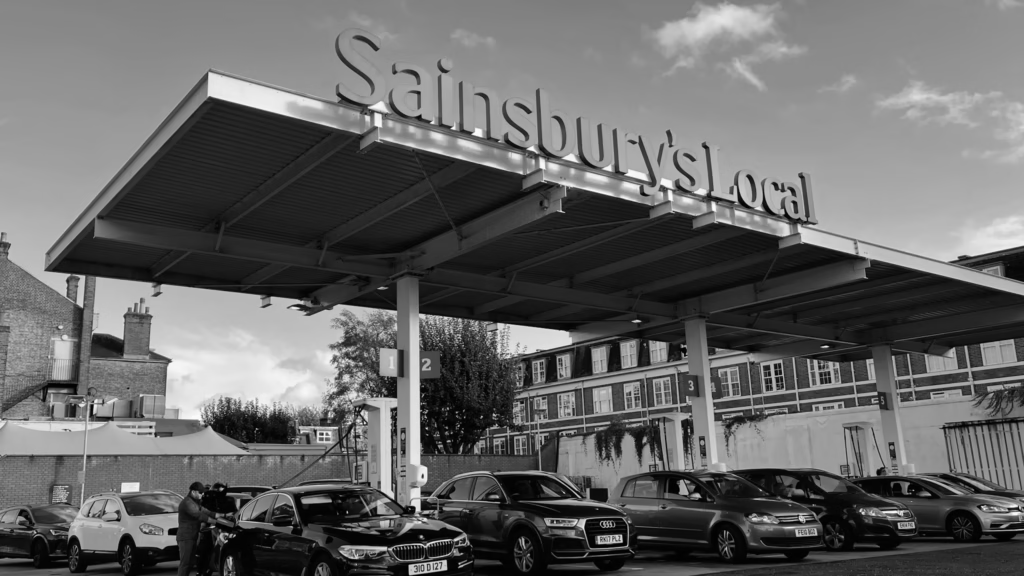
If you drive, March was brutal. Petrol prices jumped 6.5% in a single month. Diesel? Up more than 12%.
Brent crude surging past the $100 mark — a level not seen since the post-pandemic squeeze — was the trigger. And while prices have since eased to around $95 a barrel, that relief hasn’t fully reached the forecourt yet. Fuel retailers are notoriously slow to pass on falling wholesale costs (funny how it never works the other way round).
For commuters, delivery drivers, and small businesses reliant on road transport, this is a direct hit to the bottom line. And because fuel feeds into the cost of virtually everything — from supermarket logistics to construction materials — the ripple effects extend well beyond the petrol station.
Airfares: Buckle Up for Sticker Shock
Here’s a number that might make you rethink that summer booking: Barclays estimates airfares could have risen by up to 14% in March alone.
Jack Meaning, Barclays’ chief UK economist, noted that the rise in airfares was “greater than previously expected,” with inflation “driven higher than seasonal averages for March.” Jet fuel costs, insurance premiums on conflict-adjacent routes, and rerouted flight paths are all conspiring to push ticket prices skyward.
This matters for the headline CPI figure because airfares carry meaningful weight in the inflation basket — and a 14% monthly swing is enormous. If you booked Easter or summer flights early, congratulations. If you didn’t, brace yourself.

Rent and Mortgages: The Slow Squeeze Continues
While energy and fuel grab the headlines, the quieter inflation pressure is coming from where you live. Rents rose 0.4% in March alone — that’s 3.6% higher than a year ago — and mortgage interest payments ticked up another 0.2%.
Services inflation is forecast to come in at 4.4%, significantly above the Bank of England’s comfort zone. And here’s the kicker: unlike fuel prices, which can swing back down when crude retreats, rent increases tend to be sticky. Landlords rarely cut rents just because oil prices dip.
This puts the Bank of England in an increasingly awkward position. Cut rates to support a faltering economy showing signs of stagflation, and you risk stoking inflation further. Hold rates high, and you squeeze households already buckling under the pressure. It’s the classic central banking tightrope — and the Iran conflict just added a crosswind.
The Bottom Line
Wednesday’s ONS release will confirm the numbers, but the trajectory is clear: inflation is moving in the wrong direction. With services running hot at 4.4%, energy costs elevated, and rent grinding higher, the idea of a quick return to the Bank of England’s 2% target looks increasingly like wishful thinking.
The real question isn’t whether inflation hit 3.3% in March — it’s whether this is a temporary war-driven spike or the start of a more stubborn trend. If crude stays above $90 and energy markets remain jittery, don’t be surprised if April’s reading is even worse. Anyone betting on rate cuts before autumn might want to reconsider that wager.
Want more like this? Sign up to The MJBurrows Briefing—our free weekly newsletter delivered every Monday morning.
FAQ
How does the Iran conflict affect UK inflation differently from previous oil shocks?
Unlike the 2022 energy crisis, which was primarily a gas supply story, this shock hits both crude oil and natural gas simultaneously while also disrupting aviation routes. The dual impact on transport fuel and household energy creates a broader inflationary impulse that’s harder for policymakers to isolate and manage.
Could UK inflation breach 4% again in 2026?
If Brent crude sustains levels above $100 and the conflict escalates further — particularly involving Strait of Hormuz shipping lanes — some City forecasters believe a 4% print is plausible by summer. The key variable is whether OPEC+ members increase output to offset supply disruptions, which remains politically uncertain.
Are there any sectors benefiting from this inflationary environment?
Energy producers, defence contractors, and companies with strong pricing power — such as premium consumer brands and infrastructure firms with inflation-linked contracts — tend to outperform during periods of cost-push inflation. UK-listed oil majors have already seen share price gains since the conflict began, offering a partial hedge for equity investors.
What should renters do to protect themselves from rising housing costs?
Locking in a longer tenancy agreement now — if your landlord offers one — could shield you from further increases over the next 12 months. Renters should also check eligibility for local housing allowance or council tax support, as thresholds may be adjusted if inflation continues to overshoot government forecasts.
How reliable are these inflation forecasts given wartime uncertainty?
Consensus forecasts tend to underestimate inflation during active conflicts because models struggle to price in supply chain disruptions and sentiment shifts in real time. The 3.3% figure is a central estimate — the actual print could land anywhere between 3.1% and 3.5%, depending on how volatile March’s final energy and transport data prove to be.



Disclosure & Editorial Standards
MJBurrows is not authorised or regulated by the Financial Conduct Authority (FCA). The content on this website — including articles, calculators, and tools — is for general informational and educational purposes only. It does not constitute personal financial, investment, tax, or legal advice and does not take into account your individual circumstances, financial situation, or objectives.
Nothing on this site is a personal recommendation to buy, sell, hold, or otherwise deal in any financial product, asset, or service. You should always conduct your own research and seek advice from a qualified, FCA-regulated financial adviser before making any financial decisions.
Our calculators produce estimates based on simplified models using HMRC-published rates for the current tax year. They cannot account for every individual circumstance and should not be relied upon as exact figures. Tax rules and rates may change — verify current rates with HMRC or a qualified tax adviser.
Projections are not guarantees. Where our tools show future values (investment growth, pension projections, compound interest), these are hypothetical illustrations based on assumed growth rates. Past performance does not guarantee future results. The value of investments can go down as well as up.
Market data displayed on this site is provided by third-party sources including Twelve Data, Yahoo Finance, and CoinGecko. We do not guarantee the accuracy, completeness, or timeliness of third-party data.
This content is designed for UK residents and reflects UK tax rules, thresholds, and legislation. It may not apply to other jurisdictions.
Using this website does not create a professional-client relationship of any kind. MJBurrows is not responsible for any financial loss, damage, or decision made based on the content presented. By using this site, you accept these terms.
This disclaimer may be updated from time to time without prior notice. Last reviewed: April 2026.
MJBurrows is an independent UK financial news and analysis site. We maintain full editorial independence and currently receive no payment for coverage, no affiliate commissions, and no commercial incentives that influence our editorial content.
Our sources: Articles reference primary sources including the Bank of England, Office for National Statistics (ONS), HM Revenue & Customs (HMRC), the Financial Conduct Authority (FCA), and gov.uk. Calculator data uses HMRC-published rates for the 2026/27 tax year.
Corrections: If we identify an error in any article or calculator, we correct it promptly and note the correction where appropriate.