Introduction
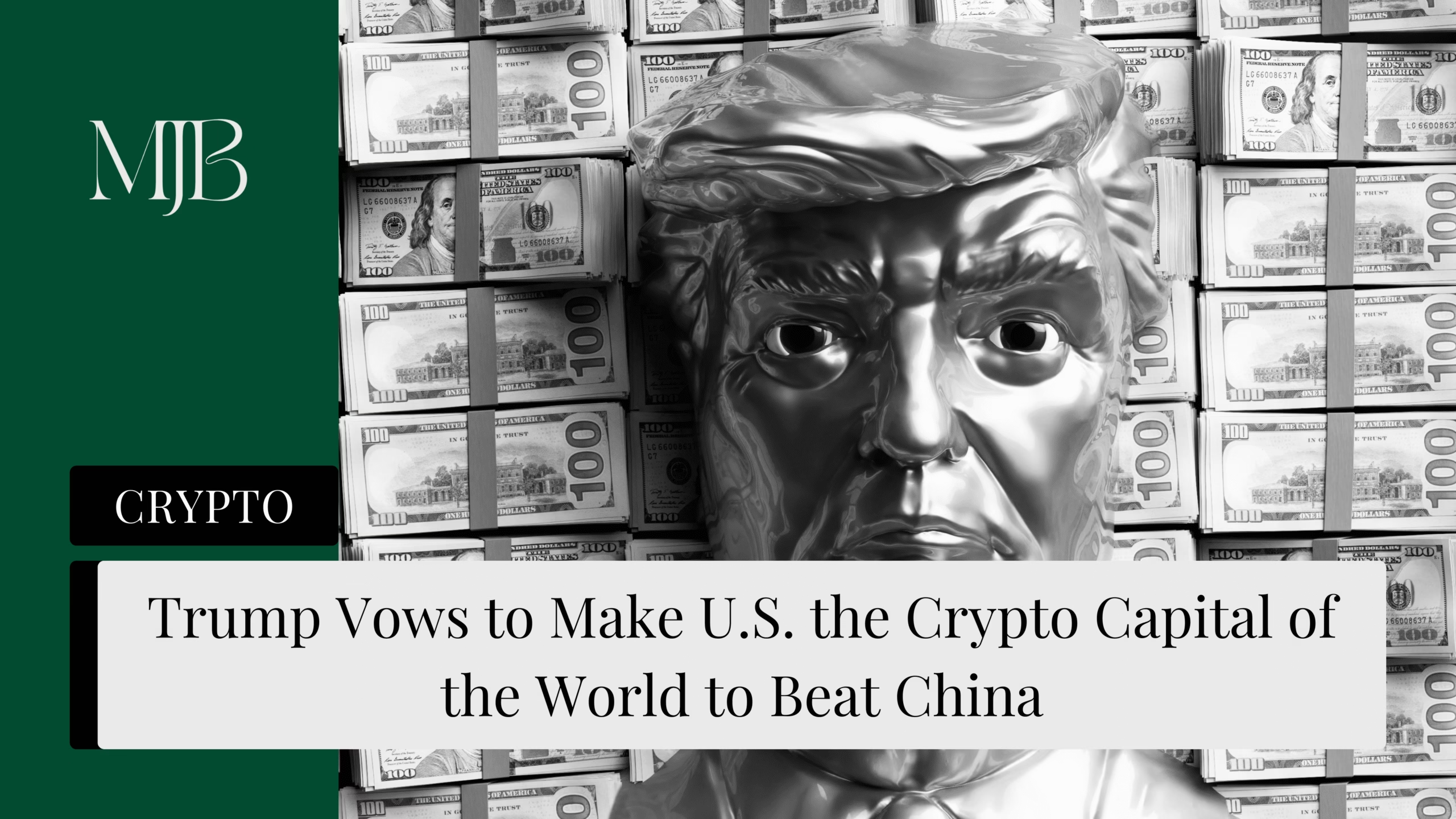
Donald Trump just declared America the “crypto capital of the world” — and he’s not being subtle about why. Speaking at Davos, the U.S. President credited his administration’s crypto-friendly legislation for securing the country’s digital asset dominance, with one eye firmly on China. His motivation? Partly political support (crypto PACs pumped hundreds of millions into the 2024 election), and partly keeping Beijing from stealing the crown. With stablecoin rules signed and broader market structure bills in the pipeline, Trump’s betting big that crypto regulation is both politically smart and strategically vital.
Trump’s Crypto Strategy: Politics Meets Geopolitics
Trump didn’t hold back at the World Economic Forum in Davos, Switzerland. He told world leaders and bankers that crypto legislation was a top priority for two reasons: political backing and beating China.
“I got tremendous political support,” Trump admitted. And the numbers back him up. Crypto companies funnelled hundreds of millions of dollars through political action committees (PACs) during the 2024 U.S. election, backing candidates who supported digital asset-friendly policies. Those same PACs are now gearing up for the 2026 midterm elections.
But Trump’s second reason is arguably more significant. “China wanted that market too,” he said. “We have to make it so that China doesn’t get hold of it.”
It’s a familiar playbook. Just as the U.S. and China are racing for artificial intelligence dominance, Trump sees crypto as another battleground where America can’t afford to lose ground.
The GENIUS Act: Stablecoins Take Centre Stage
Trump claimed he signed the “landmark GENIUS Act” last year, legislation focused on stablecoins — digital currencies pegged to traditional assets like the U.S. dollar. Stablecoins have become the backbone of crypto trading, offering stability in a notoriously volatile market.
By regulating stablecoins first, the U.S. is laying the groundwork for broader crypto adoption whilst maintaining oversight. It’s a calculated move: establish clear rules for the most widely used crypto tools, then expand from there.
Trump described the Act as a way to cement America’s leadership before China could establish its own regulatory framework and attract global crypto businesses.
What’s Next: Market Structure Bills in the Works
Stablecoins are just the start. Trump said Congress is now working on broader market structure rules for the crypto industry, which he hopes to sign “very soon.”
The U.S. Senate is currently pushing legislation through two committees. One committee is expected to release draft legislation later this week, whilst the other pulled a vote last week and is still refining its proposals.
These bills aim to create comprehensive rules for how crypto assets are traded, taxed, and regulated — filling the gaps that have left the industry in regulatory limbo for years. If passed, they could provide the clarity crypto companies have been demanding whilst giving the U.S. a competitive edge over other jurisdictions.
Why This Matters: The Crypto Capital Race
Trump’s push isn’t happening in a vacuum. China has already launched its digital yuan, a central bank digital currency (CBDC) that gives Beijing tight control over digital payments. Whilst stablecoins and CBDCs aren’t identical, they both represent the future of digital finance.
By backing stablecoin legislation and broader crypto rules, Trump is positioning the U.S. as the go-to destination for crypto innovation. That means attracting businesses, investors, and developers who might otherwise look to more crypto-friendly jurisdictions like Singapore or the UAE.
It’s also about maintaining financial influence. If the dollar remains the dominant currency backing stablecoins, the U.S. extends its monetary power into the digital age. Lose that race, and China could set the terms instead.
The Political Calculations Behind Crypto Policy
Trump’s candour about the political motivations is refreshing, if not surprising. Crypto has become a single-issue voting bloc for some, and the industry has shown it’s willing to spend big to back friendly candidates.
During the 2024 election cycle, crypto PACs donated heavily to candidates who supported digital asset legislation. Now, with the midterms approaching, those same groups are preparing to flex their financial muscle again.
For Trump, backing crypto isn’t just about technology or economics — it’s about securing a base of well-funded political support whilst outmanoeuvring China. That’s a win-win in his book.

Conclusion
Trump’s crypto push is equal parts political strategy and geopolitical chess. By signing stablecoin legislation and pushing for broader market structure rules, he’s betting that America can dominate the digital asset space before China does. With hundreds of millions in crypto PAC money backing him and Senate bills in the works, the U.S. is making a serious play to become the undisputed crypto capital of the world. Whether that gamble pays off depends on how quickly Congress can turn proposals into law — and whether the rest of the world plays along.
Want to stay ahead of crypto policy shifts? Keep an eye on Senate committee updates and watch how global markets respond to U.S. regulatory moves.
FAQ
Q1: What is the GENIUS Act that Trump mentioned?
A: The GENIUS Act is stablecoin-focused legislation that Trump claims to have signed, aimed at regulating digital currencies pegged to traditional assets like the U.S. dollar. It’s designed to establish clear rules for stablecoins, which are widely used in crypto trading, and prevent China from dominating the space.
Q2: Why is Trump prioritising crypto legislation?
A: Trump stated two reasons: first, he received significant political support from the crypto industry, with PACs donating hundreds of millions during the 2024 election. Second, he wants to prevent China from taking the lead in the digital asset market, viewing it as a strategic competition similar to the AI race.
Q3: What are market structure bills, and when will they pass?
A: Market structure bills are comprehensive legislation that would establish rules for how crypto assets are traded, taxed, and regulated in the U.S. The Senate is currently working on these bills through two committees, with draft legislation expected soon, though Trump did not provide a specific timeline beyond “very soon.”
Q4: How much money has the crypto industry spent on U.S. politics?
A: Crypto companies have supported political action committees with hundreds of millions of dollars, heavily donating to candidates during the 2024 U.S. election. These same PACs are now preparing to influence the 2026 midterm elections, making crypto a significant political force.
Q5: Why does Trump compare crypto to AI when discussing China?
A: Trump views both crypto and AI as strategic markets where the U.S. must maintain dominance over China. He believes controlling these technologies is crucial for America’s economic and geopolitical power, similar to historical races for technological supremacy between competing nations.
DISCLAIMER
Effective Date: 15th July 2025
The information provided on this website is for informational and educational purposes only and reflects the personal opinions of the author(s). It is not intended as financial, investment, tax, or legal advice.
We are not certified financial advisers. None of the content on this website constitutes a recommendation to buy, sell, or hold any financial product, asset, or service. You should not rely on any information provided here to make financial decisions.
We strongly recommend that you:
- Conduct your own research and due diligence
- Consult with a qualified financial adviser or professional before making any investment or financial decisions
While we strive to ensure that all information is accurate and up to date, we make no guarantees about the completeness, reliability, or suitability of any content on this site.
By using this website, you acknowledge and agree that we are not responsible for any financial loss, damage, or decisions made based on the content presented.