Introduction
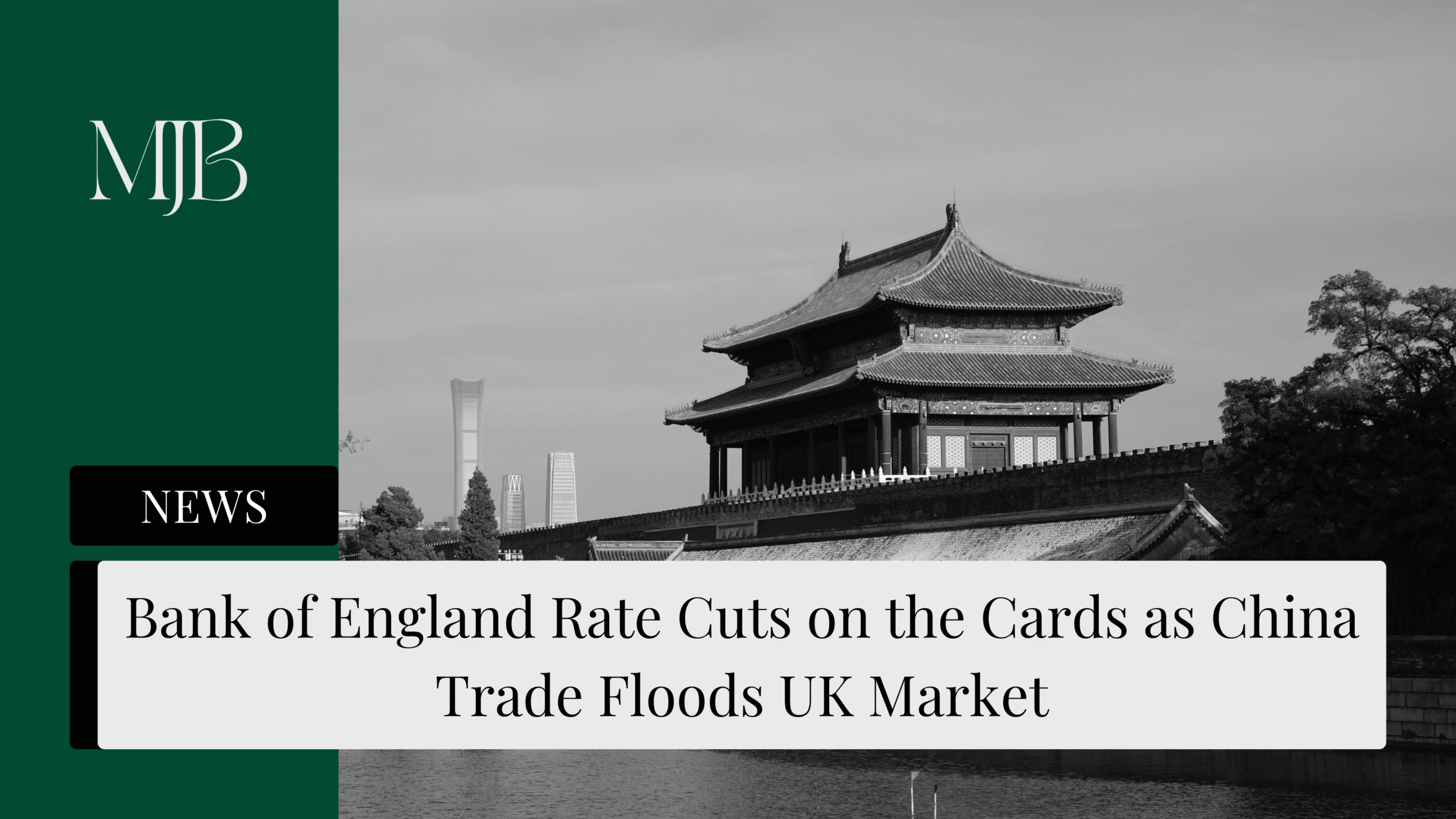
Here’s a plot twist the markets didn’t see coming: cheap Chinese goods flooding into the UK might actually be your ticket to lower interest rates. Alan Taylor, the Bank of England’s most dovish rate-setter, just dropped a bombshell in Singapore—Trump’s tariff war is redirecting billions in Chinese exports straight to Britain’s doorstep, and it’s going to crush inflation faster than anyone expected. Translation? Interest rate cuts could arrive sooner than the Bank’s been letting on.
Why Chinese Goods Are Heading to the UK Instead of the US
Trump’s tariff circus has created an unexpected winner: the UK import market.
Chinese exporters, locked out of their biggest customer (the US), are now diverting goods to Britain and the EU. Taylor, speaking at the National University of Singapore, said there’s mounting evidence this trade diversion is “intensifying”—and it’s actually reducing the risk of a global trade collapse.
The numbers back him up. China’s December trade data showed exports to the EU jumped 8.4% whilst US-bound shipments tanked. China’s overall trade surplus now sits at a staggering $1.2 trillion, proving Beijing’s found workarounds to Trump’s tariff tantrums.
For the UK, that means cheaper imports across the board—from electronics to clothing—putting downward pressure on consumer prices.
How Much Could Inflation Actually Fall?
Taylor thinks the Bank of England’s being too cautious with its predictions.
Official forecasts suggest trade diversion could shave 0.2 percentage points off UK inflation over the next two years. Taylor’s calling that “conservative.” He reckons actual inflation will undershoot the Bank’s projections significantly.
Budget Measures Add Extra Firepower
Chancellor Rachel Reeves’ energy subsidy measures are doing heavy lifting too. Those policies alone could cut headline inflation by 0.5 percentage points this year.
Taylor’s bold claim? The UK could hit the 2% inflation target by mid-2026 rather than next year, as the Bank originally forecast. With wage growth cooling off, he sees this as sustainable, not a temporary blip.

Interest Rates Should Fall “Sooner Rather Than Later”
If Taylor’s forecast proves accurate, expect the Bank to normalise interest rates faster than markets are pricing in.
“Interest rates should continue on a downward path,” Taylor said, “if my outlook continues to match up with the data, as it has done over the past year.” That’s central banker speak for “I’ve been right before, and I’ll be right again.”
His stance puts him at odds with recent Bank messaging. After Trump’s April “Liberation Day” tariff announcements, policymakers insisted global trade tensions weren’t heavily influencing their rate decisions. Taylor’s clearly broken from that script.

The Trump Wildcard That Could Change Everything
China’s not out of the woods yet.
Beyond “reciprocal” tariffs and fentanyl-related levies, Trump’s threatened a brutal 25% tariff on any country doing serious business with Iran. Given China’s major commercial ties to Tehran—and Iran’s current political instability with mass protests against the Ayatollah—Beijing could face another tariff hammer.
If that materialises, trade diversion patterns could shift again. More goods to the UK and EU? Possibly. But rising geopolitical uncertainty makes forecasting trickier by the day.
Conclusion
Taylor’s betting that Chinese trade diversion will deliver lower inflation and faster interest rate cuts than the Bank’s officially forecasting. If cheap imports keep flowing and wage growth stays subdued, Britain could hit 2% inflation six months early—making rate cuts a near-certainty by summer. Keep watching the data, because if Taylor’s track record holds, your mortgage payments might get cheaper sooner than you think.
Want to stay ahead of UK interest rate moves? Track inflation data releases and MPC minutes for early signals of policy shifts.
FAQ
Q1: Who is Alan Taylor and why does his opinion matter?
A: Taylor’s an external member of the Bank of England’s Monetary Policy Committee and widely regarded as its most dovish rate-setter. His views carry weight because he’s consistently predicted inflation trends accurately over the past year.
Q2: What is trade diversion and how does it affect UK inflation?
A: Trade diversion occurs when goods originally destined for one market (the US) get redirected elsewhere (UK and EU) due to tariffs. This floods receiving markets with cheaper imports, lowering consumer prices and suppressing inflation.
Q3: Could the Bank of England cut rates before mid-2026?
A: It’s possible. If inflation hits 2% by mid-2026 as Taylor predicts, the MPC would have justification for accelerating rate cuts—though official guidance remains more cautious than Taylor’s individual forecast.
Q4: What happens if Trump slaps 25% tariffs on China over Iran ties?
A: It could disrupt current trade diversion patterns. China might redirect even more goods to the UK and EU, further lowering inflation, or global trade uncertainty could create new inflationary pressures elsewhere in the economy.
Q5: How do energy subsidies fit into the inflation picture?
A: The government’s Budget measures on energy subsidies are expected to cut headline inflation by roughly 0.5 percentage points in 2025, working alongside trade diversion effects to push inflation toward the 2% target faster.
DISCLAIMER
Effective Date: 15th July 2025
The information provided on this website is for informational and educational purposes only and reflects the personal opinions of the author(s). It is not intended as financial, investment, tax, or legal advice.
We are not certified financial advisers. None of the content on this website constitutes a recommendation to buy, sell, or hold any financial product, asset, or service. You should not rely on any information provided here to make financial decisions.
We strongly recommend that you:
- Conduct your own research and due diligence
- Consult with a qualified financial adviser or professional before making any investment or financial decisions
While we strive to ensure that all information is accurate and up to date, we make no guarantees about the completeness, reliability, or suitability of any content on this site.
By using this website, you acknowledge and agree that we are not responsible for any financial loss, damage, or decisions made based on the content presented.