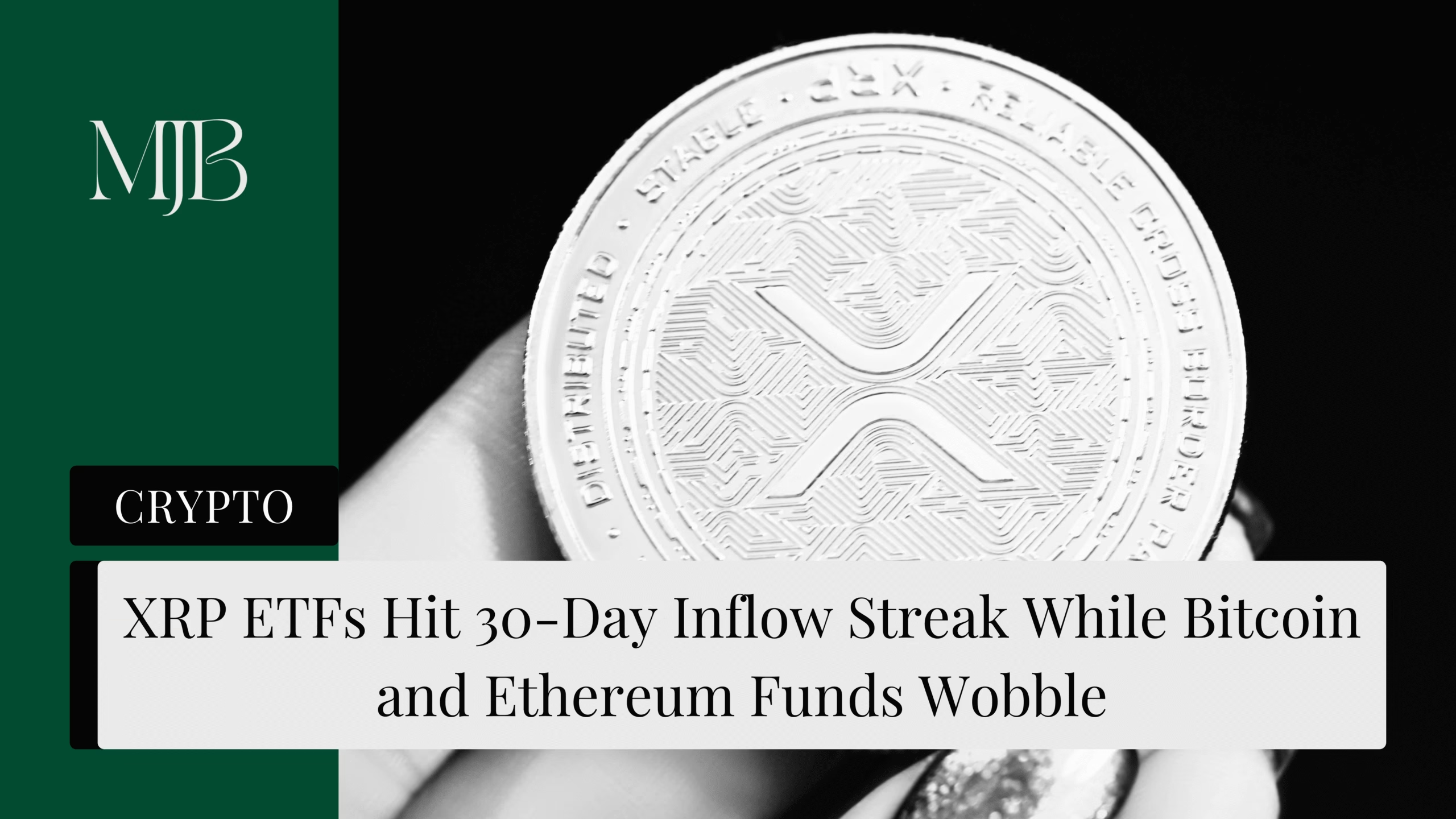
Here’s something you don’t see every day in crypto: a streak. And we’re not talking about a lucky run at the casino, XRP spot ETFs have pulled in fresh capital for 30 consecutive trading days since launching in mid-November. Meanwhile, Bitcoin and Ethereum ETFs? They’ve been bouncing in and out of outflows like a yo-yo. What’s driving this divergence, and why are investors treating XRP differently from the big two? Let’s break it down.
XRP ETFs: The New Kid That Won’t Quit
The Numbers Behind the Streak
Since their debut on 13 November, US-listed XRP spot ETFs have been on an absolute tear, racking up nearly $975 million in net inflows as of 12 December. Not a single day of redemptions. Not one. Total assets under management have climbed to roughly $1.18 billion, proving that investor appetite for this altcoin isn’t just a flash in the pan.
How XRP Stacks Up Against Bitcoin and Ethereum
Compare that to Bitcoin and Ethereum ETFs, which have seen choppy flows recently. Investors have been yanking money in and out as they react to interest rate jitters, equity market swings, and concerns about tech stock valuations. XRP? Steady as she goes.
Why XRP ETFs Are Different From Bitcoin and Ether
Structural Allocations vs. Tactical Trading
The consistency tells us something important: XRP ETFs aren’t being used as short-term trading tools. Bitcoin ETFs often act like a barometer for broader market liquidity—investors pile in when risk appetite is high and bail when things get shaky. But XRP funds seem to be attracting longer-term, structural allocations.
XRP’s Unique Value Proposition
Think of it this way: Bitcoin is the flagship crypto everyone knows. Ethereum powers decentralised apps and smart contracts. XRP? It’s got a specific niche, cross-border payments and settlement infrastructure. Investors looking for differentiated exposure within the crypto space are finding XRP appealing, especially now that it’s wrapped in the regulatory comfort of an ETF.
The Broader Shift in Crypto ETF Investing
Beyond Bitcoin and Ethereum
This isn’t just about XRP having a moment. It reflects a maturing crypto ETF market where investors are diversifying beyond Bitcoin and Ethereum. Rather than putting all their eggs in two baskets, they’re exploring alternative digital assets with clearer real-world use cases.
Strategic Positioning Over Hype
XRP’s payment and settlement credentials give it a distinct value proposition. For investors who want crypto exposure but prefer assets tied to tangible infrastructure rather than purely speculative plays, XRP ETFs offer an attractive middle ground.
The flow data from SoSoValue confirms what many suspected: demand for XRP isn’t driven by hype cycles or macro momentum. It’s being treated more like a strategic position—something you buy and hold rather than flip based on the latest Federal Reserve announcement.

What This Means for Crypto Investors
The Takeaway
If you’ve been watching the crypto ETF space, this streak matters. It shows that retail and institutional investors alike are willing to back assets beyond the usual suspects. XRP’s unbroken inflow run suggests confidence in its fundamentals and a growing appetite for diversified crypto portfolios.
For those already holding XRP or considering an allocation, the ETF structure offers a regulated, accessible entry point without the hassle of managing private keys or navigating crypto exchanges. And judging by the flow patterns, plenty of investors are taking advantage.
Want to diversify your crypto exposure? Keep an eye on how these alternative ETFs perform—they might just reshape how we think about digital asset investing.
FAQ
Q1: What are XRP spot ETFs?
A: XRP spot ETFs are exchange-traded funds that hold actual XRP tokens, allowing investors to gain crypto exposure through traditional brokerage accounts. They eliminate the need to directly buy or store the digital asset yourself.
Q2: Why have XRP ETFs seen consistent inflows while Bitcoin and Ethereum ETFs haven’t?
A: XRP ETFs appear to attract longer-term, structural allocations from investors seeking differentiated crypto exposure, particularly in payment and settlement infrastructure. Bitcoin and Ethereum ETFs experience more volatile flows tied to broader market conditions and short-term trading activity.
Q3: How much money has flowed into XRP ETFs since launch?
A: As of 12 December, XRP spot ETFs have accumulated approximately $975 million in net inflows over 30 consecutive trading days, with total assets under management reaching about $1.18 billion.
Q4: Are XRP ETFs a good investment?
A: That depends on your portfolio goals and risk tolerance. XRP ETFs offer regulated exposure to a cryptocurrency with specific use cases in cross-border payments, but like all crypto investments, they carry significant volatility and risk.
Q5: What makes XRP different from Bitcoin and Ethereum?
A: While Bitcoin serves as digital gold and Ethereum powers decentralised applications, XRP focuses on facilitating fast, low-cost international payments and settlement between financial institutions, giving it a distinct value proposition within the crypto ecosystem.
DISCLAIMER
Effective Date: 15th July 2025
The information provided on this website is for informational and educational purposes only and reflects the personal opinions of the author(s). It is not intended as financial, investment, tax, or legal advice.
We are not certified financial advisers. None of the content on this website constitutes a recommendation to buy, sell, or hold any financial product, asset, or service. You should not rely on any information provided here to make financial decisions.
We strongly recommend that you:
- Conduct your own research and due diligence
- Consult with a qualified financial adviser or professional before making any investment or financial decisions
While we strive to ensure that all information is accurate and up to date, we make no guarantees about the completeness, reliability, or suitability of any content on this site.
By using this website, you acknowledge and agree that we are not responsible for any financial loss, damage, or decisions made based on the content presented.