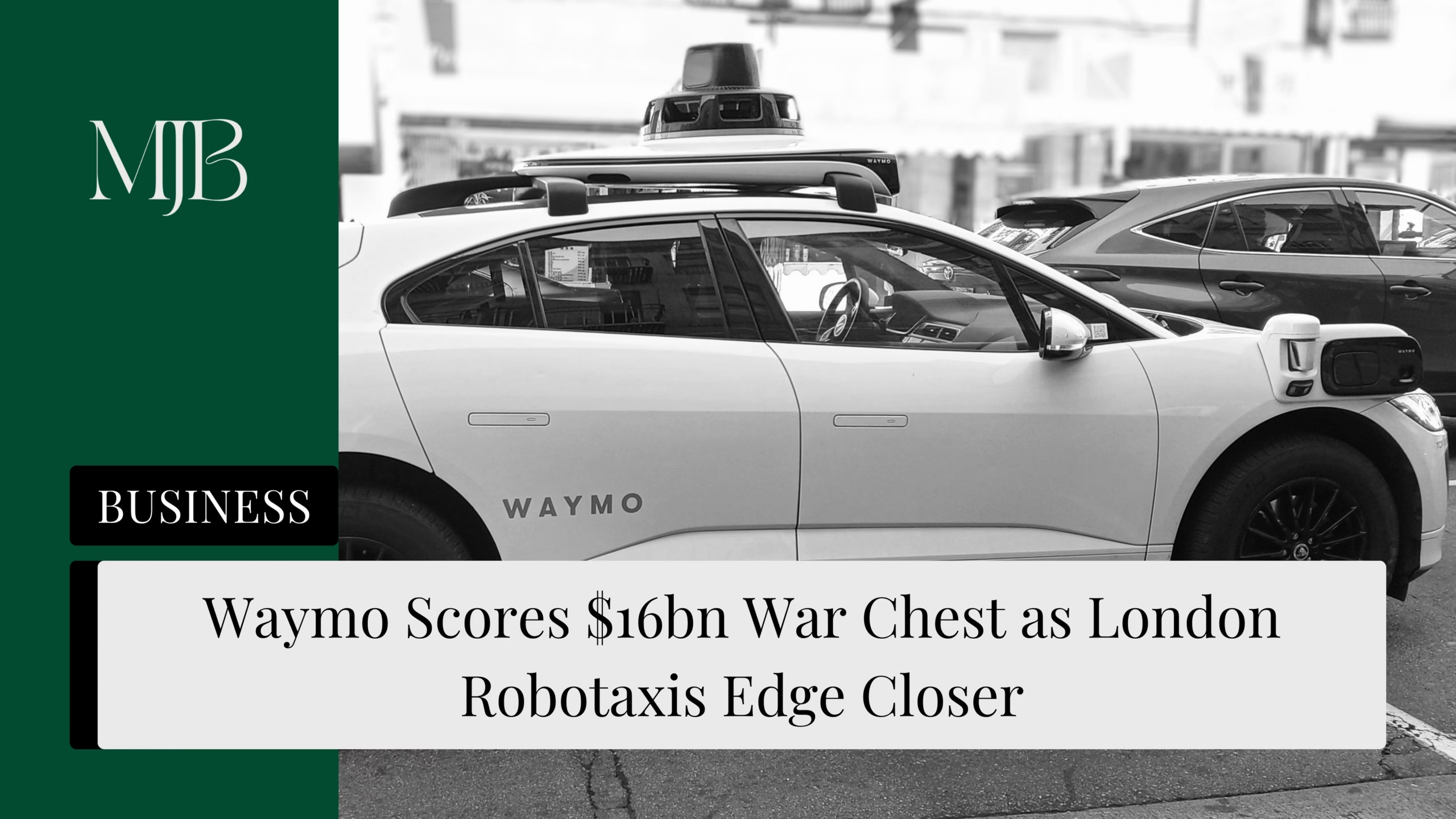
Google’s Self-Driving Unit Goes Big Ahead of UK Debut
Waymo just raised $16bn (£12.6bn). That’s not a typo.
The Alphabet-owned robotaxi firm now sits at a $126bn valuation, and timing matters here — its self-driving cars are already prowling London streets in test mode. The mega-round, led by Dragoneer, DST Global, and Sequoia, signals Waymo’s shift from ‘cool experiment’ to full-scale commercial rollout. London’s set to join over 20 new cities globally by 2026, with Tokyo also on the list.
Here’s what you need to know about the cash injection, the UK expansion, and why regulators might pump the brakes.
From Lab Project to Money Printer
Waymo’s no longer Google’s quirky moonshot. The company’s now running 400,000 paid robotaxi trips per week across six US cities. That’s 15 million rides last year — triple the previous year’s volume.
The stats back up the hype: 127 million autonomous miles logged, with Waymo claiming a 90% reduction in serious injury crashes versus human drivers. Whether that holds up under UK regulatory scrutiny is another question, but the numbers suggest this isn’t vaporware.
Five years ago, Waymo was valued around $30bn. Today’s $126bn price tag shows how seriously Big Tech views autonomous vehicles as the next growth frontier. For context, Alphabet itself now carries a $4tn market cap — Waymo’s become a meaningful chunk of that story.
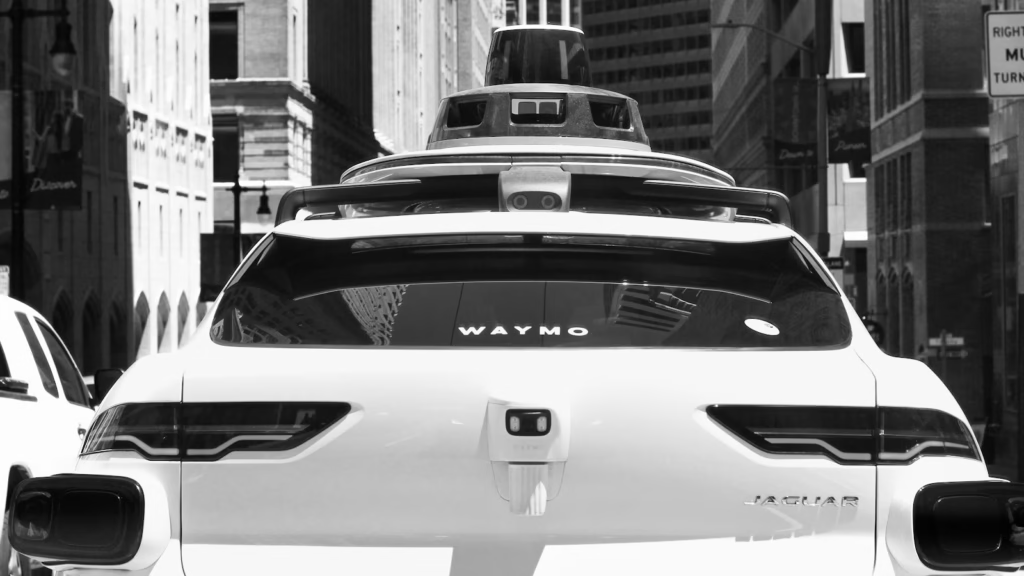
Why London? Why Now?
The UK government’s rolled out the welcome mat for autonomous vehicle trials. Ministers see self-driving tech as both a transport modernisation play and a way to lure global tech investment post-Brexit.
London’s congestion charge and Ultra Low Emission Zone also create an interesting testing ground — these vehicles don’t emit fumes, and navigating London’s chaotic traffic patterns would be a solid proof of concept.
If Waymo launches a passenger service here, the UK would become one of its first international markets, launching alongside Tokyo. That’s a big deal for a company that’s spent years perfecting operations in US cities with very different road layouts and driving cultures.
The Texas School Bus Problem
Not everything’s smooth sailing. Waymo’s currently facing US safety investigations after incidents involving school buses in Texas. The company issued a voluntary software update covering 3,000+ vehicles, insisting no collisions occurred and its tech still outperforms human drivers.
But here’s the rub: UK regulators will be watching these probes closely. Any whiff of safety concerns could delay or complicate approval for London operations. Autonomous vehicles are still politically sensitive — one high-profile incident could torpedo years of regulatory goodwill.
Waymo needs to stick the landing on these investigations if it wants UK expansion to stay on track.
The Competition Heats Up
Waymo’s not the only player eyeing robotaxi dominance. Tesla’s pushing ahead with its own autonomous ambitions, and Amazon-backed Zoox is expanding pilot programmes in US cities.
The race is on to prove which tech stack can scale safely and profitably. Waymo’s got the first-mover advantage in commercialisation, but Tesla’s got brand recognition and manufacturing scale. Zoox brings Amazon’s logistics expertise and deep pockets.
Whoever cracks the UK market first gains a major strategic edge in Europe — and London’s a high-visibility prize.
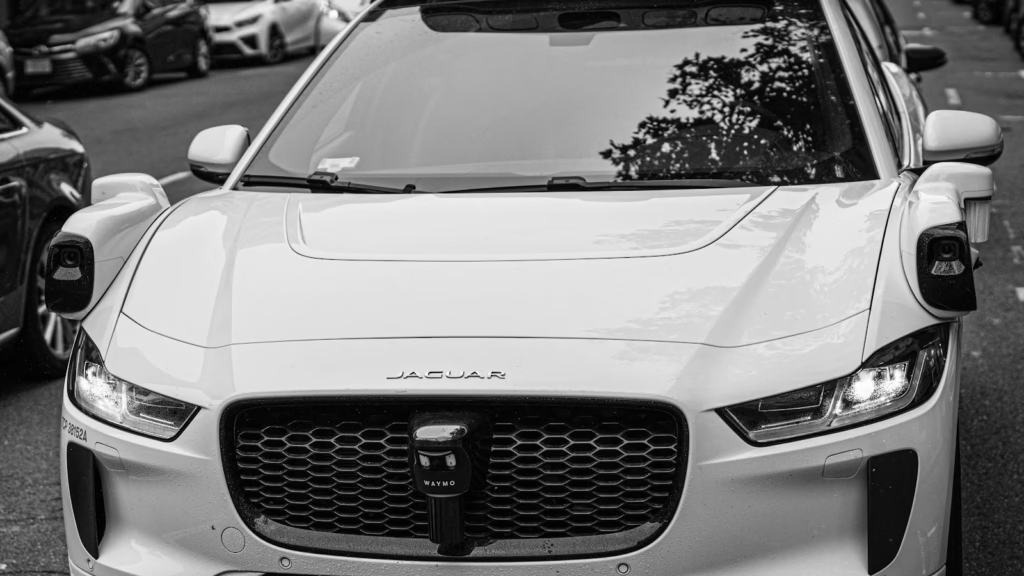
What This Means for London
If Waymo gets regulatory approval, Londoners could see self-driving taxis operating alongside Ubers and black cabs within the next couple of years. That’d shake up the city’s transport ecosystem pretty dramatically.
Questions remain: How will pricing compare? What happens to existing taxi drivers? Will insurance and liability frameworks keep pace?
For now, Waymo’s testing vehicles quietly whilst the regulatory machinery churns. Whether the $16bn funding accelerates UK approval or just funds US expansion remains to be seen.
The Bottom Line
Waymo’s massive funding round signals that autonomous vehicles are moving from experimental tech to serious business. London’s a strategic target, but safety investigations and regulatory hurdles could slow the rollout.
Keep an eye on how the Texas probes play out — they’ll likely shape UK regulators’ thinking. And if you’re in London, don’t be surprised if those unmarked test vehicles become a common sight over the next year.
Frequently Asked Questions
Q1: How much did Waymo raise and what’s the company worth now?
A: Waymo raised $16bn (£12.6bn) in its latest funding round, valuing the company at $126bn. That’s up from around $30bn just five years ago, showing massive investor confidence in autonomous vehicle commercialisation.
Q2: When will Waymo launch in London?
A: Waymo’s currently testing vehicles in London but hasn’t announced a specific passenger service launch date. The company says London will be among 20+ cities it enters globally by 2026, pending regulatory approval from UK authorities.
Q3: Are Waymo’s self-driving cars safe?
A: Waymo claims a 90% reduction in serious injury crashes compared to human drivers across 127 million autonomous miles. However, the company’s facing US safety investigations after incidents involving school buses in Texas, which could impact UK regulatory approval.
Q4: Who are Waymo’s main competitors?
A: Tesla’s developing its own robotaxi technology, whilst Amazon-backed Zoox is expanding pilot programmes in US cities. The race is intensifying as companies compete to prove which autonomous driving system can scale safely and profitably.
Q5: How many robotaxi trips does Waymo currently operate?
A: Waymo runs over 400,000 paid robotaxi trips per week across six US cities, totalling 15 million rides in the past year. That’s triple the previous year’s volume, demonstrating rapid scaling from experimental operations to commercial service.
DISCLAIMER
Effective Date: 15th July 2025
The information provided on this website is for informational and educational purposes only and reflects the personal opinions of the author(s). It is not intended as financial, investment, tax, or legal advice.
We are not certified financial advisers. None of the content on this website constitutes a recommendation to buy, sell, or hold any financial product, asset, or service. You should not rely on any information provided here to make financial decisions.
We strongly recommend that you:
- Conduct your own research and due diligence
- Consult with a qualified financial adviser or professional before making any investment or financial decisions
While we strive to ensure that all information is accurate and up to date, we make no guarantees about the completeness, reliability, or suitability of any content on this site.
By using this website, you acknowledge and agree that we are not responsible for any financial loss, damage, or decisions made based on the content presented.