UK Debt Crisis Risk: Second Only to France
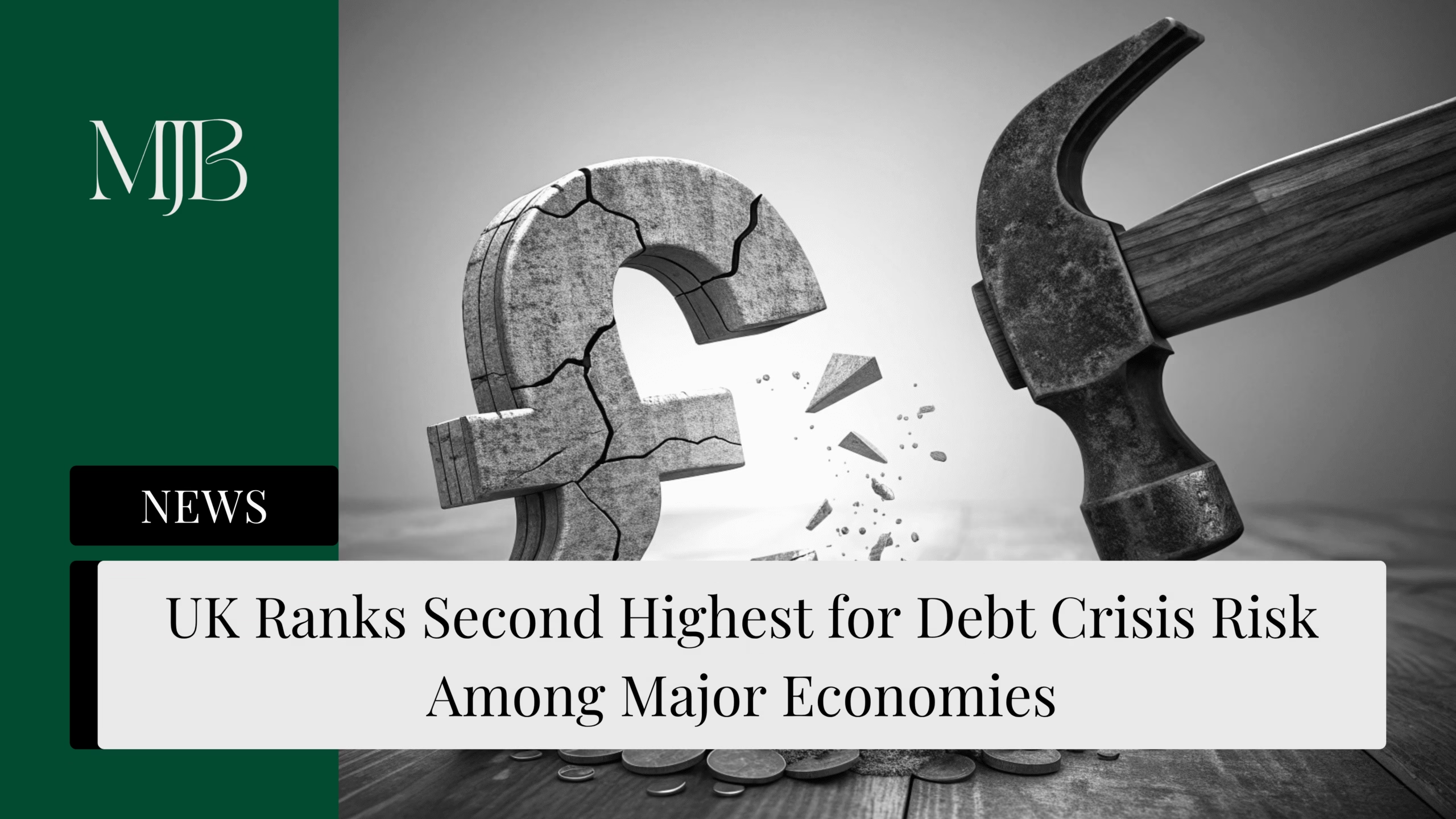
Here’s a wake-up call: the UK is now the second most likely major economy to face a debt crisis in the next two years. Only France ranks higher. That’s according to a fresh Deutsche Bank survey of financial professionals who aren’t exactly brimming with confidence about Britain’s growth prospects or spending discipline. With borrowing at pandemic-era levels and warnings of a “debt doom loop” from hedge fund legend Ray Dalio, investors are getting nervous. Let’s break down what’s happening and why it matters for your wallet.
France Leads the Pack (and Not in a Good Way)
Over half of institutional investors surveyed by Deutsche Bank flagged France as the most likely candidate for a crisis-level bond sell-off before 2028. Why? Political chaos. The country’s burned through three prime ministers recently, each failing to pass a budget that lawmakers could stomach.
France’s deficit hit 5.8% in 2024—the worst in the G7 except for the US. Former PM François Bayrou stated: France was “heading for bankruptcy.” When your own politicians start using the B-word, you know things are dicey.

UK Takes Silver (Unfortunately)
A fifth of respondents pegged the UK as most vulnerable to a government bond crisis. About half said British debt was the second-riskiest behind France—putting it ahead of both debt-heavy Japan and the US, which is currently running an $1.8 trillion deficit.
That’s not exactly the podium finish anyone wanted.
The UK’s Borrowing Binge
Here’s where it gets uncomfortable: Britain’s taking on debt at pandemic rates—without the pandemic. Since the government’s first Budget in November, yields on 10-year gilts (the main measure of borrowing costs) have jumped over 40 basis points. We’re now at levels not seen since the 2008 financial crisis sent interest rates cratering.
Ray Dalio, founder of Bridgewater Associates and one of the world’s most influential investors, didn’t pull punches. He’s warning the UK is trapped in a “debt doom loop”—a nasty cycle of rising taxes, mounting debt, and stagnant growth.
The Tax-and-Flight Problem
Dalio pointed out something crucial: when conditions worsen, wealthy people leave. And that’s a problem because the top 10% pay roughly 75% of income taxes (similar ratios exist in the UK and US).
“A deterioration in conditions… [has] the effect of causing people with money to leave,” Dalio said. The warning signs are “beginning to flash and flicker.”
Translation? Hike taxes on the rich to fix your debt problem, and they might just pack their bags. That shrinks your tax base, worsens the deficit, and forces more borrowing. Rinse and repeat.
What This Means for You
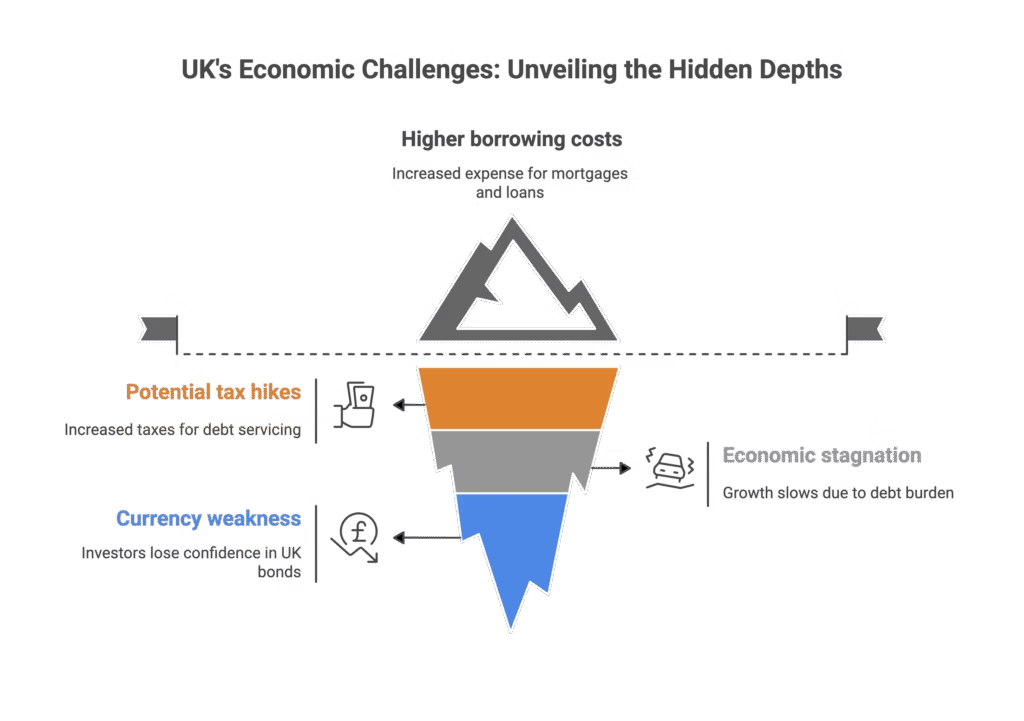
If you’re a UK taxpayer, investor, or business owner, these findings matter. A debt crisis doesn’t happen overnight, but the ingredients are lining up:
- Higher borrowing costs make mortgages and loans more expensive
- Potential tax hikes to service debt could hit middle-income earners too
- Economic stagnation as growth sputters under the weight of debt payments
- Currency weakness if investors lose faith in UK bonds
We’re not at crisis point yet, but the trajectory isn’t great.
The Bottom Line
The UK’s debt situation is raising red flags among people who manage billions. Being second only to France in crisis risk—ahead of Japan and the US—should trigger serious conversations about fiscal discipline and growth strategy.
Whether policymakers can navigate out of this without triggering the doom loop Dalio warns about remains to be seen. One thing’s clear: the borrowing party can’t last forever, and someone’s eventually got to pick up the tab.
Want to track UK debt levels and fiscal policy? Keep an eye on gilt yields and Budget announcements—they’ll tell you where this story’s heading next.
FAQ: UK Debt Crisis Risk
Q1: What exactly is a debt crisis?
A: It’s when investors lose confidence in a government’s ability to repay its debts, triggering a bond sell-off that spikes borrowing costs. This can force spending cuts, tax hikes, or even bailouts—think Greece in 2010.
Q2: Why is France considered more at risk than the UK?
A: France has worse political instability and a larger deficit (5.8% in 2024). Three PMs have resigned recently over budget disputes, and the country lacks a clear fiscal plan.
Q3: What’s a “debt doom loop”?
A: Ray Dalio’s term for a vicious cycle where governments raise taxes to service debt, wealthy people leave, tax revenue falls, deficits grow, and more borrowing is needed. It’s self-reinforcing and hard to escape.
Q4: How does this affect average UK residents?
A: Higher gilt yields mean more expensive mortgages, loans, and credit. Tax hikes may follow to service debt, and sluggish growth could limit wage increases and job opportunities.
Q5: Can the UK avoid a debt crisis?
A: Yes, but it requires discipline: controlling spending, boosting growth, and maintaining investor confidence. The path is narrow, and mistakes could tip things over the edge.
DISCLAIMER
Effective Date: 15th July 2025
The information provided on this website is for informational and educational purposes only and reflects the personal opinions of the author(s). It is not intended as financial, investment, tax, or legal advice.
We are not certified financial advisers. None of the content on this website constitutes a recommendation to buy, sell, or hold any financial product, asset, or service. You should not rely on any information provided here to make financial decisions.
We strongly recommend that you:
- Conduct your own research and due diligence
- Consult with a qualified financial adviser or professional before making any investment or financial decisions
While we strive to ensure that all information is accurate and up to date, we make no guarantees about the completeness, reliability, or suitability of any content on this site.
By using this website, you acknowledge and agree that we are not responsible for any financial loss, damage, or decisions made based on the content presented.