
The UK housing market just felt the brakes, but don’t panic. After the biggest January price jump in Rightmove’s 25-year history, February asking prices fell by a grand total of… £12. Yes, twelve pounds. The average home now sits at £368,019, down from £368,031 last month. So what’s actually going on, and should buyers or sellers be reading anything into this? Let’s break it down.
The January Hangover Explained
Here’s the thing about January’s £9,893 surge: it didn’t come from nowhere. After months of jitters around the autumn Budget and the usual Christmas freeze, sellers flooded the market with renewed confidence from Boxing Day onwards.
Rightmove called it “front-loaded” momentum — essentially, the energy that normally spreads across the first quarter got compressed into a single month. February’s flat performance, then, isn’t a warning sign. It’s more of an exhale.
Colleen Babcock, property expert at Rightmove, put it plainly: “Many sellers, some of whom had been holding back because of the budget, came to market in early 2026 with renewed confidence, which helped to drive that bumper January price rise.”
The Bigger Picture: This Market Is Actually in Good Shape
Step back from the month-on-month noise and the data looks solid:
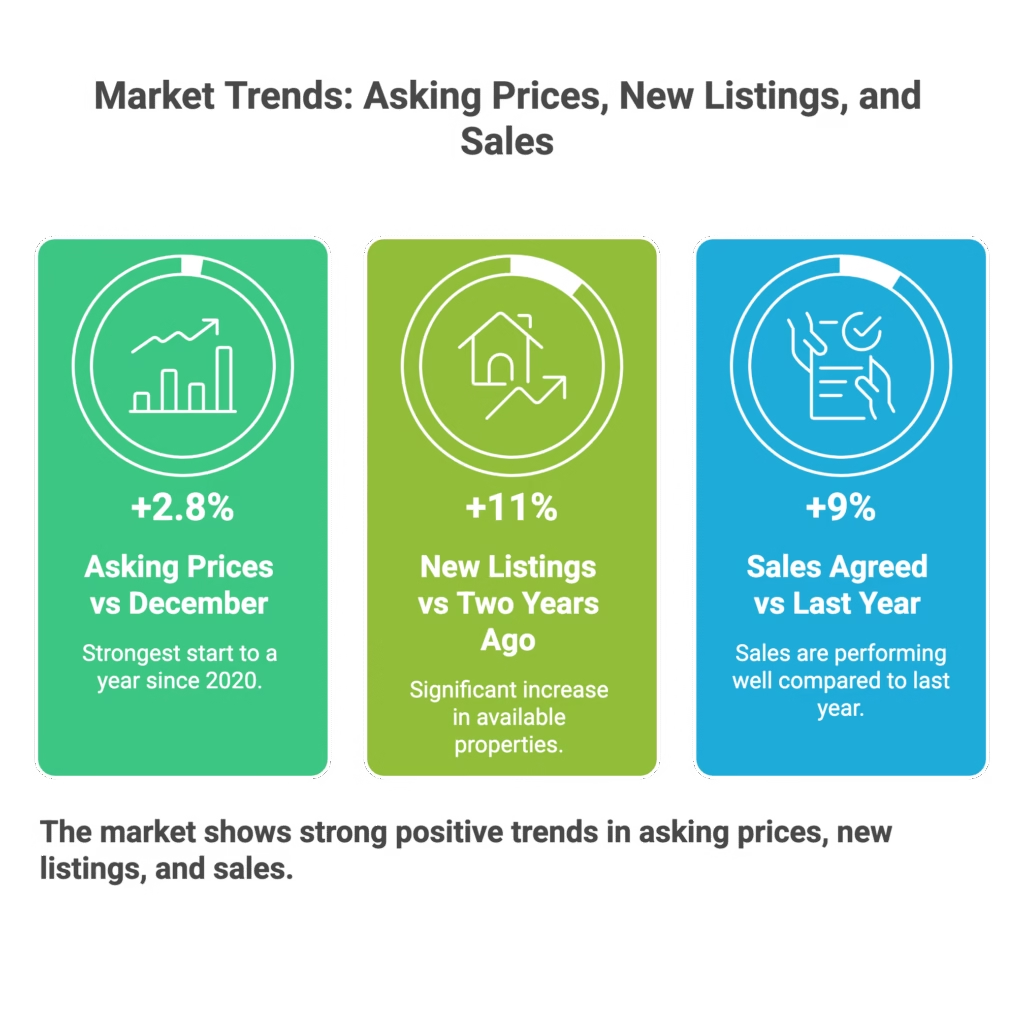
- Asking prices are 2.8% higher than December — the strongest start to a year since 2020
- New listings are 11% higher than two years ago
- Sales agreed are up 9% on this point last year
Compare that to early 2025, when buyers in England were scrambling to complete before the stamp duty deadline at the end of March — artificially inflating activity. This year’s numbers are steadier and arguably more meaningful.
Affordability Is Shifting in Buyers’ Favour
This is the headline that doesn’t always get the attention it deserves. Over the past three years:
- Average wages have risen around 17%
- House prices have grown just 1.5% over the same period
That gap is meaningful. Rightmove’s mortgage expert Matt Smith noted that last year’s review of the loan-to-income cap — alongside the Financial Conduct Authority nudging lenders on stress-testing flexibility — has “enabled the typical buyer to borrow more.” First-time buyer support from lenders remains strong, too.
On the ground, agents report steady demand. Craig Webster, managing director at Tiger Sales & Lettings in Blackpool, noted that “sellers are becoming more realistic as competition remains high, but demand remains resilient.” Katie Griffin at Sawdye & Harris in Dartmoor is eyeing a busy spring: “I think we’ll see improved activity if sellers continue to price sensibly.”
London: The Outlier With a Problem
While the national picture looks relatively healthy, London is telling a different story — and the government is paying attention.
Housing minister Matthew Pennycook recently acknowledged that prices in the capital “will probably need” to adjust, as Labour pushes towards its 1.5 million homebuilding target. The idea: encourage developers to compete on volume, not margin.
The challenge? London’s construction pipeline has collapsed. Just 4,170 housing starts were recorded in the 2024/25 financial year — the lowest of any UK region, according to the Centre for Policy Studies. The think tank points to tougher regulation, rising costs, and planning delays as the culprits.
Supply constraints and political pressure in the same city rarely end quietly. Watch this space.

What This Means for You
Whether you’re buying, selling, or just keeping an eye on the market, February’s pause isn’t a red flag — it’s a reality check after an unusually charged January. Affordability is improving, supply is picking up, and demand is holding firm.
If you’re a seller, pricing sensibly is the move. If you’re a buyer, the window of relative affordability may be worth acting on before spring competition heats up.
Want to stay ahead of the housing market? Explore our latest mortgage guides and UK property analysis for more.
FAQ
Q1: Why did UK house prices barely change in February 2026?
A: January saw a record surge as sellers who’d held back during Budget uncertainty rushed to market, front-loading the usual first-quarter momentum. February’s near-flat performance reflects that energy being spent, not a market in trouble.
Q2: Are UK house prices still rising in 2026?
A: Yes — asking prices are 2.8% higher than in December, marking the strongest start to a year since 2020, despite the February pause.
Q3: Has affordability improved for UK homebuyers?
A: Significantly. Wages have risen around 17% since 2023, while house prices have grown just 1.5% over the same period. Regulatory changes have also allowed buyers to borrow more.
Q4: Why is London’s housing market different from the rest of the UK?
A: London has the weakest construction pipeline of any UK region, with just 4,170 housing starts in 2024/25. The government has signalled that prices in the capital may need to cool as it pursues its homebuilding targets.
Q5: Is now a good time to buy a house in the UK?
A: Conditions are more favourable than they’ve been in recent years — improved affordability, rising supply, and steady demand. That said, spring typically brings more competition, so timing and location matter.
DISCLAIMER
Effective Date: 15th July 2025
The information provided on this website is for informational and educational purposes only and reflects the personal opinions of the author(s). It is not intended as financial, investment, tax, or legal advice.
We are not certified financial advisers. None of the content on this website constitutes a recommendation to buy, sell, or hold any financial product, asset, or service. You should not rely on any information provided here to make financial decisions.
We strongly recommend that you:
- Conduct your own research and due diligence
- Consult with a qualified financial adviser or professional before making any investment or financial decisions
While we strive to ensure that all information is accurate and up to date, we make no guarantees about the completeness, reliability, or suitability of any content on this site.
By using this website, you acknowledge and agree that we are not responsible for any financial loss, damage, or decisions made based on the content presented.