Five years on from Brexit, and the UK has quietly done something a lot of Brexiteers didn’t expect: almost nothing. A new report from UK in a Changing Europe (UKICE) finds the UK has “done little to diverge” from EU regulations, despite having every legal right to. We’ll break down why that is, what passive divergence is doing to UK–EU trade, and why financial services is playing by entirely different rules.
The UK Stuck Closer to EU Rules Than Anyone Expected
You’d think post-Brexit Britain would be ripping up EU red tape at speed. Not quite.
On environmental standards, product regulations, and labour laws, the UK has largely kept EU-era rules in place. Habitats protections, vacuum power limits, working hours rules — all major targets for Brexit campaigners — remain largely untouched.
Why? Partly pragmatism. If UK businesses have to comply with two totally different rulebooks to trade with Europe, that’s an extra cost nobody wants. There’s also been limited political appetite for slashing employment or environmental protections — even under the Conservatives.
‘Passive Divergence’: When the EU Moves and the UK Doesn’t
While the UK hasn’t actively changed its rules, the EU has kept legislating — and that’s quietly created a gap between the two.
The EU now requires goods to carry a Digital Product Passport, detailing materials and environmental impact. It’s also passed major new rules on harmful substances in products like toys. The UK hasn’t followed suit.
The result? What UKICE calls “passive divergence” — the UK standing still while Europe moves forward. Combined with the non-tariff barriers baked into the 2021 Trade and Cooperation Agreement, it’s hit UK goods exports hard.
The Trade Numbers Tell the Story
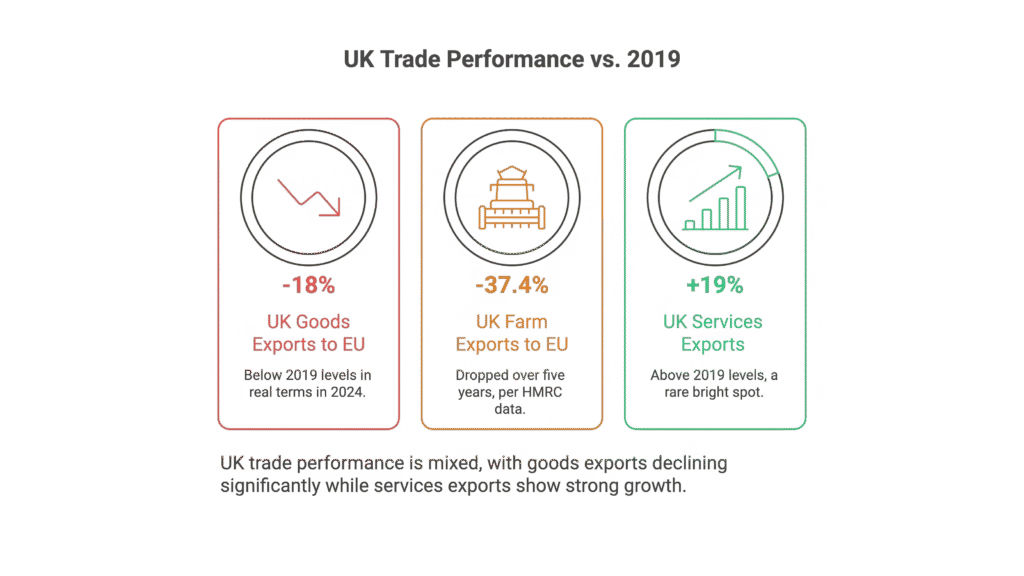
- UK goods exports to the EU were 18% below 2019 levels in real terms in 2024
- UK farm exports to the EU have dropped 37.4% over five years, per HMRC data analysed by the National Farmers’ Union
- Services exports, by contrast, are 19% above 2019 levels — a rare bright spot
The divergence is hurting things you can ship, not things you can Zoom.
An EU Reset Is on the Table — But Business Wants More
The government is actively pursuing a “reset” with the EU, eyeing closer alignment on electricity markets and food safety standards. Keir Starmer put it plainly in January: “If it’s in our national interest to have even closer alignment with the single market, then we should consider that.”
Businesses are broadly supportive — but many think ministers aren’t being ambitious enough. Emma Rowland, trade policy advisor at the Institute of Directors, told CNBC this week that business leaders would “overwhelmingly choose closer alignment with the EU over the US.”
Financial Services: The Exception to the Rule
Not every sector is playing follow-the-leader with Brussels. Financial services is a rare area where the UK has genuinely gone its own way — and done so with industry backing.
Both Conservative and Labour governments have sought a competitive edge by loosening regulatory requirements on City firms. Recent moves include:
- The Prudential Regulation Authority delaying Basel 3.1 rules by a year
- The Financial Conduct Authority scrapping the requirement for major short sellers to disclose their identity
Both changes bring the UK closer to the US model than the EU one, and City figures are keen to keep it that way. Steven Fine, CEO of Peel Hunt, told the FT the UK now has “significantly less friction” in its regulatory framework compared with most European jurisdictions — and warned against creating uncertainty “just as the City is recovering its mojo.”
City figures are actively lobbying to be carved out of any future UK–EU alignment deals.

The Bottom Line
Brexit didn’t trigger the bonfire of regulations many predicted. Instead, the UK largely held its position while the EU kept building — and the gap has grown by default rather than design. Goods trade has taken a real hit; services less so. A closer EU relationship is now firmly on the political agenda, but financial services looks set to stay on its own path.
Want to stay ahead of UK–EU trade developments? Bookmark this page and check back as reset negotiations progress.
FAQ
Q1: Has the UK changed many EU regulations since Brexit?
A: Surprisingly few. Most EU-era rules on environmental, product, and labour standards remain largely in place. The main driver has been avoiding extra costs for businesses that trade with Europe.
Q2: What is ‘passive divergence’ between the UK and EU?
A: It’s when the EU passes new legislation and the UK chooses not to follow. The rules don’t actively clash — but the gap widens over time, creating friction for businesses exporting to Europe.
Q3: How has Brexit affected UK trade with the EU?
A: Goods exports to the EU were 18% below 2019 levels in real terms in 2024, with farm exports down 37.4%. Services exports have fared better, running 19% ahead of 2019 levels.
Q4: Why is financial services treated differently from other sectors?
A: The UK financial sector is large enough to compete internationally, giving it leverage to push for lighter-touch regulation. Both major parties have supported diverging from EU rules to maintain a competitive edge over European rivals.
Q5: What is the UK–EU ‘reset’ Keir Starmer is pursuing?
A: It’s a broader effort to rebuild the UK–EU relationship, potentially including closer alignment on areas like food safety and energy markets. Business groups support it, though many are pushing for more ambition than the government has shown so far.
DISCLAIMER
Effective Date: 15th July 2025
The information provided on this website is for informational and educational purposes only and reflects the personal opinions of the author(s). It is not intended as financial, investment, tax, or legal advice.
We are not certified financial advisers. None of the content on this website constitutes a recommendation to buy, sell, or hold any financial product, asset, or service. You should not rely on any information provided here to make financial decisions.
We strongly recommend that you:
- Conduct your own research and due diligence
- Consult with a qualified financial adviser or professional before making any investment or financial decisions
While we strive to ensure that all information is accurate and up to date, we make no guarantees about the completeness, reliability, or suitability of any content on this site.
By using this website, you acknowledge and agree that we are not responsible for any financial loss, damage, or decisions made based on the content presented.