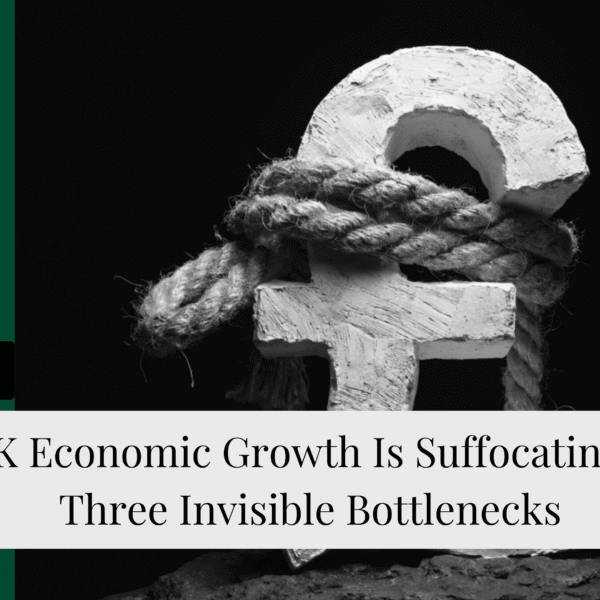
The UK construction sector’s recovery is looking shakier by the day. Whilst the industry will notch up 4.5% growth in 2026, don’t pop the champagne yet — that growth is almost entirely powered by infrastructure mega-projects, not the stuff that actually builds communities. Housebuilders and commercial developers? They’re still limping along, crushed under the weight of soaring labour costs, planning gridlock and a workforce shortage that just won’t quit. Here’s the thing about UK construction recovery right now: it’s lopsided, fragile, and nowhere near what the Government promised.
The Infrastructure Mirage
Let’s start with the headline number: construction is set to grow 4.5% this year, up from 3.5% in 2025. Not bad, right? But before you celebrate, read the fine print. That bump is almost entirely down to defence, transport and energy projects. Roads get built. Powerlines go up. But actual homes? Commercial spaces? Not so much.
The problem is structural. Infrastructure projects are Government-backed and funded. They don’t care about interest rates or planning delays the way a developer does. They’re the reliable bits keeping the whole sector afloat whilst everything else struggles.

Why Housebuilding and Commercial Development Are Gasping
Here’s the uncomfortable truth: the sectors that actually matter to ordinary people — new homes and office space — are still drowning. Housebuilders face a triple whammy: financing costs remain stubbornly high, planning delays stretch on for months, and labour shortages mean projects either stall or get more expensive.
Then there’s the wage squeeze. Minimum pay for 21 to 22-year-olds has climbed 33% in just three years. For 18 to 20-year-olds, it’s up a staggering 46%. Higher wages sound good in isolation — and workers deserve fair pay — but the construction industry is watching those costs balloon and panicking about affordability. It’s squeezing margins and making it harder to justify hiring apprentices when labour budgets are already stretched.
And here’s the kicker: tender price inflation (what you pay between quoting and submitting) is tipped to jump from 2.75% this year to 4% by 2029. That’s not a gentle slope — that’s climbing costs eating into project viability.
Where’s the Young Talent Gone?
The construction industry has a serious pipeline problem. The Chartered Institute of Building found something alarming: 66% of young people think construction is a solid career. But only 30% would actually pursue it. That gap is damning.
Meanwhile, nearly a million young people are currently not in education, employment or training — the so-called NEET cohort. You’d think construction employers would be circling like hawks. Instead, rising entry-level wages are making them cautious about hiring fresh talent at a time when experience is leaving the industry.
Watch this space: the Government’s pledge of fully-funded training for under-25s in small and medium-sized businesses is a step. But it doesn’t solve the real problem — employers can’t absorb the rising employment costs that’ll stack up once workers are on the payroll.
The 1.5 Million Home Problem
Labour promised to build 1.5 million homes by the next election. It’s an ambitious target. It’s also looking increasingly unlikely. The Office for Budget Responsibility has basically said this target is in peril — and all the macro headwinds we’ve just discussed explain why. You can’t build homes if your supply chain is bottlenecked, planning takes forever, and the economics don’t stack up.
The Bottom Line
The UK construction sector is growing, but it’s growing in all the wrong places. Infrastructure keeps the lights on whilst housebuilding and commercial development languish. Wages are rising faster than productivity, labour is scarce, and the costs just keep creeping up. This fragile recovery won’t translate into the homes, offices and communities the UK actually needs — not unless something shifts.
Want more like this? Sign up to The MJBurrows Briefing — our free weekly newsletter delivered every Monday morning.
FAQ
Will UK construction keep growing in 2026?
Yes, but mainly from infrastructure projects, not housebuilding. Growth of 4.5% is expected, but it’s heavily skewed towards Government-backed schemes rather than commercial or residential development.
Why are labour costs such a problem?
Minimum pay for young workers has jumped 30-46% in three years. That’s pushed hiring costs up faster than productivity, making it harder for developers to justify apprentice roles and squeeze margins further.
Can the Government’s apprenticeship pledge help?
It’s a start, but incomplete. Fully-funded training is useful, but it doesn’t solve rising employment costs once workers are actually employed. The real issue is affordability, not access to training.
Is the 1.5 million homes target realistic?
Probably not. Planning delays, labour shortages, high financing costs and soaring tender price inflation all work against hitting that target. The Office for Budget Responsibility is already flagging it as in peril.
What does tender price inflation actually mean?
It’s the jump in construction costs between when a quote is made and when the tender is actually submitted. Current levels are 2.75% but expected to hit 4% by 2029, eating into project profitability.
DISCLAIMER
Effective Date: 15th July 2025
The information provided on this website is for informational and educational purposes only and reflects the personal opinions of the author(s). It is not intended as financial, investment, tax, or legal advice.
We are not certified financial advisers. None of the content on this website constitutes a recommendation to buy, sell, or hold any financial product, asset, or service. You should not rely on any information provided here to make financial decisions.
We strongly recommend that you:
- Conduct your own research and due diligence
- Consult with a qualified financial adviser or professional before making any investment or financial decisions
While we strive to ensure that all information is accurate and up to date, we make no guarantees about the completeness, reliability, or suitability of any content on this site.
By using this website, you acknowledge and agree that we are not responsible for any financial loss, damage, or decisions made based on the content presented.