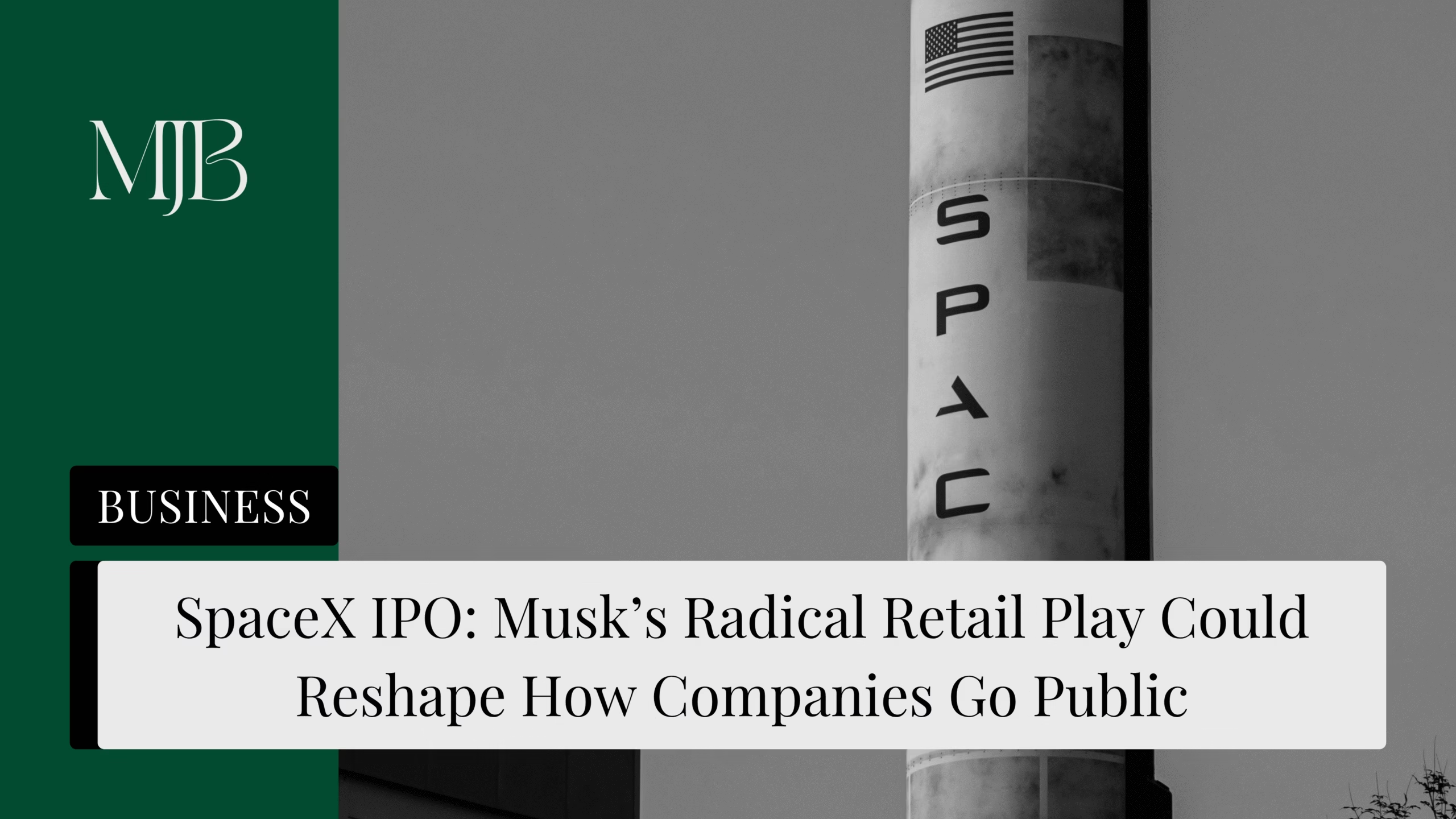
Elon Musk is about to shake up the IPO playbook. Instead of the typical 5-10% retail allocation, SpaceX is eyeing up to 30% for everyday investors when it lists. With a potential valuation hitting £1.32 trillion, this isn’t just a routine space company launch—it’s a statement about who Musk thinks should own the future. CFO Bret Johnsen is currently negotiating with underwriting banks, but, the kicker: SpaceX is taking the driver’s seat rather than letting traditional bankers run the show. So what’s really happening behind the scenes, and why should you care?
The Retail Revolution: Why 30% Is Wild
The SpaceX IPO retail allocation is pushing boundaries. Most companies hand roughly 5-10% of IPO shares to retail investors—the everyday folks buying through brokers. SpaceX wants to triple that. Rowan Taylor from Liberty Hall Capital Partners captured the mood perfectly: “This is one of those lifetime moments in which people may say they just have to get in.”
Why the shift? SpaceX reckons retail investors are stickier. They’re more likely to hold long-term rather than flip shares for quick profits. That’s gold for a company building infrastructure that needs patient capital.

The Valuation Picture: What £1.32 Trillion Really Means
A potential £1.32 trillion valuation puts SpaceX in rarefied air. For context, that’s in the ballpark of the world’s biggest companies—think Apple, Saudi Aramco, or Microsoft territory. The number reflects SpaceX’s dominance in rocket launches, its profitability, and Musk’s recent move to consolidate xAI into the company. You’re not just investing in rockets; you’re buying into an infrastructure-plus-AI play.
Bank Assignments: A Global Strategy
SpaceX isn’t leaving retail allocation to chance. Here’s how the banking empire’s carved up: Bank of America is handling US high-net-worth individuals and family offices. Morgan Stanley is managing smaller retail orders. Barclays takes the UK mandate. Deutsche Bank handles German investors. Royal Bank of Canada covers Canada.
This structure shows SpaceX is treating the IPO like a global roadshow, not just a Wall Street affair.

The xAI Factor: Infrastructure Meets AI
SpaceX’s consolidation of xAI changes the investment story. The combined entity now positions itself as an infrastructure-plus-AI powerhouse. Yes, xAI’s capital-intensive and competing in a brutally competitive sector. But paired with SpaceX’s cash-generating rocket business, the narrative shifts. You’re backing stable profitability underwritten by cutting-edge AI ambitions.
What’s Next?
SpaceX’s retail-focused approach could set a template for future mega-IPOs. By giving everyday investors a genuine slice, Musk’s betting on community ownership over institutional gatekeeping. It’s ambitious, slightly rebellious, and entirely Musk. The real question: will retail investors stay the course, or does the gravity of space eventually pull them back down?
Want more like this? Sign up to The MJBurrows Briefing—our free weekly newsletter delivered every Monday morning.
FAQ
Q: Why is SpaceX allocating 30% to retail investors when typical IPOs allocate 5-10%?
A: SpaceX believes retail investors are more stable, long-term shareholders who won’t flip shares for quick profits. The company is taking direct control of IPO structure rather than letting banks dictate terms.
Q: What does the £1.32 trillion valuation tell us about SpaceX’s market position?
A: It places SpaceX in the tier of the world’s largest companies—comparable to Apple or Microsoft. The valuation reflects dominance in rocket launches, profitability, and the recent consolidation of xAI.
Q: How is SpaceX managing the IPO differently from traditional companies?
A: Instead of letting underwriting banks compete for the deal, SpaceX is taking a direct role in IPO structuring. CFO Bret Johnsen is negotiating with banks, but SpaceX is calling the shots on allocation and geographic strategy.
Q: What’s the xAI consolidation adding to the investment case?
A: By merging xAI into SpaceX, the company positions itself as an infrastructure-plus-AI investment. While xAI remains capital-intensive, SpaceX’s profitable rocket business provides the cash foundation to sustain AI ambitions.
DISCLAIMER
Effective Date: 15th July 2025
The information provided on this website is for informational and educational purposes only and reflects the personal opinions of the author(s). It is not intended as financial, investment, tax, or legal advice.
We are not certified financial advisers. None of the content on this website constitutes a recommendation to buy, sell, or hold any financial product, asset, or service. You should not rely on any information provided here to make financial decisions.
We strongly recommend that you:
- Conduct your own research and due diligence
- Consult with a qualified financial adviser or professional before making any investment or financial decisions
While we strive to ensure that all information is accurate and up to date, we make no guarantees about the completeness, reliability, or suitability of any content on this site.
By using this website, you acknowledge and agree that we are not responsible for any financial loss, damage, or decisions made based on the content presented.