The pound just had a rough morning and Rachel Reeves is to blame.
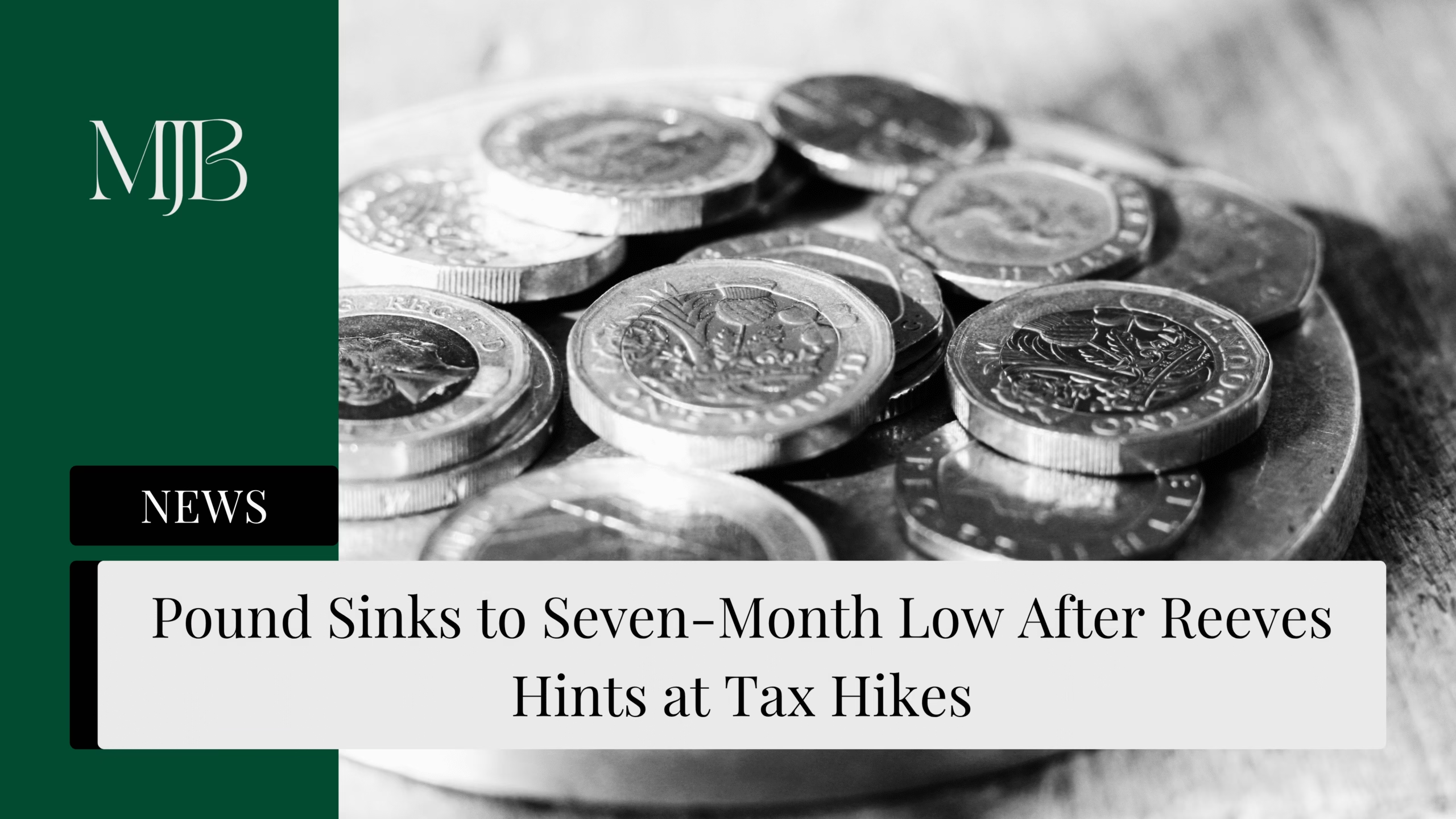
Sterling dropped to its lowest level since April, hitting $1.30 after the Chancellor delivered a speech that basically screamed “more taxes are coming.” Markets didn’t love it. The pound fell 0.46% against the dollar and 0.32% against the euro to €1.14.
Why the panic? Reeves talked about “big challenges” facing the UK, despite already dropping a historic £40bn tax bomb in her last Budget. She promised to make the “right, not popular” decisions but refused to clarify whether she’d stick to Labour’s manifesto pledge of not raising taxes on “working people.”
Translation: brace yourselves.
In this article, we’ll break down why the pound tumbled, what spooked investors, and what it means for UK markets heading into the Autumn Budget.
Why Did the Pound Drop After Reeves’ Speech?
Markets hate uncertainty. And Reeves gave them plenty of it.
Neil Wilson, investor strategist at Saxo Markets, summed it up perfectly: “The market reaction thus far is to sell sterling.” He added that the pound is acting as a “pressure valve”—and that’s not the kind of response any Chancellor wants to see right after a major speech.
Here’s what triggered the selloff:
Vague warnings, no details. Reeves painted a grim picture of the UK’s fiscal situation but dodged questions about specific policies. When you tell investors “tough decisions ahead” without saying what those decisions are, they assume the worst.
Tax hike fears. She’s already raised £40bn in taxes. Now she’s saying more pain is coming? Investors started pricing in higher corporate taxes, potential VAT increases, or even tweaks to income tax thresholds.
Weak pound = weak confidence. Currency markets are brutally honest. When sterling drops, it’s a vote of no confidence in the government’s economic strategy.
FTSE 100 Takes a Hit Too
It wasn’t just the pound feeling the pressure—the FTSE 100 fell 1.26% to 9,579.06 points this morning.
That might not sound dramatic, but with a market cap of nearly £2.3tn, we’re talking about roughly £25bn in value wiped out in a single session.
Lale Akoner, global market analyst at eToro, noted: “With the pound weaker and the FTSE 100 slipping, investors seem to be positioning for a steady, not spectacular, path ahead.”
What dragged the index down?
Tech sector jitters. FTSE futures were already pointing south before Reeves even opened her mouth, thanks to a broader tech selloff.
Mining stocks crushed. Gold slipped from its $4,000 mark, while copper and iron ore prices came under pressure. Copper miner Antofagasta led the fallers, dropping 4% to 2,634.00p.
When commodities wobble and tax fears mount, blue-chip stocks get caught in the crossfire.
What Happens Next?
All eyes are now on the Autumn Budget.
Reeves has signalled that tough decisions are coming, but until she reveals specifics, markets will stay nervous. The pound could stabilise if the tax hikes are smaller than feared—or tank further if they’re worse.
For now, investors are playing defense. The message from today’s market action? Show us the plan, or we’ll keep selling.
Key Takeaways
Here’s what you need to remember:
- The pound hit a seven-month low at $1.30 after Reeves’ speech hinted at more tax hikes
- Sterling fell 0.46% against the dollar and 0.32% against the euro
- The FTSE 100 dropped 1.26%, shedding roughly £25bn in market value
- Mining stocks were hit hard, with Antofagasta down 4%
- Markets hate uncertainty—and Reeves delivered plenty of it
Want to stay ahead of UK market moves? Keep an eye on the Autumn Budget announcements and watch how the pound reacts to any policy clarity.
FAQ
Q1: Why did the pound fall after Rachel Reeves’ speech?
A: The pound dropped because Reeves warned of “big challenges” and hinted at more tax hikes without providing specifics. Markets dislike uncertainty, so investors sold sterling as a precautionary move. The lack of clarity on whether Labour would stick to its “no tax hikes on working people” pledge added to the anxiety.
Q2: How low did the pound go against the dollar?
A: Sterling fell to $1.30, its lowest level since April. That’s a 0.46% drop in a single day. It also weakened against the euro, falling 0.32% to €1.14.
Q3: Why did the FTSE 100 fall alongside the pound?
A: The FTSE 100 dropped 1.26% due to a combination of factors: tax hike fears, a weak pound, and pressure on mining stocks. Gold, copper, and iron ore prices all declined, dragging down major miners like Antofagasta. Tech sector jitters didn’t help either.
Q4: What does a weaker pound mean for the UK economy?
A: A weaker pound makes imports more expensive, which can drive up inflation. However, it can also boost exports by making UK goods cheaper for foreign buyers. In this case, the drop signals investor concern about the UK’s fiscal outlook and economic stability.
Q5: Will the pound recover?
A: That depends on what Rachel Reeves announces in the Autumn Budget. If the tax hikes are smaller than expected or come with growth-boosting measures, the pound could bounce back. But if the measures are harsher than anticipated, sterling could fall further. Markets are waiting for clarity.
DISCLAIMER
Effective Date: 15th July 2025
The information provided on this website is for informational and educational purposes only and reflects the personal opinions of the author(s). It is not intended as financial, investment, tax, or legal advice.
We are not certified financial advisers. None of the content on this website constitutes a recommendation to buy, sell, or hold any financial product, asset, or service. You should not rely on any information provided here to make financial decisions.
We strongly recommend that you:
- Conduct your own research and due diligence
- Consult with a qualified financial adviser or professional before making any investment or financial decisions
While we strive to ensure that all information is accurate and up to date, we make no guarantees about the completeness, reliability, or suitability of any content on this site.
By using this website, you acknowledge and agree that we are not responsible for any financial loss, damage, or decisions made based on the content presented.