
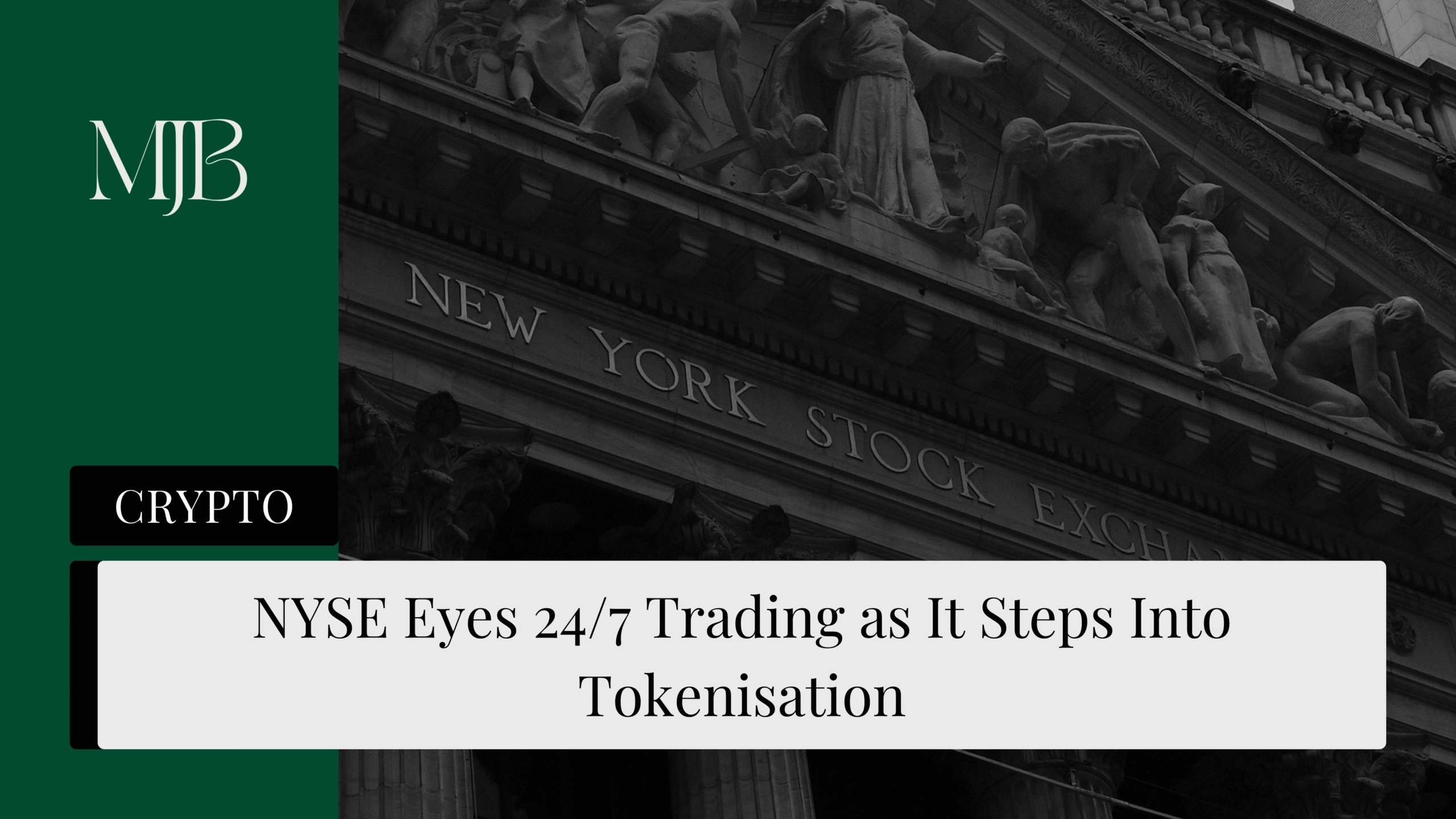
The stock market that never sleeps? It might actually happen. The New York Stock Exchange — the world’s largest — is developing blockchain-powered technology to enable round-the-clock trading of tokenised stocks and ETFs. NYSE President Lynn Martin says the exchange felt a “responsibility” to get involved. The regulator in charge? Sounding unusually enthusiastic. Here’s what’s going on, why it matters, and what comes next.
Why the NYSE Is Taking Tokenisation Seriously
For years, tokenisation — converting real-world assets like stocks or bonds into blockchain-based tokens — was largely a crypto-world talking point. Not anymore.
Speaking at the World Liberty forum in Palm Beach, Lynn Martin made it clear the NYSE isn’t sitting this one out. “We’ve felt the responsibility to enter into the tokenisation conversation,” she said.
The exchange has already built out its tokenisation technology and is actively working with regulators to figure out how it fits within the existing financial framework. The language here is notable: this isn’t exploratory chatter, it’s a development already underway.
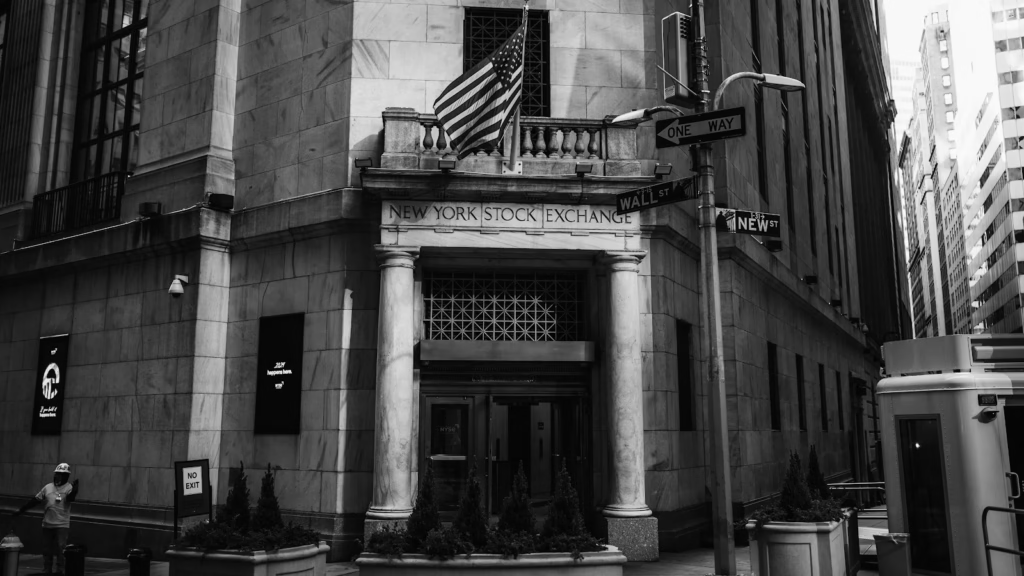
What Tokenisation Actually Offers
So why bother? Tokenised assets come with some genuinely useful upgrades over traditional market infrastructure:
Faster settlement. Blockchain can cut the current T+1 (one business day after the trade date) settlement cycle significantly — potentially to near-instant.
24/7 trading. Crypto markets never close. Tokenised stocks could operate the same way, compared to the NYSE’s current 6.5-hour, five-day-a-week window.
Programmable finance. Smart contracts can automate dividend payments, corporate actions, and more — reducing friction and cost.
Martin also referenced past stress points in traditional markets around liquidity and stability. “We’ve learned from challenges,” she said. “We’re applying those learnings.” In other words, they’re not just copying crypto, they’re trying to do it better.
Regulators Are Actually On Board
The regulatory backdrop for blockchain-based finance has shifted meaningfully under the current US administration.
CFTC Chairman Michael Selig, speaking on the same panel, was direct: “I want that to be very clear — we stand ready to build with the incumbents, new entrants, old technologies, new technologies.” He acknowledged that previous administrations had discouraged development of new financial tools, signalling a clear change in tone.
For the NYSE’s plans to move forward, regulatory sign-off is still required. But having a CFTC chair openly championing collaboration rather than caution is a meaningful shift for the whole tokenised asset space.

What We Know (And Don’t Know) About the Launch
The NYSE is preparing a blockchain-powered platform for launch later this year, but details are thin. As of now, there’s no confirmed launch date, no detailed public roadmap, and no clarity on which specific assets would be available first.
What we do know: the platform is intended to allow 24/7 trading of tokenised stocks and ETFs, subject to regulatory approval. That’s a significant departure from the exchange’s traditional operating model — and a sign of how seriously Wall Street’s oldest institutions are treating this technology.
The Bottom Line
The NYSE entering the tokenisation space isn’t just a tech experiment — it’s a signal that mainstream financial infrastructure is beginning to adapt to blockchain-native expectations. Faster settlement, always-on trading, and smarter financial products aren’t crypto pipe dreams anymore. They’re coming to the world’s biggest stock exchange. Watch this space.
FAQ
Q1: What is tokenisation in finance?
A: Tokenisation converts real-world assets — like stocks, bonds, or ETFs — into blockchain-based digital tokens. This can enable faster settlement, 24/7 trading, and more automated financial processes.
Q2: Is the NYSE actually launching 24/7 stock trading?
A: It’s planning to, pending regulatory approval. The exchange is developing a blockchain-powered platform that would allow round-the-clock trading of tokenised stocks and ETFs, though no firm launch date has been confirmed.
Q3: What does the CFTC’s involvement mean for tokenised assets?
A: CFTC Chairman Michael Selig has signalled strong support for building out new financial technology, marking a shift from the more restrictive stance of previous administrations. This regulatory openness is key to the NYSE’s plans progressing.
Q4: How is this different from cryptocurrency trading?
A: Tokenised stocks represent ownership in real companies regulated by financial authorities — they’re not cryptocurrencies. The blockchain is simply the underlying infrastructure enabling faster, more flexible trading of traditional assets.
Q5: Will retail investors be able to access NYSE tokenised assets?
A: That’s not yet confirmed. The NYSE hasn’t detailed who will have access to its tokenised platform, though the broader direction of travel in the industry points towards eventual retail participation.
DISCLAIMER
Effective Date: 15th July 2025
The information provided on this website is for informational and educational purposes only and reflects the personal opinions of the author(s). It is not intended as financial, investment, tax, or legal advice.
We are not certified financial advisers. None of the content on this website constitutes a recommendation to buy, sell, or hold any financial product, asset, or service. You should not rely on any information provided here to make financial decisions.
We strongly recommend that you:
- Conduct your own research and due diligence
- Consult with a qualified financial adviser or professional before making any investment or financial decisions
While we strive to ensure that all information is accurate and up to date, we make no guarantees about the completeness, reliability, or suitability of any content on this site.
By using this website, you acknowledge and agree that we are not responsible for any financial loss, damage, or decisions made based on the content presented.