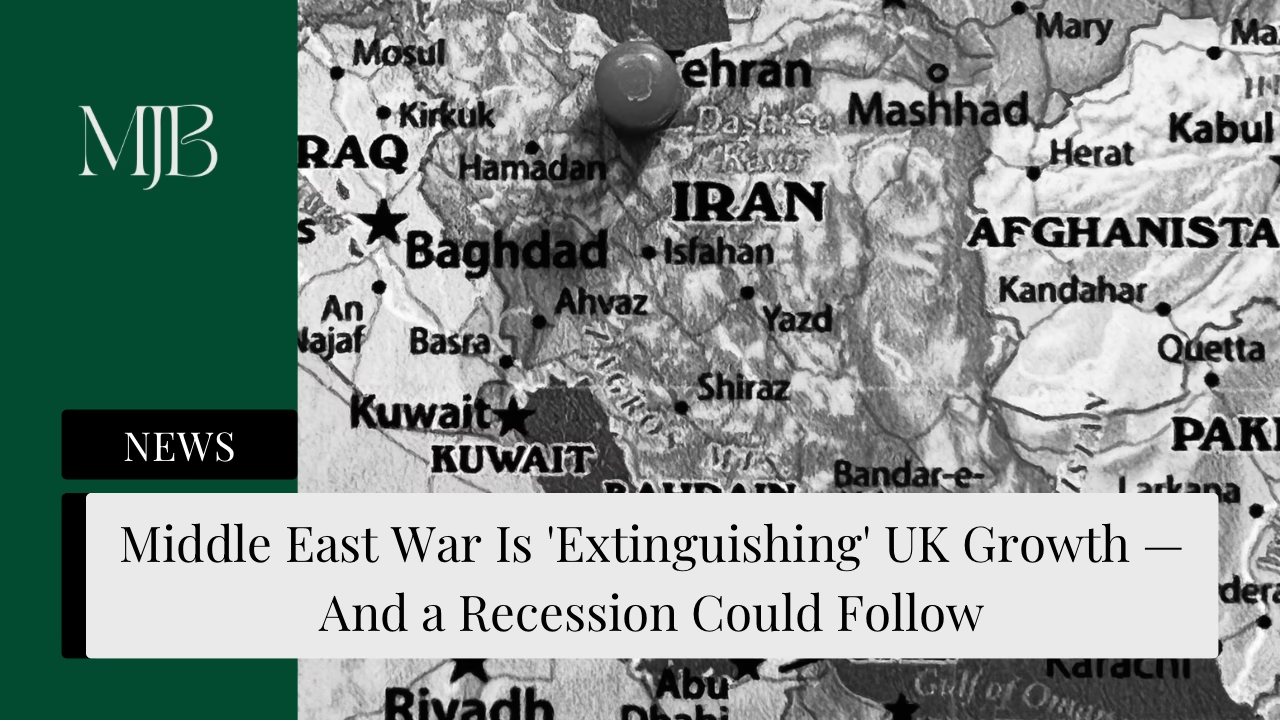
The war isn’t just a foreign policy problem — it’s an economic one. The Middle East conflict is hitting the UK economy harder and faster than many expected. Fresh PMI data from S&P Global shows business activity slowing sharply in March, with cost pressures accelerating at their fastest pace in decades. The flash purchasing managers’ index is clinging to growth territory at just 51 — one point above contraction. And economists at Morgan Stanley are already using the word “recession.” This isn’t a distant risk anymore.
What the PMI Data Shows
S&P Global’s flash PMI for March showed businesses across manufacturing and services reporting:
- A slowdown in output
- Falling domestic and international orders
- Rapidly accelerating cost pressures
The composite index held at 51 — just above the 50-point threshold that separates growth from contraction. Manufacturing output barely scraped through at 50.1. Manufacturers’ input price costs rose by a striking 14 points in March — the biggest monthly jump since October 1992, when Black Wednesday forced the UK out of the European Exchange Rate Mechanism.
Chris Williamson, chief business economist at S&P Global, said the war was “stalling growth while driving inflation sharply higher” — a textbook stagflationary squeeze.

Who’s Feeling It Most
Companies across sectors are pointing directly at the war. Survey respondents cited lost business due to “heightened risk aversion among customers, surging price pressures, higher interest rates, or travel and supply chain disruptions,” according to Williamson.
Supply chains are under particular strain. Around 650 services firms and 650 manufacturers reported longer wait times for raw materials as ships divert away from the Middle East and travel the longer route around South Africa. Services providers also flagged rising cost pressures, and business expectations fell to their lowest level in nine months.
There is a small silver lining: company bosses reported a modest rise in export orders, possibly due to customers stockpiling ahead of expected further disruption.
The Recession Warning
The economic alarm bells are getting louder. Morgan Stanley has warned the UK will face a “pronounced recession” later this year if monetary policy doesn’t ease and commodity prices remain elevated.
Capital Economics’ chief UK economist Paul Dales was blunt: the PMI shows the conflict is “already going a long way to boosting inflation and extinguishing GDP growth — and this is just the start.” He added: “We are a bit struck by how rapid the moves have been.”
The Bank of England’s dilemma is real. Markets are pricing in interest rates rising from 3.75% to 4.25–4.5%, though Dales believes they may have “gone too far.” Lloyds senior economist Rhys Herbert offered a slightly more measured take, noting the UK economy “entered March with stronger momentum than it ended last year” — but cautioned that “businesses are operating in a challenging environment.”

Key Takeaways
The numbers speak clearly: the Middle East war is landing harder on the UK economy than the official forecasts had priced in. Growth is stalling, inflation is rising, and the Bank of England faces a lose-lose on rates. The next few months of data will be critical in determining whether a recession is merely a risk or an inevitability.
FAQ
What did the S&P Global flash PMI show for March 2026?
The flash composite PMI came in at 51, just above the 50 growth threshold. Manufacturing output scored 50.1. Manufacturers’ input costs rose 14 points — the biggest monthly jump since Black Wednesday in October 1992.
Is the UK heading into recession in 2026?
Morgan Stanley has warned of a “pronounced recession” later this year if monetary policy doesn’t ease and energy prices stay elevated. Capital Economics also flagged the risk, calling the PMI data an early sign that growth is being “extinguished.”
How is the Middle East conflict affecting UK supply chains?
Ships are diverting away from the Middle East and sailing around South Africa, causing longer wait times for raw materials. Both manufacturers and services firms reported increased costs and disruption to supply chains.
What is the Bank of England likely to do with interest rates?
Markets are pricing in rates rising from 3.75% to 4.25–4.5%. Capital Economics believes that expectation has gone too far, while the Bank’s MPC has signalled it stands “ready to act” if prices accelerate further.
Which sectors of the UK economy are most affected?
Both manufacturing and services are feeling the impact, with businesses citing customer risk aversion, cost pressures and supply chain delays. Manufacturers are experiencing especially severe cost increases.
DISCLAIMER
Effective Date: 15th July 2025
The information provided on this website is for informational and educational purposes only and reflects the personal opinions of the author(s). It is not intended as financial, investment, tax, or legal advice.
We are not certified financial advisers. None of the content on this website constitutes a recommendation to buy, sell, or hold any financial product, asset, or service. You should not rely on any information provided here to make financial decisions.
We strongly recommend that you:
- Conduct your own research and due diligence
- Consult with a qualified financial adviser or professional before making any investment or financial decisions
While we strive to ensure that all information is accurate and up to date, we make no guarantees about the completeness, reliability, or suitability of any content on this site.
By using this website, you acknowledge and agree that we are not responsible for any financial loss, damage, or decisions made based on the content presented.