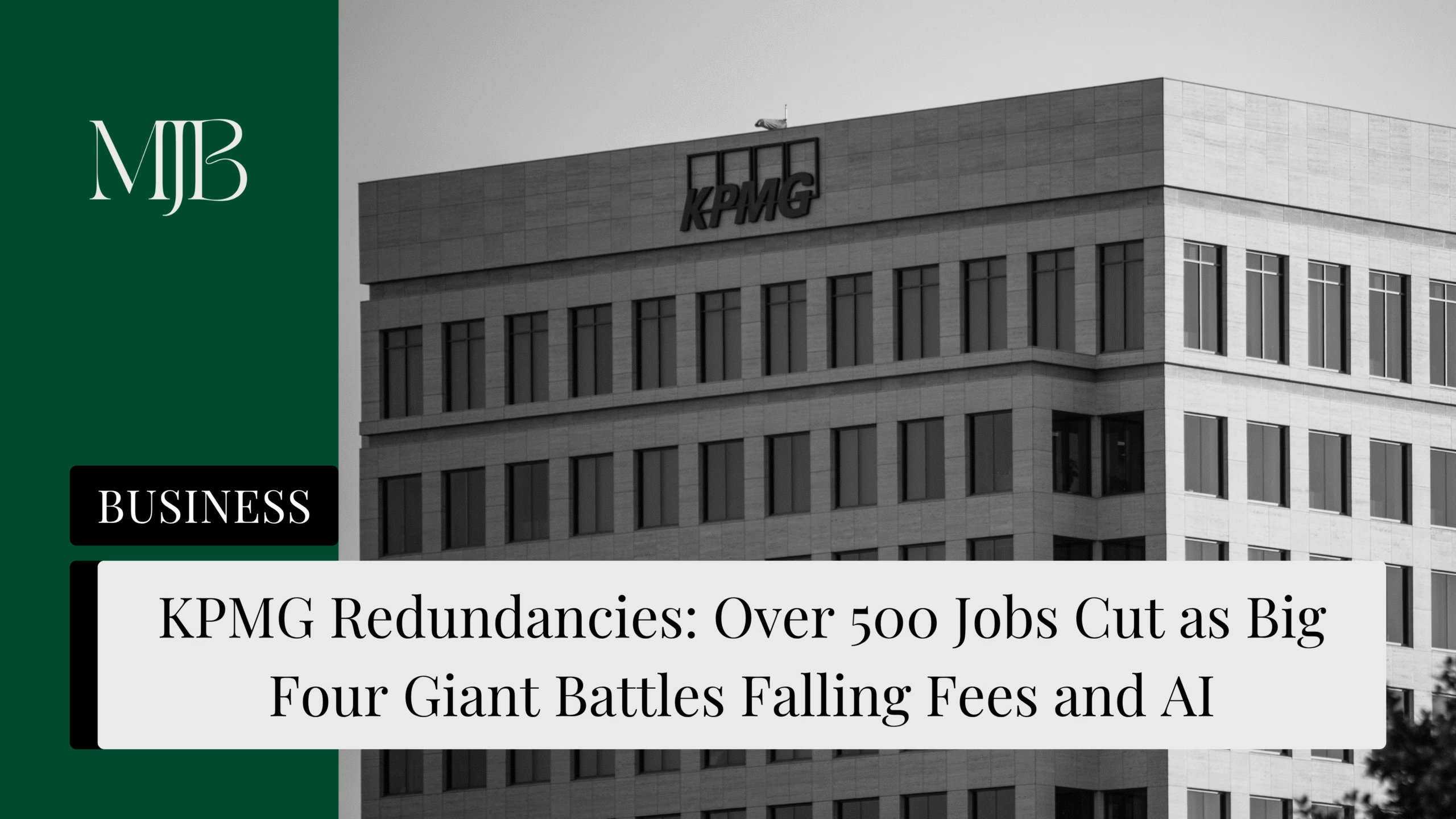
KPMG UK is cutting over 500 employees—mostly assistant managers in its audit arm. It’s a brutal reminder that even Big Four firms aren’t immune to market pressures. The KPMG redundancies affect roughly 440 audit roles and around 120 in advisory, addressing declining audit revenue and the relentless march of AI into accounting. If you’re junior in the Big Four, 2026 isn’t looking like your year. Here’s what’s actually happening, why it matters, and what it signals about the future of accounting jobs.
The Numbers Behind the KPMG Redundancies
This isn’t a gentle restructure. KPMG UK is eliminating roughly 1 in 20 auditing positions and 1 in 50 advisory roles—that’s a significant churn. The cuts focus on assistant manager level: qualified accountants who completed their qualifications around three years ago. These are junior enough to be vulnerable, senior enough to have specialised knowledge. Public sector audit staff are protected, but everyone else is fair game. One source told the Financial Times the advisory cuts are “pretty devastating,” which is finance-speak for “it’s a bloodbath.”

Why Now? The Audit Revenue Squeeze
KPMG’s issue is straightforward: audit fees are falling. Competition from rival firms, price pressure from clients, and shrinking margins mean something’s got to give. The firm had the steepest redundancy numbers among the Big Four during 2023, so this isn’t a one-off moment—it’s a pattern. The firm’s own statement captures the tone perfectly: “current market conditions mean our attrition rates are very low within certain parts of our audit population, which is why we are proposing to right-size those areas.” Translation: people aren’t leaving fast enough, so we’re forcing them out.
AI Is Coming for Spreadsheets (and Maybe Your Job)
KPMG’s leadership is actively exploring AI opportunities to replace administrative and spreadsheet-based accounting work. This isn’t hypothetical future-speak—it’s happening now. The firm even pressured competitor Grant Thornton to reduce fees, with a cheeky request to pass on “AI cost savings” to clients. In other words, automation is already cutting into margins, and KPMG needs to adapt or lose market share. For junior accountants doing formula-heavy work, the outlook isn’t rosy.

What This Means for the Talent Pipeline
Senior executives are genuinely worried. Cutting 400+ junior staff now could create a skills gap later. You can’t just hire experienced auditors from thin air—you grow them from assistants. KPMG’s aggressive pruning risks leaving the firm short-staffed when the market turns, which it eventually will. It’s shortsighted, but it’s also what happens when quarterly pressures dominate strategy.
Key Takeaways
KPMG’s cutting over 500 jobs, mostly junior audit roles, because revenue’s tight and AI is reshaping the work. The Big Four are under genuine pressure, and this won’t be the last wave of cuts you’ll see. If you’re starting an accounting career, the message is clear: specialist skills and adaptability matter more than ever.
Want more like this? Sign up to The MJBurrows Briefing—our free weekly newsletter delivered every Monday morning.
FAQ
Q: Will public sector audit roles be affected?
A: No. KPMG’s statement specifically protects public sector audit staff, likely because those roles are tied to government contracts with different economics. Everyone else is potentially vulnerable.
Q: Why are they cutting if the market’s still operating?
A: Declining audit fees mean margins are shrinking faster than volume. KPMG needs to cut costs now rather than wait for a full recession. It’s a preemptive strike on profitability.
Q: Could AI actually replace audit jobs entirely?
A: Not entirely, but admin-heavy roles (spreadsheet work, data entry, basic reconciliations) are genuinely at risk. Strategic audit work still requires human judgement, but the junior roles doing mechanical tasks are vulnerable.
Q: How does this compare to other Big Four firms?
A: KPMG had the steepest cuts in 2023, so they’re in a worse position than some peers. But the whole sector faces the same pressures, so don’t expect better news from Deloitte, EY, or PwC anytime soon.
DISCLAIMER
Effective Date: 15th July 2025
The information provided on this website is for informational and educational purposes only and reflects the personal opinions of the author(s). It is not intended as financial, investment, tax, or legal advice.
We are not certified financial advisers. None of the content on this website constitutes a recommendation to buy, sell, or hold any financial product, asset, or service. You should not rely on any information provided here to make financial decisions.
We strongly recommend that you:
- Conduct your own research and due diligence
- Consult with a qualified financial adviser or professional before making any investment or financial decisions
While we strive to ensure that all information is accurate and up to date, we make no guarantees about the completeness, reliability, or suitability of any content on this site.
By using this website, you acknowledge and agree that we are not responsible for any financial loss, damage, or decisions made based on the content presented.