Markets don’t like surprises — and an Iranian attack on the Strait of Hormuz is about as big a surprise as they come. With US and Israeli strikes hitting at least five Iranian cities, and Iran retaliating against Israel, investors are now bracing for an oil price spike that could reignite inflation across the UK and beyond. Here’s what’s happening, what it could cost, and where smart money might be heading.
Why the Strait of Hormuz Matters So Much
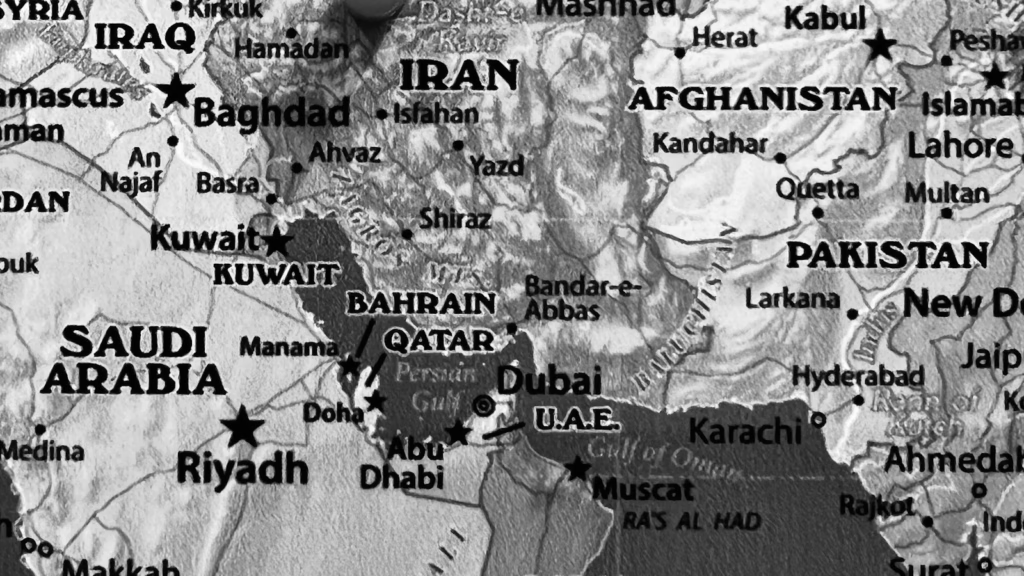
The Strait of Hormuz isn’t just a shipping lane — it’s the jugular vein of the global energy market. Roughly a fifth of the world’s oil and gas passes through it every day. Block it, and you’ve got an immediate supply crunch.
Foreign Secretary David Lammy called any Iranian move to close the strait a “catastrophic mistake.” He wasn’t being dramatic.
Oil at $100? The Numbers Behind the Fear
Before the weekend’s escalation, Brent crude was sitting at around $73 a barrel. Analysts at Capital Economics now warn that Iranian strikes on the strait could push that to $100.
Chief emerging markets economist William Jackson put the risk plainly: even limited strikes could send oil toward $80, while a prolonged conflict disrupting supply could drive prices “much higher.” His models suggest every significant move up in oil could add up to 0.7 percentage points to global inflation — bad news for central banks already walking a tightrope.
The political risk premium baked into oil prices has already risen sharply amid the US military build-up in the region. Markets haven’t fully priced in the worst-case scenario yet.
What Investors Are Watching When Markets Reopen
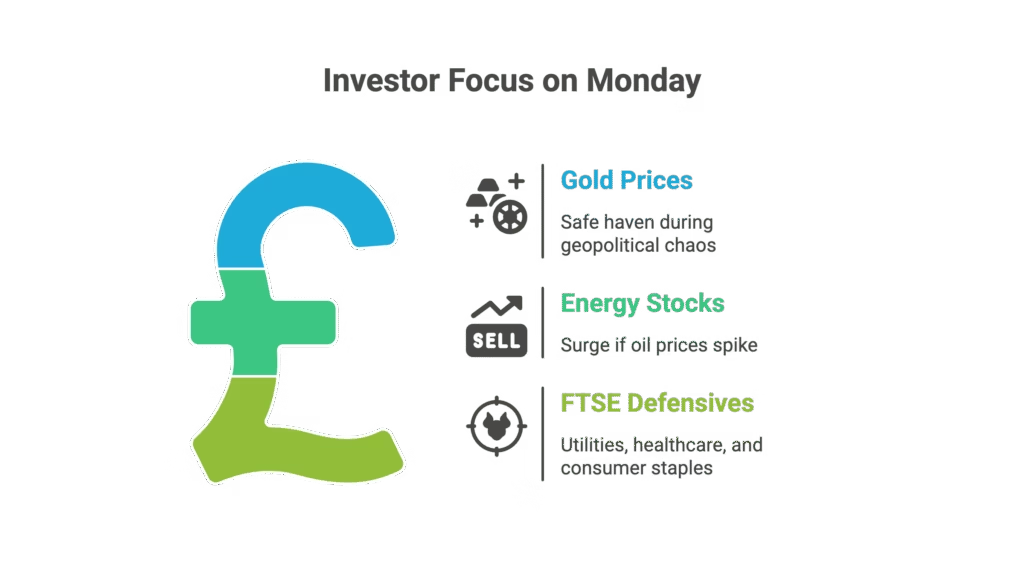
Eyes will be glued to three things on Monday:
- Gold prices — the classic safe haven during geopolitical chaos
- Energy stocks — likely to surge if oil spikes
- FTSE defensives — utilities, healthcare, and consumer staples
Susannah Streeter, chief investment strategist at Wealth Club, offered some perspective for long-term investors: “For investors owning quality companies over the long term, big bumps in the road are part of the journey.”
Defensive assets — think high-dividend stocks, gold, and utilities — tend to hold up better when markets get jittery. If volatility spikes, these could act as a cushion.
The UK’s Inflation Problem Just Got More Complicated
The UK was already navigating a tricky inflation picture. An oil shock would make the Bank of England’s job significantly harder — higher energy costs feed directly into transport, manufacturing, and household bills.
A UK government spokesperson called for no “further escalation into a wider regional conflict,” but diplomatic language doesn’t move oil markets. Traders do.
Conclusion
The Strait of Hormuz crisis is a live risk, not a hypothetical. Oil at $100 is on the table, inflation could tick back up, and investors need a defensive game plan. Keep an eye on gold, energy plays, and dividend-heavy stocks — and resist the urge to panic-sell quality holdings. Markets have weathered geopolitical shocks before.
FAQ
Q1: Why is the Strait of Hormuz so important to oil prices?
A: Around 20% of global oil and gas trade flows through this narrow waterway. Any disruption — even the threat of one — immediately tightens supply expectations and pushes prices higher.
Q2: How high could oil prices go if Iran attacks?
A: Capital Economics estimates oil could jump from ~$73 to $100 a barrel in a worst-case scenario. A more limited conflict could still push prices to around $80.
Q3: How would higher oil prices affect UK inflation?
A: Rising oil feeds into energy bills, fuel costs, and manufacturing prices across the board. Capital Economics suggests a major spike could add up to 0.7 percentage points to global inflation — including in the UK.
Q4: What assets tend to hold up during geopolitical crises?
A: Gold, utilities, healthcare stocks, consumer staples, and high-dividend companies historically show more resilience during periods of market uncertainty.
Q5: Are nuclear negotiations between the US and Iran still possible?
A: Talks had been scheduled in Switzerland, but the weekend’s airstrikes have significantly darkened the diplomatic outlook. A return to the negotiating table looks unlikely in the short term.
DISCLAIMER
Effective Date: 15th July 2025
The information provided on this website is for informational and educational purposes only and reflects the personal opinions of the author(s). It is not intended as financial, investment, tax, or legal advice.
We are not certified financial advisers. None of the content on this website constitutes a recommendation to buy, sell, or hold any financial product, asset, or service. You should not rely on any information provided here to make financial decisions.
We strongly recommend that you:
- Conduct your own research and due diligence
- Consult with a qualified financial adviser or professional before making any investment or financial decisions
While we strive to ensure that all information is accurate and up to date, we make no guarantees about the completeness, reliability, or suitability of any content on this site.
By using this website, you acknowledge and agree that we are not responsible for any financial loss, damage, or decisions made based on the content presented.