

Introduction
Think London’s stock market is a ghost town? The Financial Conduct Authority has news for you: you’re looking at the wrong numbers. The City watchdog is about to pull back the curtain on UK share trading data and they reckon actual liquidity could be four times higher than what’s currently reported. Between January and September last year alone, the LSE recorded 270 million transactions. The FCA’s estimate? Over a billion. That’s not a rounding error—that’s a perception problem that’s been costing the UK listings for years.
Why Current Liquidity Data Tells Half the Story
Here’s the issue: most liquidity estimates only track the London Stock Exchange’s central limit order book. Sounds comprehensive, right? Wrong.
What’s Missing from the Numbers
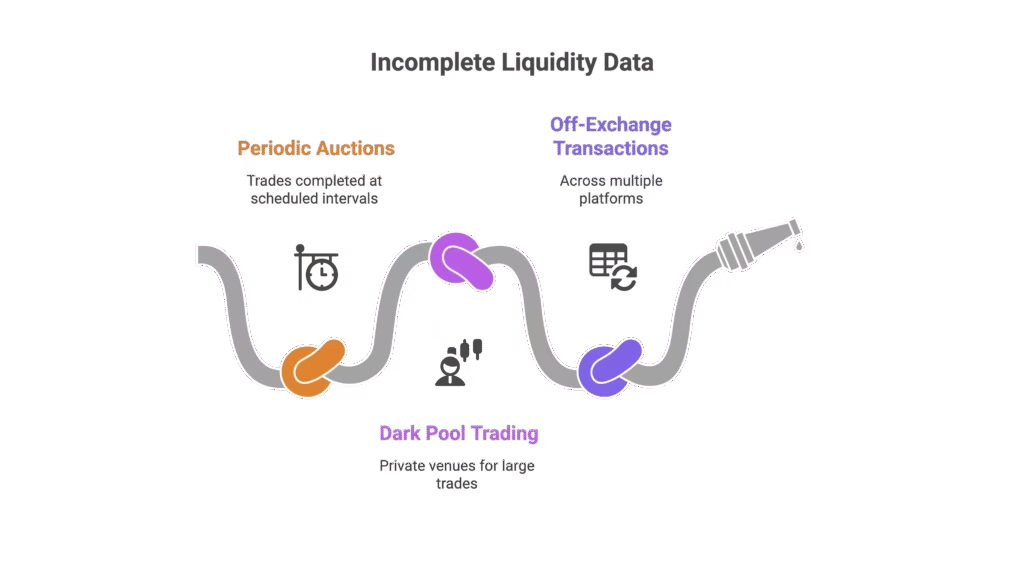
Current data excludes:
- Periodic auctions at the LSE (trades completed at scheduled intervals)
- Dark pool trading (private venues for large institutional trades)
- Off-exchange transactions across multiple platforms
Dark pools alone handle massive volume. These private trading venues let big players execute chunky orders without moving the market—think pension funds quietly shifting £50 million positions without causing price spikes.
“The truth is we have way more liquidity here than is often reported, and that is just silly,” Simon Walls, interim director of markets at the FCA, told the Financial Times.
The FCA’s Stopgap Solution
The regulator isn’t waiting around. They’re planning to collect and publish comprehensive trading data immediately—a temporary fix until the official ‘consolidated tape’ launches soon.
What’s a Consolidated Tape?
It’s essentially a single feed bringing together trading data from every platform. Think of it as switching from watching individual CCTV cameras to having one screen showing everything at once.
The FCA is willing to “step in and just sort this out” even at “a little bit of risk” to themselves, Walls said. Translation: they’re fed up with companies citing dodgy liquidity figures as an excuse to delist.

How Liquidity Myths Are Hurting UK Markets
The perception gap has real consequences. In 2024, around 88 companies either delisted entirely or moved their primary listing away from the UK.
Companies Who Cited Liquidity Concerns
Flutter Entertainment said switching to New York would give them access to “the world’s deepest and most liquid capital markets.”
Tui pointed out less than 25% of its share trading happened in London, compared to its Frankfurt listing.
But here’s the kicker: the FCA’s been circulating a ‘myth-busting’ document claiming real liquidity across FTSE indices is comparable to the S&P 500 and Nasdaq 100. If true, these companies are making decisions based on incomplete data.
“Sometimes when an issuer has historically chosen to move from the UK to the US, one of the thoughts is that liquidity is lower in the UK and often it’s not true,” Walls explained.

What This Means for UK Public Markets
This data push is part of a broader effort to revive London’s battered public markets. The UK’s been haemorrhaging listings, and incomplete liquidity data has been adding fuel to the fire.
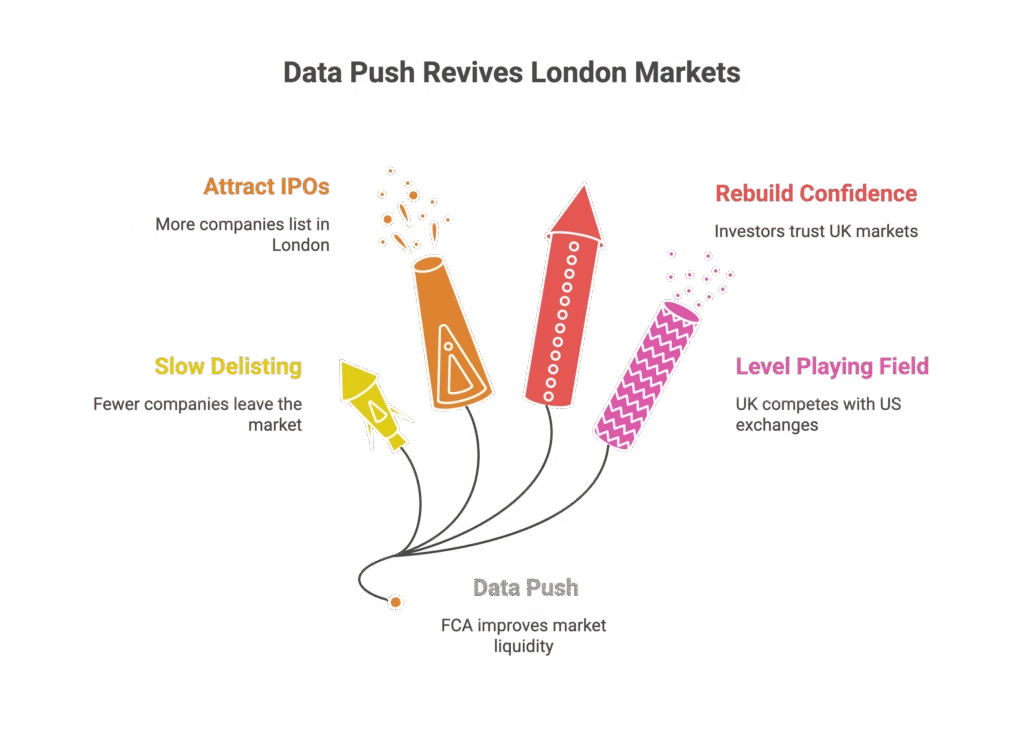
If the FCA can prove UK markets are more liquid than companies think, it might:
- Slow the delisting exodus
- Attract new IPOs to London
- Rebuild confidence in UK capital markets
- Level the playing field with US exchanges
The question is whether better data alone can reverse years of negative sentiment. Perception has a nasty habit of becoming reality in financial markets.
Conclusion
The FCA’s liquidity data initiative is a long-overdue reality check. If UK market liquidity really is four times higher than reported, that’s a massive misunderstanding that’s been driving corporate decisions for years. Whether publishing the full picture can stop the London listing exodus remains to be seen—but transparency is a solid first step. Keep an eye on the consolidated tape launch in the coming months.
FAQ
Q1: Why is London share trading liquidity underestimated?
A: Current estimates only track the LSE’s central limit order book, excluding periodic auctions and dark pool trading. This captures maybe a quarter of actual trading volume, creating a false perception that UK markets lack liquidity.
Q2: What is the FCA’s consolidated tape?
A: It’s a unified data feed that will aggregate trading information from all platforms—exchanges, dark pools, and off-exchange venues. Think of it as a comprehensive view of every share trade happening across the UK market.
Q3: How many companies left the London Stock Exchange in 2024?
A: Around 88 companies either delisted completely or transferred their primary listing away from the UK in 2024. Many cited concerns about liquidity and access to deeper capital markets as reasons for leaving.
Q4: Are UK markets really as liquid as the S&P 500?
A: According to the FCA’s internal ‘myth-busting’ document, yes—when you account for all trading venues, FTSE indices show liquidity levels comparable to major US benchmarks. The problem is that comprehensive data hasn’t been publicly available until now.
Q5: When will the FCA start publishing complete trading data?
A: The FCA is working on an immediate stopgap measure to publish comprehensive data now, ahead of the official consolidated tape launch. Exact timing hasn’t been confirmed, but the regulator has signalled urgency.
DISCLAIMER
Effective Date: 15th July 2025
The information provided on this website is for informational and educational purposes only and reflects the personal opinions of the author(s). It is not intended as financial, investment, tax, or legal advice.
We are not certified financial advisers. None of the content on this website constitutes a recommendation to buy, sell, or hold any financial product, asset, or service. You should not rely on any information provided here to make financial decisions.
We strongly recommend that you:
- Conduct your own research and due diligence
- Consult with a qualified financial adviser or professional before making any investment or financial decisions
While we strive to ensure that all information is accurate and up to date, we make no guarantees about the completeness, reliability, or suitability of any content on this site.
By using this website, you acknowledge and agree that we are not responsible for any financial loss, damage, or decisions made based on the content presented.