
Big Four firm Deloitte just posted something worth noting: growing profit while revenue shrank. How? The UK arm posted a four per cent profit increase to £789m for the year ending May 2025, even as revenue dipped from £5.75bn to £5.68bn. It’s a classic case of doing more with less (as we are seeing more and more)—but the story gets more nuanced when you look at which divisions thrived and which took a beating.
The Numbers That Matter
Deloitte’s distributable profit climbed from £756m to £789m, and profit per equity partner (PEP) recovered nicely after last year’s five per cent nosedive. PEP now sits at £1.051m, up from £1.012m in 2024.
But here’s the mixed bag:
Winners:
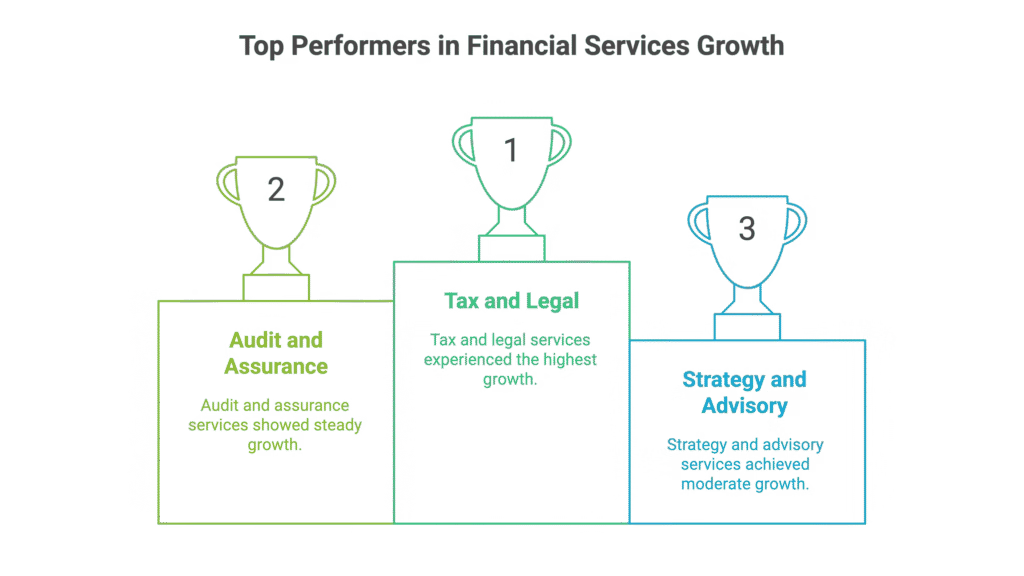
- Tax and legal grew seven per cent (£1.25bn to £1.33bn)
- Audit and assurance up three per cent (£941m to £969m)
- Strategy and advisory rose three per cent to £901m
The loser:
- Technology and transformation crashed 10 per cent to £1.67bn
That tech drop? It’s the headline story. Clients pumped the brakes on large-scale change programmes as economic uncertainty lingered. When budgets tighten, expensive digital transformations are often first on the chopping block.
Why Tech Took the Hit
Deloitte’s technology division faced what CEO Richard Houston called “a tougher market.” Companies aren’t avoiding tech entirely—they’re just pickier about where they spend. Big, multi-year transformation projects? Too risky right now. Smaller, tactical upgrades? Still happening.
This isn’t unique to Deloitte. Across the consulting world, firms are seeing clients delay or downsize major tech investments. Geopolitical tension and economic headwinds make CFOs nervous, and IT budgets reflect that caution.

Cost-Cutting and Strategic Shifts
Deloitte didn’t sit idle. The firm made “changes to the shape” of its business—corporate speak for restructuring. That included around 250 redundancies in October 2024, though the firm didn’t spotlight this in its official results.
At the same time, Deloitte hired 3,160 new employees, including over 1,900 graduates and apprentices. It promoted 5,500 people (60 to partner) and converted 77 salaried partners to equity—nearly triple last year’s number.
The firm also invested £253m in salary increases and bonuses, plus £64m in learning and development. Translation: they’re trimming in some areas while doubling down on talent retention and growth pockets.
Investing in AI and Regional Growth
Despite the revenue dip, Deloitte ramped up tech spending from £135m to £158m. The star? PairD, its GenAI platform, now generating over one million prompts monthly from UK staff alone.
The firm’s also expanding geographically with new offices in Bristol and Aberdeen, plus four tech delivery centres in Belfast, Cardiff, Manchester, and Newcastle. It’s a bet on regional talent and distributed teams—smart moves as companies rethink where work happens.

What This Means for the Big Four
Deloitte’s results mirror broader trends: professional services firms are navigating choppy waters but staying profitable through restructuring and selective investment. Tax advisory remains hot (thanks to complex regulations), audit is steady (mandatory work doesn’t disappear), but discretionary consulting—especially big tech projects—is under pressure.
Houston’s takeaway? “We’ve remained resilient with notable client successes.” That’s CEO optimism, but the numbers back it up. Profit’s growing, just not through top-line revenue growth.
Conclusion
Deloitte UK proved you can shrink revenue and still fatten profit margins—if you’re strategic. The tech division’s 10 per cent drop stings, but tax, audit, and advisory growth softened the blow. With £158m in new tech investments and aggressive regional expansion, Deloitte’s betting on AI and geographic diversification to drive future growth. Whether that’s enough in an uncertain market? We’ll know this time next year.
Want to stay ahead of Big Four trends? Track how consulting firms balance cost-cutting with innovation—it’s where the industry’s headed.
FAQ
Q1: What was Deloitte UK’s revenue for 2025?
A: Deloitte UK posted £5.68bn in revenue for the year ending May 2025, down slightly from £5.75bn the previous year. Despite the dip, profit grew four per cent to £789m.
Q2: Why did Deloitte’s technology division struggle?
A: The tech and transformation business saw revenue fall 10 per cent to £1.67bn as clients delayed large-scale change programmes amid economic uncertainty. Companies prioritised cost management over big IT investments.
Q3: How much does Deloitte contribute in UK taxes?
A: Deloitte’s total UK tax contribution for FY25 was £1.78bn, including £1.14bn collected on behalf of HMRC and £643m related to equity partners. It’s a significant chunk of public finances.
Q4: What is Deloitte’s PairD platform?
A: PairD is Deloitte’s proprietary GenAI platform, currently generating over one million prompts per month from UK employees. It’s part of the firm’s £158m tech investment strategy for FY25.
Q5: Is Deloitte hiring or cutting jobs?
A: Both. Deloitte hired 3,160 new employees in FY25, including 1,900+ graduates and apprentices, while also making around 250 redundancies in October 2024 as part of restructuring efforts.
DISCLAIMER
Effective Date: 15th July 2025
The information provided on this website is for informational and educational purposes only and reflects the personal opinions of the author(s). It is not intended as financial, investment, tax, or legal advice.
We are not certified financial advisers. None of the content on this website constitutes a recommendation to buy, sell, or hold any financial product, asset, or service. You should not rely on any information provided here to make financial decisions.
We strongly recommend that you:
- Conduct your own research and due diligence
- Consult with a qualified financial adviser or professional before making any investment or financial decisions
While we strive to ensure that all information is accurate and up to date, we make no guarantees about the completeness, reliability, or suitability of any content on this site.
By using this website, you acknowledge and agree that we are not responsible for any financial loss, damage, or decisions made based on the content presented.