Payments giant Block has just announced it’s slashing nearly 4,000 jobs, dropping headcount from over 10,000 to just under 6,000. The kicker? The company insists it’s not struggling financially. Gross profit is growing, profitability is improving, and revenues look healthy. So why the mass layoffs? AI. And Block’s unusually candid admission is one of the clearest signals yet that AI-driven job cuts are no longer a distant threat — they’re happening right now.
Half the Workforce. Gone. And It’s Not About Money.
Rather than blaming a downturn or cost pressures, Block says smaller, flatter teams powered by AI tools are enabling an entirely new way of running a business — and that fundamentally changes how many people you actually need.
Co-founder and CEO Jack Dorsey shared the staff memo publicly on X, and the message was refreshingly direct. “We’re already seeing that the intelligence tools we’re creating and using, paired with smaller and flatter teams, are enabling a new way of working,” the note read. “That fundamentally changes what it means to build and run a company.”
The company also justified moving fast. Dragging cuts out over several years, it argued, would damage morale and trust more than one clear, decisive action now.
It’s worth noting that not everyone is convinced. Some analysts and commentators have questioned whether AI is the real driver here, pointing to Block’s significant pandemic-era overhiring as a more likely culprit. Dorsey has disputed this, but the debate adds context to the announcement.

What Affected Employees Are Getting
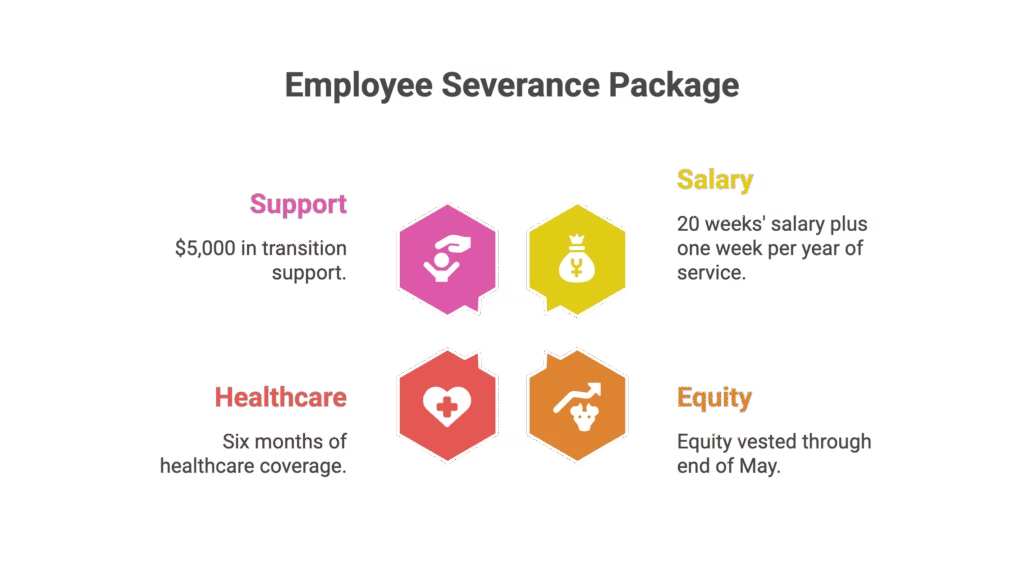
Block isn’t leaving workers empty-handed. Affected employees will receive:
- 20 weeks’ salary, plus one week per year of service
- Equity vested through end of May
- Six months of healthcare
- $5,000 in transition support
The company was careful to note the decision was “not a reflection” of individual contributions — though that’s cold comfort for 4,000 people heading for the door.
Why This Matters Beyond Block
Block’s announcement isn’t happening in a vacuum — it’s part of a much bigger picture.
Over 30,000 tech roles have reportedly been cut since the start of 2026, even as many firms continue posting strong revenues. That disconnect — profitable companies, shrinking headcounts — is becoming the defining tension of the AI era.
In the UK, unemployment has already ticked up to 5.2% — its highest level in nearly five years, per the latest ONS data — and businesses are increasingly hitting pause on hiring as automation expands. Research from Helm found that a third of Britain’s scale-up founders expect AI-driven job cuts within the next year, with 58% already delaying or reducing recruitment because of AI adoption.
Block’s move is arguably the clearest admission yet from a major tech firm that AI isn’t just changing how work gets done — it’s changing how much human labour is needed at all.
What This Signals for the Wider Jobs Market
For years, the debate around AI and jobs has been largely theoretical. Block just made it very real.
The company framed its restructuring as embedding AI into “everything we do — how we work, how we create, how we serve our customers.” That’s not efficiency-speak. That’s a strategic pivot away from human headcount as a growth lever.
If a profitable, fast-growing payments company is making this call now, others will follow. Dorsey himself predicted that the majority of companies will reach the same conclusion within the next year. The question isn’t whether AI will reshape the workforce — it’s how quickly, and who bears the cost.

The Bottom Line
Block’s 4,000 job cuts are a landmark moment: a financially healthy company openly citing AI as the direct driver of large-scale redundancies. Whether or not you believe the AI rationale fully, the direction of travel is clear. With similar trends emerging across tech globally and UK unemployment already rising, this is less a one-off story and more an early signal of structural workforce change. Stay sharp — this is just the beginning.
FAQ
Q1: Why is Block cutting jobs if it’s profitable?
A: Block says AI tools are enabling leaner, more efficient teams — so it no longer needs the same headcount to run the business. The cuts are about restructuring for an AI-first operating model, not fixing financial problems, though some analysts have questioned whether pandemic overhiring is a bigger factor.
Q2: What redundancy package will affected Block employees receive?
A: Workers are getting 20 weeks’ salary plus one week per year of service, equity vested through end of May, six months of healthcare, and $5,000 in transition support.
Q3: How does Block’s move fit into broader AI job cut trends?
A: It’s part of a clear pattern. Over 30,000 tech roles have been cut since early 2026, and UK data shows businesses are already slowing hiring due to AI adoption. Block is one of the most explicit companies to name AI as the direct cause.
Q4: What does this mean for UK workers specifically?
A: UK unemployment has risen to 5.2% — its highest level in nearly five years — and a third of scale-up founders expect AI-driven cuts within the year. Block’s announcement adds pressure to an already uncertain jobs market.
Q5: Will other companies follow Block’s lead?
A: Dorsey thinks so, predicting that most companies will make similar structural changes within the next year. When a profitable company publicly attributes mass layoffs to AI efficiency gains, it signals a broader shift in how businesses think about headcount.
DISCLAIMER
Effective Date: 15th July 2025
The information provided on this website is for informational and educational purposes only and reflects the personal opinions of the author(s). It is not intended as financial, investment, tax, or legal advice.
We are not certified financial advisers. None of the content on this website constitutes a recommendation to buy, sell, or hold any financial product, asset, or service. You should not rely on any information provided here to make financial decisions.
We strongly recommend that you:
- Conduct your own research and due diligence
- Consult with a qualified financial adviser or professional before making any investment or financial decisions
While we strive to ensure that all information is accurate and up to date, we make no guarantees about the completeness, reliability, or suitability of any content on this site.
By using this website, you acknowledge and agree that we are not responsible for any financial loss, damage, or decisions made based on the content presented.