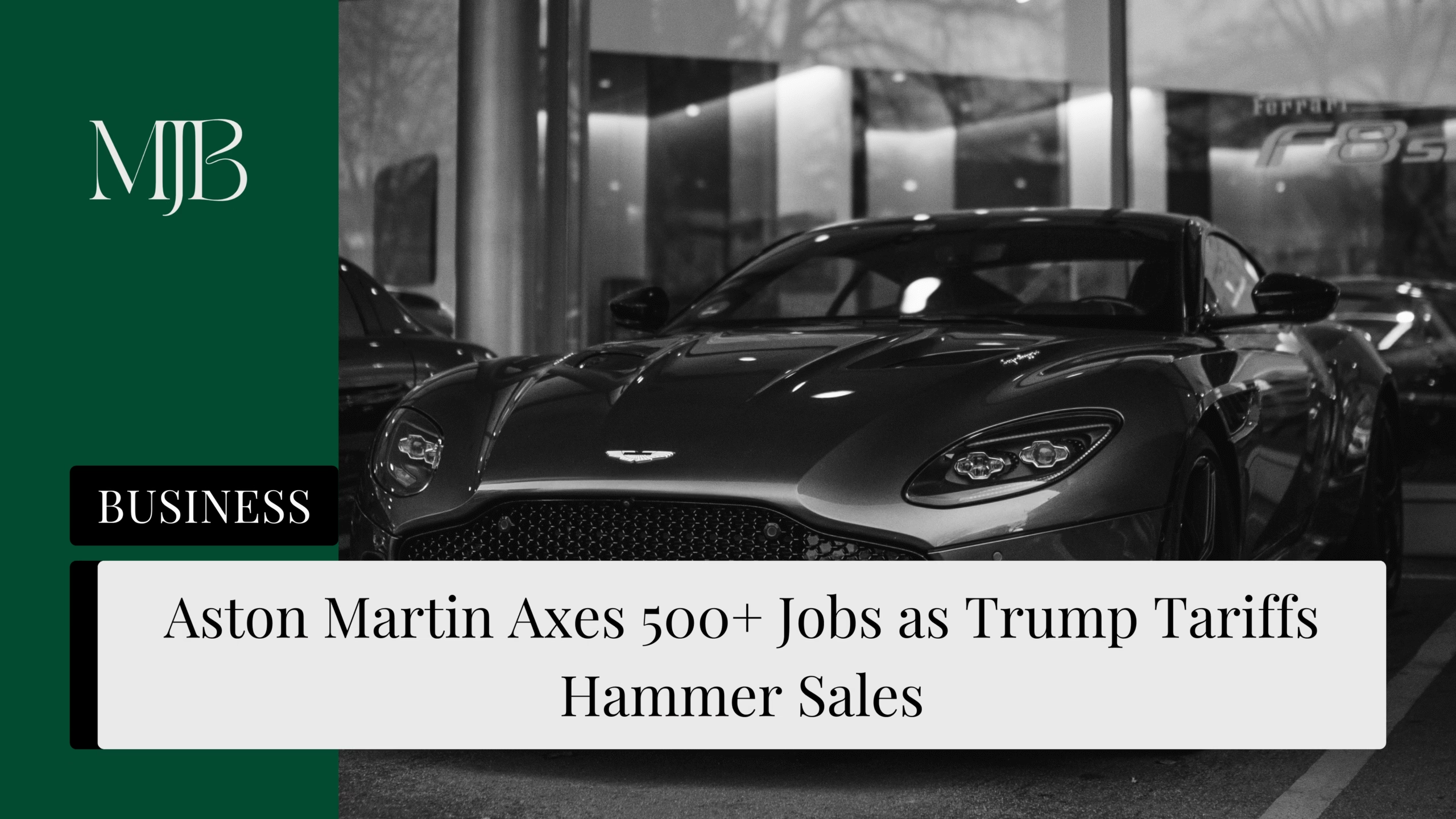
Aston Martin is in trouble. The British luxury carmaker has announced plans to cut roughly 20% of its global workforce, equating to more than 500 jobs, as profits tank and US tariffs continue to bite. With revenue down 21% and wholesale volumes falling 10%, the road ahead looks bumpy.
So what went wrong, and can Aston Martin course-correct? Let’s break it down.
Why Aston Martin Is Cutting 500+ Jobs
The company has set aside £18.7m to cover expected restructuring costs as it consults on slashing a fifth of its roughly 3,000-strong workforce. That’s a dramatic move and analysts aren’t convinced it’s enough on its own.
Aarin Chiekrie, equity analyst at Hargreaves Lansdown, put it plainly: cutting headcount is “only part of the puzzle.” Without a meaningful recovery in sales volumes, the maths don’t add up. Fewer staff means less capacity — and less capacity makes a volume ramp-up nearly impossible.

The Trump Tariff Effect
Aston Martin’s woes aren’t entirely self-inflicted. When Trump slapped steep tariffs on foreign-made cars, British manufacturers — including Aston Martin and Jaguar Land Rover — were forced to suspend US-bound shipments from April. The US is a critical market for luxury vehicles, so the timing couldn’t have been worse.
UK car production hit its lowest level since 1949 last May. Aston Martin’s chief executive Adrian Hallmark cited “an unprecedented backdrop of geopolitical uncertainties and macroeconomic pressures, including heightened tariffs in the US and China” as key drags on performance.
Translation: Trump’s trade policy has done real damage to a brand whose cars carry an average selling price of £185k — and whose biggest buyers are wealthy Americans.

The Numbers Don’t Lie
The financials make for grim reading:
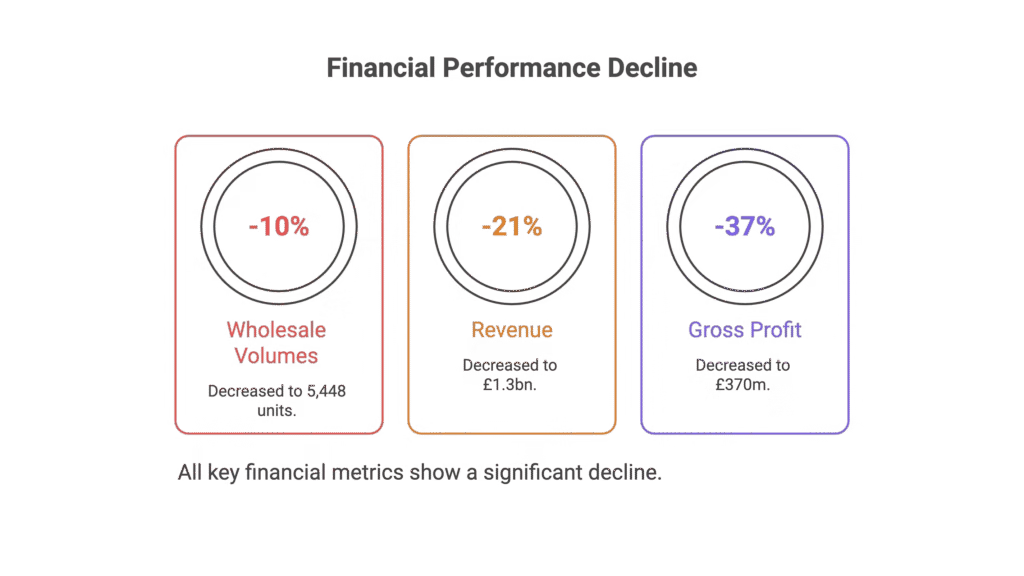
- Wholesale volumes: Down 10% to 5,448 units
- Revenue: Down 21% to £1.3bn
- Gross profit: Down 37% to £370m
And it gets worse. Aston Martin didn’t just see profits shrink — it posted an operating loss of £259.2m for 2025, widening sharply from the prior year. That’s a significant deterioration across the board, and it explains why the company is restructuring rather than investing.
Can the Valhalla Save It?
There’s a glimmer of hope. Aston Martin is pencilling in around 500 deliveries of its limited-edition hybrid supercar, the Valhalla, in 2026. Hallmark called the model’s launch the “highlight of the year” and expressed confidence that upcoming products would position the brand for a comeback.
The company is targeting a “material improvement” in financial performance this year, with a focus on margin expansion and cash flow generation. Whether that’s realistic depends heavily on whether the tariff environment eases, and whether wealthy buyers keep opening their wallets.

The Bottom Line
Aston Martin is fighting on multiple fronts: a hostile trade environment, falling sales, and now a major restructuring. Cutting jobs buys breathing room, but Chiekrie’s warning rings true — without volume recovery, the cuts only go so far. The Valhalla gives the brand a narrative, but it’s a limited-edition run, not a volume play.
Watch this space. The next 12 months will be telling for one of Britain’s most iconic car brands.
FAQ
Q1: Why is Aston Martin cutting jobs?
A: Aston Martin is reducing its workforce by around 20% — over 500 roles — as part of a restructuring in response to falling sales, declining revenue, and the financial impact of US and China tariffs.
Q2: How have Trump’s tariffs affected Aston Martin?
A: After the US imposed steep tariffs on foreign-made cars, Aston Martin suspended US-bound shipments, hitting sales volumes hard. The US is one of its most important markets for high-margin luxury vehicles.
Q3: What is the Aston Martin Valhalla?
A: The Valhalla is a limited-edition hybrid supercar that Aston Martin expects to deliver around 500 units of in 2026. It’s central to the brand’s near-term recovery plan and seen as a key revenue driver.
Q4: Is Aston Martin profitable?
A: The company remains profitable but margins are under pressure. Profit fell 37% to £370m in the latest annual results, while revenue dropped 21% to £1.3bn.
Q5: What’s next for Aston Martin?
A: The company is targeting improved financial performance in 2026, driven by Valhalla deliveries and operational efficiencies from its transformation strategy. Long-term success, however, hinges on reversing the slide in sales volumes.
DISCLAIMER
Effective Date: 15th July 2025
The information provided on this website is for informational and educational purposes only and reflects the personal opinions of the author(s). It is not intended as financial, investment, tax, or legal advice.
We are not certified financial advisers. None of the content on this website constitutes a recommendation to buy, sell, or hold any financial product, asset, or service. You should not rely on any information provided here to make financial decisions.
We strongly recommend that you:
- Conduct your own research and due diligence
- Consult with a qualified financial adviser or professional before making any investment or financial decisions
While we strive to ensure that all information is accurate and up to date, we make no guarantees about the completeness, reliability, or suitability of any content on this site.
By using this website, you acknowledge and agree that we are not responsible for any financial loss, damage, or decisions made based on the content presented.