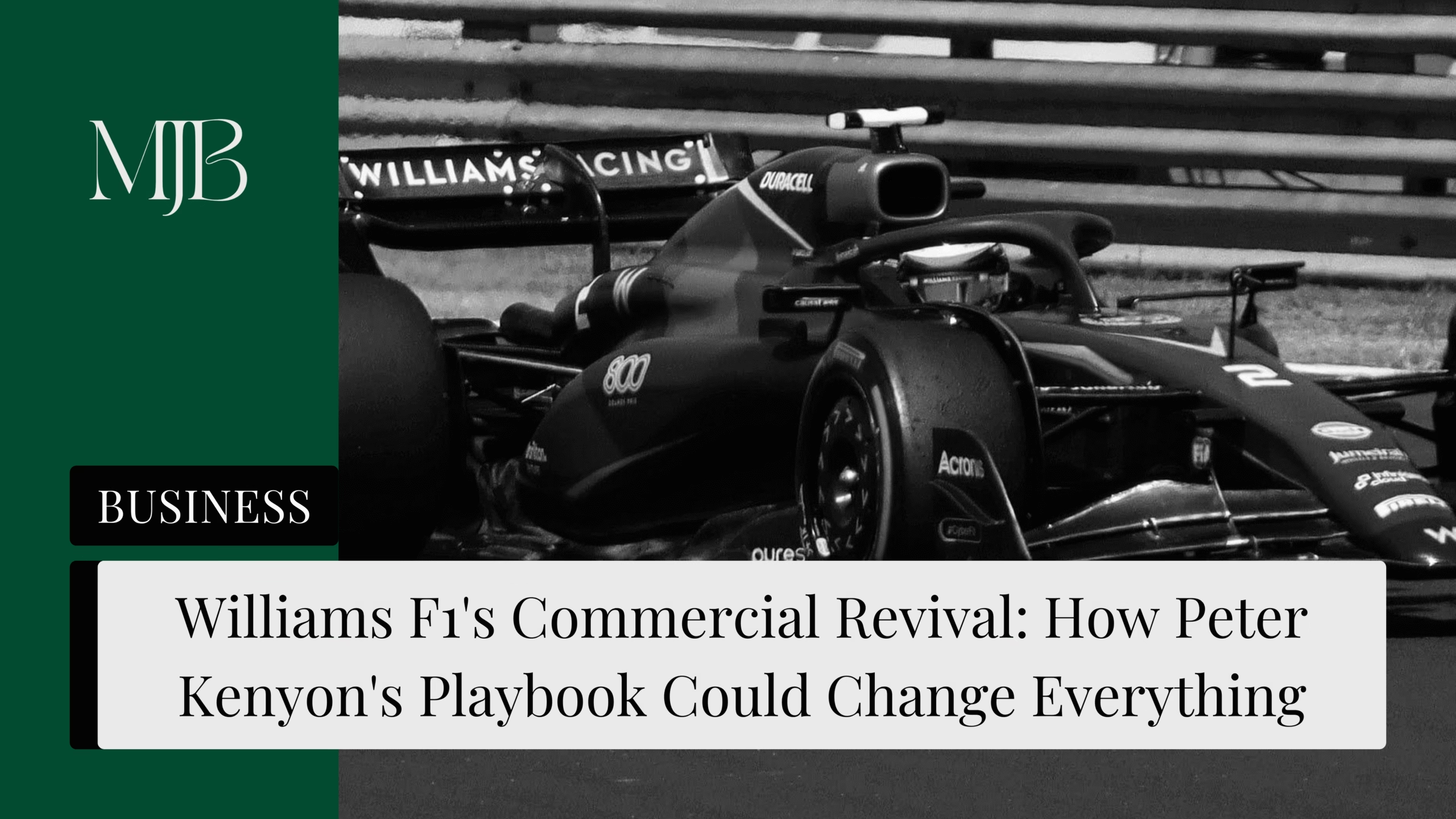
Williams F1 isn’t just rebuilding on the track, it’s rewriting the sponsorship playbook. With legendary commercialisation expert Peter Kenyon now steering the business side, the historic Oxfordshire team has landed game-changing deals with Atlassian, Anthropic, and Barclays. The result? Williams is no longer just competing with nine other F1 teams; they’re going head-to-head with football’s elite and the NBA for partner dollars. That’s not a typo. Here’s how a 75-year-old motorsport institution became a fintech and AI magnet.
The Man Who Turned United and Chelsea Into Sponsorship Goldmines
Peter Kenyon’s CV reads like a sponsorship hall of fame. He helped architect Manchester United’s ascent into a commercial powerhouse, then did it all over again at Chelsea—this time with Roman Abramovich’s wallet and José Mourinho’s star power. Fast forward five years, and Kenyon is now a board advisor at Williams, deployed to do what he does best: make historic brands irresistible to deep-pocketed partners.
“We’ve been involved with the business for five years now,” Kenyon stated. “It’s an incredible brand with lots of legacy and great values, and there’s a long-term plan here.” That plan is working. Last year, Carlos Sainz—fresh from Ferrari—joined the grid, and Williams finished fifth in the constructors’ standings. Not exactly fighting for pole position, but the trajectory matters. And the commercial market has noticed.
Tech Is Now Williams’ Competitive Edge
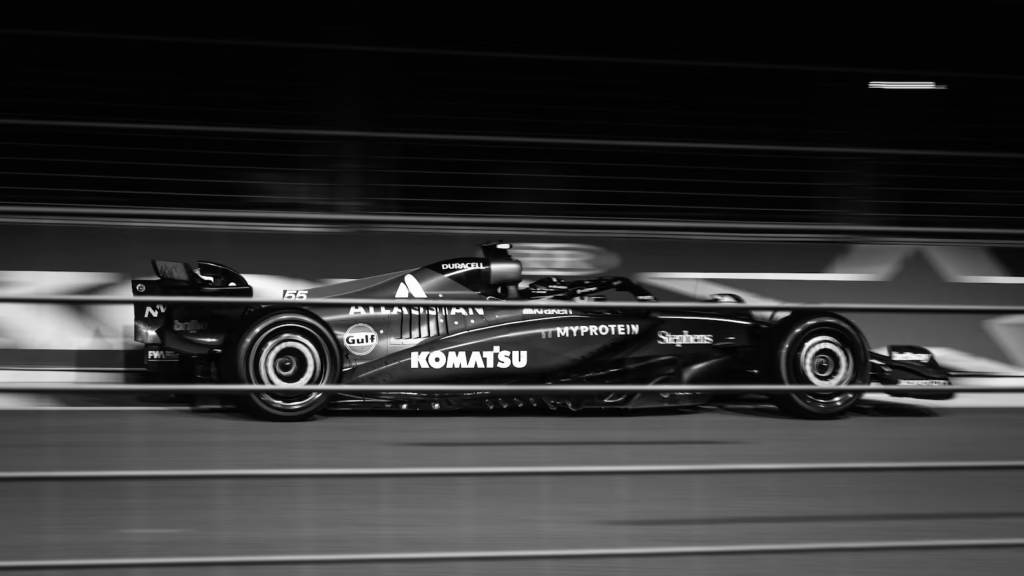
Here’s the thing about modern sports sponsorship: it’s no longer about slapping a logo on a car and calling it a day. Williams is marketing itself as a bleeding-edge tech operation. Atlassian came on as title partner last year. Then came Anthropic, Barclays, Marks & Spencer, and Wilkinson Sword for the 2026 season.
Kenyon explains the strategy plainly: “AI is on everybody’s tongues. We already use AI in terms of our aero and wind tunnel. Having people like Atlassian, Anthropic, and Airia gives us real tech businesses that can come in and support our tech infrastructure, and get us there smarter and quicker.” Translation: Williams isn’t just a race team anymore—it’s a living laboratory for enterprise software and AI innovation. Partners don’t just get brand exposure; they get a testing ground for next-gen tools.
Formula 1 Is Now Hunting Football’s Prize Pool
Formula 1 teams can’t rely on matchday ticket sales like football clubs do. But here’s what they can do: tap into global reach that football franchises still struggle to match. The sport’s explosion in the US—thanks to Netflix’s Drive to Survive and now Apple’s entering the fray—has attracted a flood of sponsors who are frankly spoilt for choice across all major sports.
“We compete against the other nine or 10 teams in F1, but we also compete against the top 50 teams across sport,” Kenyon says. “Because most partners that are spending the type of money that’s been coming in are also looking at all the sports to say, ‘Do we want to be football? Do we want to be NFL?'” In other words, Williams isn’t pitching itself as the best F1 team, it’s pitching itself as a better investment than a football club or an NBA franchise. And with 24 different markets and a genuinely global fanbase, they’ve got a case.

The Long Game: Race-Winning by 2028
Commercial deals only take you so far. Manchester United’s trophy drought over the past decade proves money can’t buy championships. For Williams, the real test comes this week in Melbourne. The 2026 season marks a massive technical reset—new engines, new chassis regulations—and the team has been built around this moment for years.
Kenyon isn’t getting ahead of himself. “We’re on a journey,” he says. “That journey is, we believe, to being race-winning in 2028. It’s not about a race, it’s not about one season. It’s a genuine rebuild on that journey back to the top.” Watch this space. The commercial momentum is real, but trophies are what truly unlock the next tier of sponsorship value. If Williams can prove the tech-driven approach actually delivers on track, the flood of partners will only grow.
The Bottom Line
Williams F1 is betting that becoming a tech and AI hub will prove more valuable than chasing seat-of-your-pants performance metrics. Peter Kenyon’s proven playbook—borrowed from football but reimagined for motorsport’s global reach—suggests they might actually be onto something. The real verdict comes when the cars hit the circuit. If they perform, commercial gold awaits.
Want more like this? Sign up to The MJBurrows Briefing — our free weekly newsletter delivered every Monday morning.
Your Questions Answered
Who is Peter Kenyon and why does he matter for Williams?
Kenyon is a legendary sports commercialisation expert who helped turn Manchester United and Chelsea into sponsorship behemoths. He’s been a board advisor at Williams for five years and has orchestrated the team’s transformation into a tech-focused brand that now competes with football’s elite for partner dollars.
What are Williams’ new sponsorship deals for 2026?
Williams secured major partnerships with Atlassian (title sponsor), Anthropic, Barclays, Marks & Spencer, and Wilkinson Sword. The focus is explicitly on tech and AI partners who can integrate their tools into Williams’ operations and share credibility as innovation leaders.
Why is Williams pitching itself against football and NBA teams?
Major sponsors now shop across all sports, so Williams competes for the same sponsorship budget that goes to Manchester City or the Lakers. With 24 global markets and younger, more gender-balanced viewership (thanks to Netflix and Apple), F1 offers reach football franchises struggle to match.
When can we expect Williams to win races again?
Kenyon is targeting 2028 as the year Williams becomes race-competitive. The 2026 technical reset is crucial, but he’s deliberately managing expectations—this is a multi-year rebuild, not a quick fix.
Is sponsorship money enough to win championships?
No. Manchester United’s recent struggles prove that. Williams needs the commercial revenue to fuel development, but the real test is whether the new engines and regulations actually narrow the gap on the grid.
DISCLAIMER
Effective Date: 15th July 2025
The information provided on this website is for informational and educational purposes only and reflects the personal opinions of the author(s). It is not intended as financial, investment, tax, or legal advice.
We are not certified financial advisers. None of the content on this website constitutes a recommendation to buy, sell, or hold any financial product, asset, or service. You should not rely on any information provided here to make financial decisions.
We strongly recommend that you:
- Conduct your own research and due diligence
- Consult with a qualified financial adviser or professional before making any investment or financial decisions
While we strive to ensure that all information is accurate and up to date, we make no guarantees about the completeness, reliability, or suitability of any content on this site.
By using this website, you acknowledge and agree that we are not responsible for any financial loss, damage, or decisions made based on the content presented.