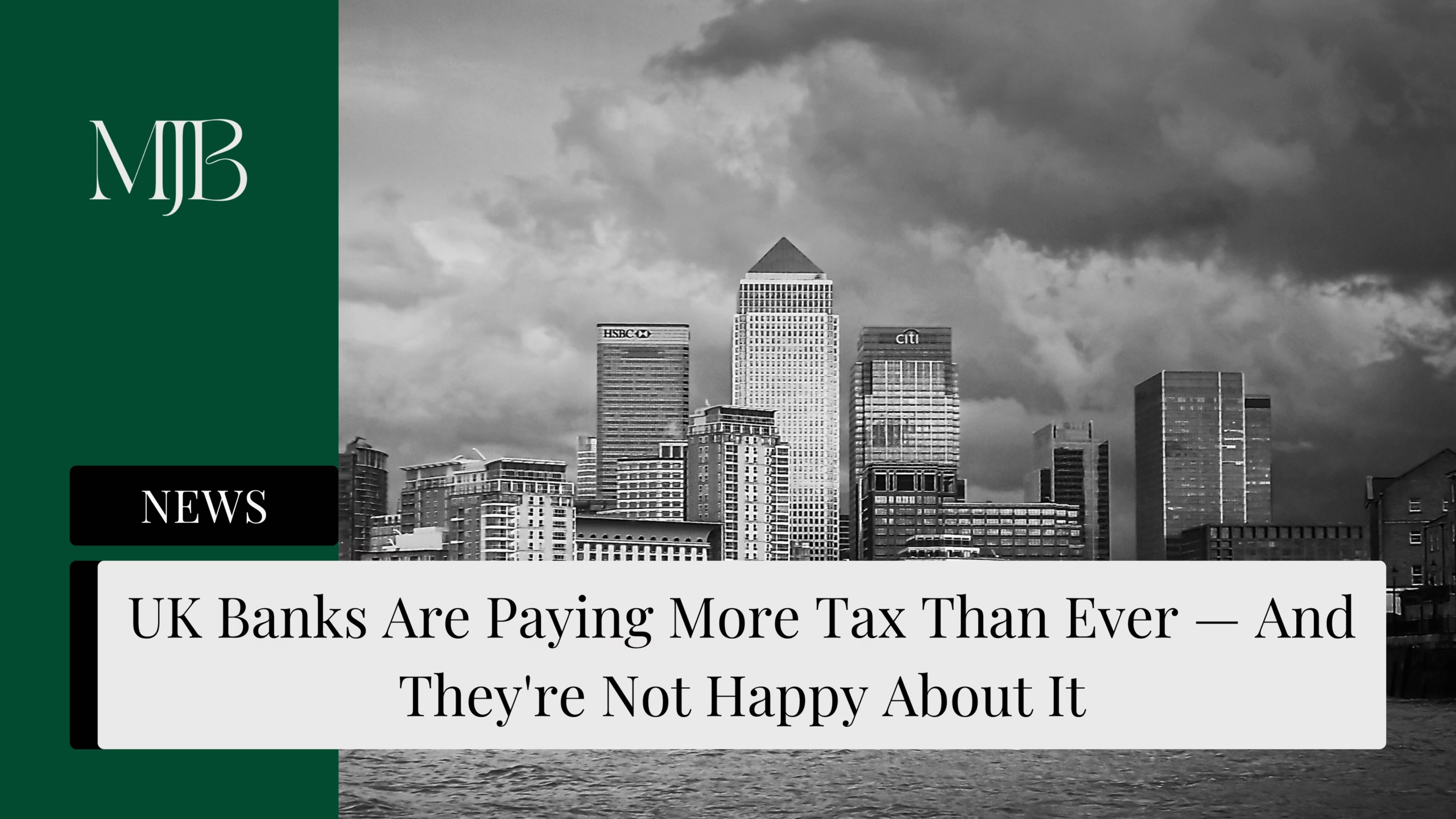
UK banks are footing a bigger tax bill than at any point since before the 2008 financial crisis and the industry wants something done about it.
New research from AFME and KPMG is piling pressure on Chancellor Rachel Reeves to actively cut bank taxes, not just hold the line. The argument? The UK’s tax regime is making British lenders less competitive globally — and ultimately, customers foot the bill.
Here’s what’s going on.
The Numbers Don’t Lie
In the 2024–25 financial year, UK banks contributed around £35.2bn in total tax — up sharply from £23.3bn before the financial crisis. The sector’s total effective tax rate now sits at 46.4%, nudging up from 45.8% the year prior, partly thanks to Reeves’ hike to employer National Insurance contributions.
That’s not a typo. Nearly half of every pound banks earn goes to the Treasury.
Why Banks Get Taxed Differently
On top of the standard tax regime that applies to all businesses — corporation tax, VAT, property taxes, NI — banks face two additional levies:
- The bank levy: A tax on a bank’s debts and liabilities, designed to discourage risky short-term borrowing. Higher rate for short-term debt, lower for long-term.
- The surcharge: An extra 3% on top of the 25% corporation tax rate, applied to bank profits.
The result? UK lenders are competing internationally while carrying a heavier tax load than most of their rivals.

What the Industry Wants
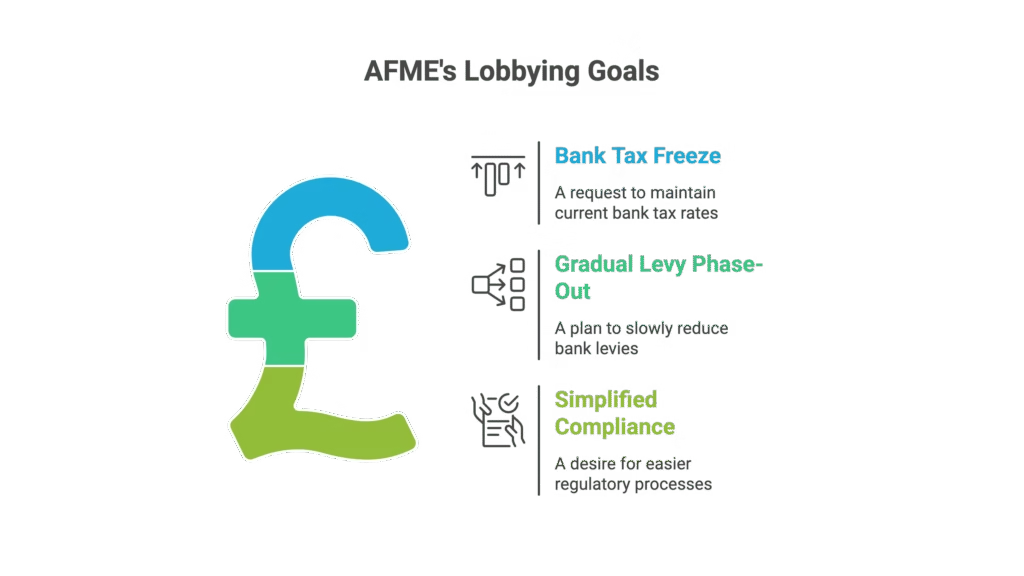
AFME isn’t just venting — it’s lobbying with a specific wish list:
- A government commitment to freeze bank taxes for the rest of this parliament
- A gradual phase-out of the bank levy to bring banks in line with the wider economy
- Simplified compliance and reporting requirements
The group’s core argument is that sector-specific taxes don’t just hit shareholders — the costs “are ultimately transferred to bank services and customers, resulting in increased costs across the broader economy.”
In other words, when banks pay more, so do you.
The Political Tightrope Reeves Is Walking
Reeves had a choice at last autumn’s Budget: squeeze banks or play nice. She played nice — and within 48 hours, several major British banks announced sizeable UK investment commitments. Coincidence? Probably not entirely.
City minister Lucy Rigby also signalled a warmer tone, saying banks deserved to come off the “naughty step” as the government looks to loosen post-financial crisis regulation.
But the political picture is anything but stable. Analysts at Moody’s have flagged leadership uncertainty around Keir Starmer as a key risk for the sector — warning that a shift to a more left-wing leader could be “uncomfortable” for UK banking.
And then there’s Nigel Farage, who made his position clear at Davos: Reform UK would end what he called banks’ access to “free money” from quantitative easing earnings. He framed it not as a new tax, but as closing a subsidy. Banks would beg to differ.

The Bottom Line
UK banks are at a crossroads. They’re paying record levels of tax, facing political headwinds from multiple directions, and competing against international peers who don’t carry the same burden. The AFME report is essentially a warning shot: ease the pressure now, or risk longer-term damage to the UK’s financial competitiveness.
Whether Reeves listens — or whether political expediency wins out — remains to be seen. Watch this space.
FAQ
Q1: Why do UK banks pay more tax than other businesses?
A: On top of standard business taxes, banks face a sector-specific levy on their liabilities and a surcharge on profits. These were introduced after the 2008 financial crisis to reduce systemic risk and make the sector contribute more to public finances.
Q2: What is the bank levy, and how does it work?
A: The bank levy is a tax on a bank’s debts and liabilities, designed to discourage reliance on risky short-term borrowing. Short-term debt attracts a higher rate than long-term debt, which is seen as more financially stable.
Q3: Did Rachel Reeves raise taxes on banks in the Autumn Budget?
A: No — Reeves held back from targeting banks directly, despite significant pressure from think tanks and politicians. However, her employer NI increase did push the sector’s total tax rate higher.
Q4: What did AFME recommend to the government?
A: AFME called for a freeze on new bank taxes, a phased removal of the bank levy, and simpler tax compliance rules — arguing that high bank taxes ultimately get passed on to customers.
Q5: What’s Nigel Farage’s position on bank taxation?
A: Farage supports ending banks’ access to earnings from quantitative easing, framing it as removing a subsidy rather than imposing a new tax. He made the case at the World Economic Forum in Davos earlier this year.
DISCLAIMER
Effective Date: 15th July 2025
The information provided on this website is for informational and educational purposes only and reflects the personal opinions of the author(s). It is not intended as financial, investment, tax, or legal advice.
We are not certified financial advisers. None of the content on this website constitutes a recommendation to buy, sell, or hold any financial product, asset, or service. You should not rely on any information provided here to make financial decisions.
We strongly recommend that you:
- Conduct your own research and due diligence
- Consult with a qualified financial adviser or professional before making any investment or financial decisions
While we strive to ensure that all information is accurate and up to date, we make no guarantees about the completeness, reliability, or suitability of any content on this site.
By using this website, you acknowledge and agree that we are not responsible for any financial loss, damage, or decisions made based on the content presented.
MORE NEWS





Disclosure & Editorial Standards
MJBurrows is not authorised or regulated by the Financial Conduct Authority (FCA). The content on this website — including articles, calculators, and tools — is for general informational and educational purposes only. It does not constitute personal financial, investment, tax, or legal advice and does not take into account your individual circumstances, financial situation, or objectives.
Nothing on this site is a personal recommendation to buy, sell, hold, or otherwise deal in any financial product, asset, or service. You should always conduct your own research and seek advice from a qualified, FCA-regulated financial adviser before making any financial decisions.
Our calculators produce estimates based on simplified models using HMRC-published rates for the current tax year. They cannot account for every individual circumstance and should not be relied upon as exact figures. Tax rules and rates may change — verify current rates with HMRC or a qualified tax adviser.
Projections are not guarantees. Where our tools show future values (investment growth, pension projections, compound interest), these are hypothetical illustrations based on assumed growth rates. Past performance does not guarantee future results. The value of investments can go down as well as up.
Market data displayed on this site is provided by third-party sources including Twelve Data, Yahoo Finance, and CoinGecko. We do not guarantee the accuracy, completeness, or timeliness of third-party data.
This content is designed for UK residents and reflects UK tax rules, thresholds, and legislation. It may not apply to other jurisdictions.
Using this website does not create a professional-client relationship of any kind. MJBurrows is not responsible for any financial loss, damage, or decision made based on the content presented. By using this site, you accept these terms.
This disclaimer may be updated from time to time without prior notice. Last reviewed: April 2026.
MJBurrows is an independent UK financial news and analysis site. We maintain full editorial independence and currently receive no payment for coverage, no affiliate commissions, and no commercial incentives that influence our editorial content.
Our sources: Articles reference primary sources including the Bank of England, Office for National Statistics (ONS), HM Revenue & Customs (HMRC), the Financial Conduct Authority (FCA), and gov.uk. Calculator data uses HMRC-published rates for the 2026/27 tax year.
Corrections: If we identify an error in any article or calculator, we correct it promptly and note the correction where appropriate.