
Britain is trying to build 1.5 million homes. Meanwhile, £9bn earmarked to fund the infrastructure that makes those homes possible is just… sitting there.
New research from the Home Builders Federation (HBF) reveals that councils across England are holding billions in developer contributions — money paid by housebuilders specifically to fund schools, transport, healthcare, and affordable housing — largely untouched. For a government staking its growth agenda on housebuilding, that’s an uncomfortable number to explain.
The £9bn Problem Nobody’s Talking About
The HBF’s freedom of information survey found £6.6bn in unspent Section 106 payments and £2.2bn in unused Community Infrastructure Levy (CIL) funds sitting in council bank accounts.
That’s not a rounding error. That’s roughly 55% more than the £5.8bn in newly announced local services funding the government recently celebrated.
What makes it worse? Nearly £3bn of that total has been held for more than five years — in many cases beyond the timeframe agreements require funds to be deployed. The unspent balance has actually grown by £800m since mid-2024, even as developer contributions overall have fallen alongside weaker housing supply.

What’s the Money Actually For?
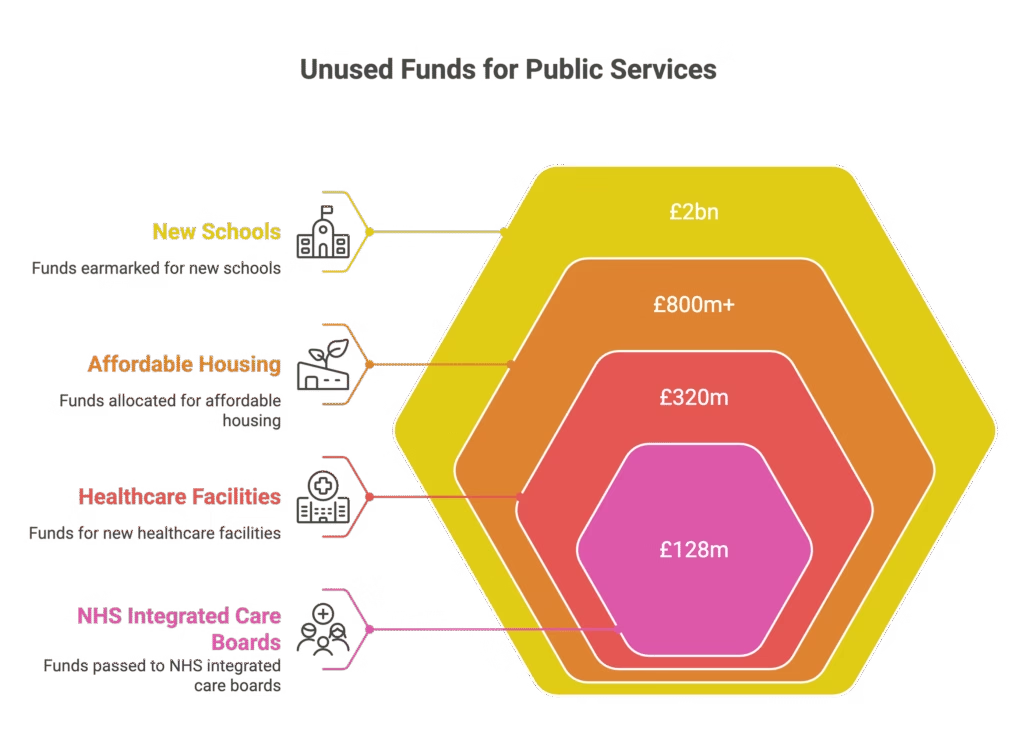
Here’s where it gets tangible:
- £800m+ allocated for affordable housing — unused
- ~£2bn earmarked for new schools — sitting idle
- ~£320m for new healthcare facilities — undeployed
- £128m passed to NHS integrated care boards — in some cases, requests for access have reportedly been refused or ignored
Annual government affordable housing grants are expected to total between £2.5bn and £3bn for the rest of this parliament. Councils are effectively holding the equivalent of several years’ worth of that central funding in their accounts.
Who’s Holding the Most?
The averages alone tell a story: councils hold £19m in unspent Section 106 contributions and £13.9m in unused CIL funds each, on average.
But the distribution is wildly uneven. Tower Hamlets alone is sitting on more than £260m — around nine times the national average on a per-household basis.
Why Isn’t It Being Spent?
Councils point to legitimate complications: funds are often pre-allocated to specific projects, and delivery gets snarled by staffing shortages and procurement complexity. Planning departments have taken a battering — spending on planning and development has fallen by more than 40% since 2010, and almost every local authority would miss statutory planning targets without deadline extensions.
New home applications have surged following recent planning reforms, but completions remain subdued. The build-to-rent sector is warning of squeezed margins, and John Lewis recently scrapped its housing venture entirely. The headwinds are real.
But the HBF isn’t buying the excuses wholesale. Neil Jefferson, the federation’s chief executive, put it plainly: this money should be funding schools, healthcare and essential local infrastructure — not accumulating interest while communities wait.
The proportion of councils publishing mandatory infrastructure funding statements by the December deadline has also dropped — from 90% in 2020 to 75% in 2025. That’s a transparency problem on top of a delivery one.

What Happens Next?
Ministers have boosted local government funding and pledged more resources for planning. But with £9bn already in the system and undeployed, the political pressure is shifting: spend what you have before citing infrastructure constraints as a reason to block new development.
For a government betting on housebuilding as a growth driver, unlocking existing capital may matter just as much as finding new investment.
Key Takeaways
- £9bn in developer contributions sits unspent in council accounts across England
- Nearly £3bn has been held for over five years, often beyond contractual deadlines
- Funds earmarked for affordable housing, schools, and healthcare remain untouched
- Planning capacity and procurement complexity are slowing deployment — but transparency is also declining
- The government faces pressure to unlock this capital before announcing new funding programmes
FAQ
Q1: What are Section 106 payments?
A: Section 106 agreements are legally binding obligations placed on developers as part of planning permission, requiring them to fund local infrastructure such as schools, affordable housing, and transport. The funds are collected by local councils and are supposed to be deployed within agreed timeframes.
Q2: What is the Community Infrastructure Levy (CIL)?
A: CIL is a charge local authorities can apply to new developments to help fund infrastructure in their area. Unlike Section 106, it’s a standardised levy rather than a negotiated agreement, and councils have more discretion over how and when they spend it.
Q3: Why is £9bn sitting unspent if there’s a housing crisis?
A: A combination of factors: staffing shortages in planning departments, procurement complexity, funds tied to specific projects, and declining transparency around infrastructure reporting. Critics argue the scale of unspent balances reflects a deeper capacity crisis in local government.
Q4: Could this money actually solve the affordable housing shortfall?
A: Not entirely — but it would help significantly. The £800m+ sitting unspent in affordable housing allocations alone represents a substantial chunk of what central government spends on housing grants each year.
Q5: What is the government doing about it?
A: Ministers have pledged additional resources for planning departments and boosted local government funding. However, with £9bn already in the system, the focus is increasingly on spending existing contributions rather than announcing new funding streams.
DISCLAIMER
Effective Date: 15th July 2025
The information provided on this website is for informational and educational purposes only and reflects the personal opinions of the author(s). It is not intended as financial, investment, tax, or legal advice.
We are not certified financial advisers. None of the content on this website constitutes a recommendation to buy, sell, or hold any financial product, asset, or service. You should not rely on any information provided here to make financial decisions.
We strongly recommend that you:
- Conduct your own research and due diligence
- Consult with a qualified financial adviser or professional before making any investment or financial decisions
While we strive to ensure that all information is accurate and up to date, we make no guarantees about the completeness, reliability, or suitability of any content on this site.
By using this website, you acknowledge and agree that we are not responsible for any financial loss, damage, or decisions made based on the content presented.